

Sheep, Goat, or Turkey: Who Can Mow Grass and Save the Climate?
I’ve been asked to evaluate which animals make the best natural grasscutters for a three-hectare property in the Philippines. The client’s main motivation isn’t meat or milk production, but reducing carbon emissions by replacing fuel-powered mowing with grazing animals. This pro-green energy perspective is refreshing, and it challenges me to consider both profitability and ecological impact together (FAO, 2021).
The Philippines’ livestock sector is an important part of the national economy, but it also contributes to greenhouse gas emissions. According to the Department of Agriculture (2022), the livestock industry provides livelihoods for millions of Filipinos, yet methane and nitrous oxide emissions from ruminants remain a concern. Balancing production with sustainability is now at the center of agricultural planning.
When I first looked at the property through the videos sent to me, I noticed the grass coverage was wide and consistent. The client’s idea of using animals as natural grasscutters made sense from both an energy and land-management standpoint. However, simply releasing animals to graze isn’t enough. I need to assess species differences, management requirements, and their long-term profitability.
My method is straightforward: I will compare sheep, goats, and turkeys on technical, economic, and environmental grounds. This involves looking at feeding behavior, land use, carbon impacts, market returns, and overall practicality for the Philippine setting. The client’s question is not just “Who eats grass better?” but “How can I sustain this system financially while helping the planet?”
Globally, livestock is recognized as both a problem and a solution in climate mitigation. FAO (2021) highlights that improved management of grazing systems can cut emissions significantly while maintaining productivity. This is why selecting the right animal species matters. The wrong choice could mean wasted investment and missed opportunities for emission reduction.
For me, the most exciting part of this project is aligning livestock with pro-green energy goals. Rather than treating animals solely as commodities, the client is positioning them as ecological partners. It is an approach that blends stewardship with enterprise, opening up new ways of seeing profitability not just in pesos, but also in carbon savings.
This review will walk through each animal species in depth. I’ll look at their grazing styles, carbon impacts, profitability opportunities, and ecological footprints. Along the way, I’ll lean on Philippine data whenever possible, but I’ll also bring in global insights for comparison. My goal is to answer the client’s core question in a comprehensive and science-grounded way.
Feeding Behavior and Diet Preferences
Sheep as True Grazers
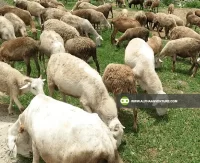
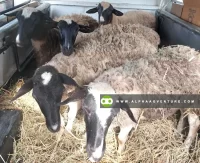
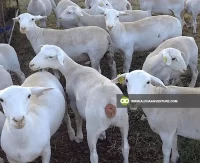
When I think of sheep, the first image that comes to mind is grass. Sheep are true grazers, preferring tender grasses and low-growing forages. Their split upper lip helps them nibble close to the ground, keeping pasture short and even. This makes them ideal for maintaining grasslands as natural lawnmowers. However, their grass-focused feeding means they usually avoid brushy vegetation, leaving woody weeds to spread unchecked (Devendra, 2007).
Sheep can be highly efficient on land dominated by grasses. They maintain consistent sward height, which reduces the need for mechanical mowing. For the client’s three-hectare property, this could mean lower labor inputs and fuel savings. Yet, if the land has many shrubs or invasive weeds, sheep may not manage it well. Instead of complete vegetation control, I could end up with neatly cropped grass mixed with untouched brush.
Goats as Browsing Specialists
Goats behave very differently. Rather than sticking to grass, they are browsers. They prefer shrubs, vines, and woody plants. I have often seen goats stretch on their hind legs to reach leaves, bark, and stems. This makes them excellent for controlling brush and invasive weeds that sheep ignore. They can reshape landscapes by eating higher and tougher vegetation that otherwise dominates unmanaged pastures (Devendra, 2007).
The browsing habits of goats are particularly valuable in preventing shrub encroachment. On three hectares, goats could reduce invasive growth while allowing grasses to thrive. However, stocking density must be managed carefully. If too many goats are kept, they may overbrowse, stripping shrubs and reducing biodiversity. Mismanagement could lead to soil erosion, which undermines the sustainability goals of this green energy-inspired project.
Turkeys as Omnivorous Foragers
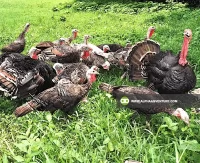
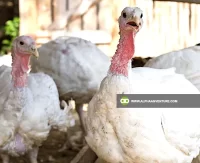
Turkeys take yet another approach. They are omnivorous foragers, pecking at grass, seeds, and insects as they roam. Unlike ruminants, they do not rely solely on vegetation. Their ecological value lies in pest control. Turkeys eat grasshoppers, beetles, and other insects that damage crops and grasslands. In this sense, they indirectly protect vegetation rather than actively removing it (Calpe, 2019).
On a three-hectare property, turkeys would not keep the grass down like sheep or clear shrubs like goats. Instead, they complement both by reducing pest pressure. Their constant movement also distributes manure widely, improving nutrient cycling. They will nibble on grass and seeds but never as intensively as ruminants. Thus, turkeys serve a balancing function more than a primary vegetation management role.
Implications for a Three-Hectare Property
When I put these three animals side by side, the feeding differences become clear. Sheep excel at grass control, goats specialize in brush management, and turkeys help reduce insect loads. If the land is grass-dominated, sheep are the obvious choice. If shrubs are the bigger problem, goats are indispensable. And if insects reduce vegetation quality, turkeys add ecological value.
I find it most useful to think of them as complementary. Sheep are the land’s barbers, trimming the grass evenly. Goats are hedge trimmers, cutting back brush and woody plants. Turkeys are pest patrol, moving constantly to reduce insect populations. For a property driven by pro-green energy values, integrating all three could maximize grasscutting efficiency while improving ecological balance.
Forage Intake and Stocking Rates
Understanding Dry Matter Intake
Forage intake is best measured in dry matter terms, since feeds differ in water content. Daily dry matter intake (DMI) is usually expressed as a percentage of body weight. This allows comparisons across species regardless of diet. Most grazing animals consume between 2 to 5 percent of body weight in dry matter daily. Using DMI benchmarks, I can estimate stocking potential for sheep, goats, and turkeys on the three-hectare property (Abegaz et al., 2019).
Sheep Intake Benchmarks
Sheep typically eat 2.5 to 3 percent of body weight daily as dry matter. A 40-kilogram mature sheep consumes about 1 to 1.2 kilograms of forage dry matter daily. Because sheep graze grasses efficiently, their consumption closely matches grassland productivity. If managed properly, they maintain short grass consistently without destroying root systems. This makes them ideal for maintaining open grasslands, particularly once brush and shrubs are already under control (Abegaz et al., 2019).
Goats Intake Benchmarks
Goats consume slightly more relative to body weight, about 3 to 4 percent in dry matter daily. A 35-kilogram goat eats between 1.1 and 1.4 kilograms. Unlike sheep, goats prefer shrubs, vines, and leaves. Their higher intake supports their browsing activity, which requires more energy. Goats are valuable for controlling brush and weeds but can also overbrowse if density is not regulated. Thus, their stocking rate depends heavily on the level of brush cover (Owen & Jayasuriya, 1989).
Turkey Intake Benchmarks
Turkeys eat about 5 percent of body weight in dry matter daily. A mature 7-kilogram bird consumes around 350 grams. Their diet is diverse, including grasses, seeds, and insects. Although their individual forage demand is lower than ruminants, their role is not in bulk grass removal. Instead, they spread ecological benefits across many birds, offering pest control and manure distribution. On a per-hectare basis, they are stocked in much higher numbers than sheep or goats (Calpe, 2019).
Stocking Rate Guidelines
Translating forage intake into land capacity requires stocking rate benchmarks. In Philippine grassland conditions, one hectare can sustain about 12 to 15 sheep, or 3 to 7 goats depending on brush density. Turkeys are different, with a potential of 120 to 250 birds per hectare in free-range systems. These figures assume moderate forage productivity, but in fertile areas with irrigated grasses, carrying capacity may increase slightly without degrading the land (Abegaz et al., 2019).
Application to Three Hectares
With three hectares, stocking capacity could support 36 to 45 sheep, or 9 to 21 goats, or 360 to 750 turkeys. Actual numbers will depend on the property’s forage yield. Tropical grasses in the Philippines can yield 8 to 12 metric tons of dry matter per hectare annually. Matching this with daily animal intake ensures sustainable stocking without exhausting forage resources (Owen & Jayasuriya, 1989).
Scenarios for Land Clearing
During an initial land clearing phase dominated by brush, goats would be the best choice. Stocking at 15 to 20 goats across three hectares could clear shrubs efficiently. Turkeys could be added later for insect control, but they cannot replace goats in tackling woody plants. Once brush pressure is reduced, goat numbers should be lowered to prevent overbrowsing, allowing grasses to recover and stabilize soil cover.
Scenarios for Maintenance
Once the land is dominated by grasses, sheep become the more efficient choice. Around 40 sheep across three hectares would keep the grass trimmed evenly. A small group of 6 to 8 goats could remain as brush controllers, preventing shrub regrowth. Turkeys at about 500 birds would complement the ruminants, offering insect control and additional nutrient cycling. This combined system balances grass cutting with ecological services, aligning well with sustainable land use goals.
Integrating Stocking Dynamics
Stocking decisions are not static. During wet months, when grasses grow rapidly, higher densities may be supported temporarily. During dry months, animal numbers or grazing hours must be reduced, or supplemental feeding introduced. Flexible stocking ensures that forage availability, animal health, and soil quality remain balanced. For a client motivated by carbon reduction, dynamic management prevents overgrazing and enhances the long-term sustainability of livestock as natural grasscutters.
Vegetation and Target Species Suitability
Brush-Dominated Land
Goats excel in brush-heavy land. Their browsing instincts allow them to consume vines, shrubs, and woody stems that sheep ignore. On the three-hectare property, goats could effectively reduce invasive shrubs and creeping vines. By standing on their hind legs, they reach higher leaves, stripping growth that would otherwise outcompete grasses. This makes goats the first-choice species for reclamation of brush areas, particularly when land has been neglected for years (Caton & Dhuyvetter, 1997).
Grass-Dominated Land
Sheep are more effective for grass-dominated land. They graze grasses closely and evenly, maintaining pasture at a controlled height. Cogon grass, for instance, can overwhelm pastures if not checked. Sheep continuously nibble it down, weakening its dominance over time. Their even grazing patterns prevent patches of overgrown areas, making them ideal natural lawnmowers. On lands where cogon is prevalent, sheep provide steady suppression without the need for mechanical cutting or herbicide application (PCAARRD, 2020).
Mixed Vegetation
Mixed vegetation is common in the Philippines, where grasses grow alongside makahiya, shrubs, and vines. In this context, a combination of species works best. Sheep maintain the grasses, while goats tackle shrubs and climbing vines. Turkeys complement both by reducing insect pressure on plants. This mixed-species system prevents any one vegetation type from dominating. It also supports biodiversity, which enhances soil health and resilience against pests and diseases over the long term.
Case Study: Cogon Grass
Cogon grass is notoriously invasive. It forms dense mats, crowding out other forages. Sheep are particularly suited to suppressing cogon because they graze it persistently. Although cogon is tough, repeated grazing weakens its regrowth. Goats may nibble at cogon occasionally but prefer shrubs and vines instead. Turkeys offer little direct impact on cogon, though they assist by keeping insect pests from weakening more desirable forage plants. In cogon-dominated areas, sheep should be prioritized (PCAARRD, 2020).
Case Study: Makahiya and Vines
Makahiya and climbing vines present another challenge. Goats are naturally suited for this task. They strip vines and consume makahiya foliage despite its thorns. Their browsing helps reduce vine pressure on grasses, giving pastures room to recover. Sheep may graze around vines but rarely suppress them. Turkeys again provide complementary support by eating seeds and insects. In vine-infested areas, goats form the frontline, supported by other species for balance (Caton & Dhuyvetter, 1997).
Best-Fit Species
Goats are the best fit if land is primarily brush. If grass dominates, sheep are most efficient. For mixed vegetation, a balanced system integrating sheep, goats, and turkeys provides the most sustainable solution. Each species targets a different ecological niche, reducing the risk of overgrowth by any one vegetation type. The client’s three-hectare land could therefore benefit most from a multi-species approach, aligning ecological efficiency with the goal of sustainable grasscutting.
Effectiveness as Grasscutters
Biomass Reduction Speed
Goats reduce brush biomass rapidly because they actively target leaves, bark, and woody stems. Within weeks, they open up dense thickets, creating light gaps that favor grass growth. Sheep, by contrast, take longer to show visible results because they clip grass steadily but less dramatically. Turkeys play a minor but complementary role. By scratching the ground and eating weeds, they add subtle but steady biomass control over time (Hart, 2001).
Thoroughness of Grazing
Sheep graze more thoroughly than goats when it comes to grass. Their consistent nibbling keeps grass short and uniform, leaving few patches untouched. Goats browse unevenly because they prefer shrubs and leaves. They may clear woody areas completely while ignoring thick mats of cogon. Turkeys do not match ruminants in thoroughness, but their pecking at seedlings and small plants helps reduce regrowth and seed banks, which adds to the overall thoroughness of biomass control (Gomez et al., 2018).
Goats on Woody Biomass
Goats excel at tackling woody biomass. Their ability to strip bark, chew vines, and consume tough leaves gives them an advantage in reclaiming neglected land. In fact, they often debark small trees, eventually killing them. This can be beneficial for clearing unwanted shrubs but risky if desirable species are present. Their aggressive browsing suits initial land clearing best. Without goats, woody vegetation tends to reassert dominance quickly, limiting the effectiveness of grasscutting strategies.
Sheep on Turf
Sheep act as natural lawnmowers. They keep grasses clipped to a steady level, ensuring turf remains short and manageable. Unlike goats, they do not destroy woody plants, but this makes them ideal for maintenance phases after initial clearing. Their close grazing suppresses invasive grasses like cogon over time. By continually lowering grass height, they encourage palatable regrowth while limiting seed development. This creates a more balanced and productive pasture system, particularly in grass-dominant environments.
Turkeys as Secondary Control
Turkeys do not match ruminants in biomass consumption, but they support grasscutting in unique ways. They scratch soil surfaces, which disrupts weed seedlings. They consume broadleaf weeds, insects, and fallen seeds, indirectly reducing competition with grasses. Turkeys also help prevent insect outbreaks that weaken desirable forage plants. When combined with goats and sheep, turkeys act as a biological cleanup crew, smoothing out what ruminants leave behind and ensuring vegetation control extends beyond grass height alone.
Risks of Overgrazing
Overgrazing poses a significant risk when using livestock for grasscutting. Goats, if left unmanaged, may strip bark from useful trees and reduce shrubs excessively. Sheep, when stocked too heavily, can scalp grass to the roots, leading to soil erosion and pasture degradation. Turkeys rarely cause overgrazing but may over-scratch patches, exposing soil. Effective rotational grazing systems, supported by Philippine forage productivity benchmarks, prevent these risks. Stocking rates must align with land capacity to sustain vegetation health (Hart, 2001).
Comparative Efficiency
Each species shows clear strengths. Goats outperform in clearing woody biomass, sheep dominate in turf management, and turkeys provide complementary weed and pest control. If the land requires rapid biomass reduction, goats deliver immediate impact. For long-term uniformity, sheep provide steady results. Turkeys ensure ecological balance and reduce seed-based regrowth. When used together, their combined efficiency surpasses what any single species can achieve. This synergy makes mixed-species grazing highly effective for sustainable grasscutting.
Pasture Recovery and Sustainability
Rotational Grazing Benefits
Rotational grazing sustains both animals and vegetation. By moving goats, sheep, and turkeys between paddocks, I allow forage to recover before animals return. This system prevents overgrazing and encourages uniform use of pasture. Goats, sheep, and turkeys benefit from fresh forage, while landowners maintain long-term productivity. In Philippine settings, rotational systems align with natural rainfall cycles, ensuring pastures stay productive across dry and wet seasons (Teague & Barnes, 2017).
Soil Fertility and Regeneration
Livestock play a direct role in soil fertility. Sheep recycle nutrients by grazing grasses and returning them as manure. Goats add fertility by spreading organic matter across brushy areas. Turkeys contribute by scratching soil and mixing organic debris into the top layer. This constant cycling of nutrients regenerates soil structure. Fertile soils produce resilient forage systems, allowing landowners to sustain grasscutting without heavy dependence on synthetic fertilizers (Teague & Barnes, 2017).
Preventing Erosion
Proper grazing management reduces erosion risks significantly. Sheep keep grasses short yet alive, maintaining a protective cover on the soil. Goats, when managed carefully, prevent brush encroachment that otherwise destabilizes soil. Turkeys add an extra layer of control by clearing weed seedlings without removing protective grass cover. By balancing these grazing activities, landowners preserve soil health. Reduced erosion ensures better water retention and improved resilience against heavy rains in Philippine landscapes.
Carbon Sequestration
Pastures sequester carbon when grazing is managed sustainably. Grasses store carbon in their root systems, which expand when they recover after grazing. Sheep support this cycle by stimulating grass regrowth. Goats encourage diversity by opening land for grasses to thrive. Turkeys maintain ground cover, which enhances organic matter buildup. Together, these species create conditions that lock carbon into soils, reducing overall greenhouse gas emissions while advancing the client’s pro-green energy commitment.
Ecosystem Services Perspective
Beyond vegetation control, these animals provide valuable ecosystem services. They sustain soil fertility, reduce erosion, and contribute to climate mitigation. Pastures managed under rotational grazing become multifunctional landscapes that produce forage, recycle nutrients, and store carbon. For the client’s 3-hectare land, integrating sheep, goats, and turkeys creates a regenerative system. This approach transforms livestock into partners of sustainability, showing that natural grasscutting can align with broader ecological goals.
Infrastructure: Land Division, Water, Shelter, and Fencing
Designing Paddocks for Three Hectares
In planning a three-hectare pasture, I divide the land into several paddocks for rotational grazing. I usually start with six to eight paddocks, each around 0.4 to 0.5 hectares. This setup allows forage to rest while another paddock is grazed.
I also consider the life cycle of internal parasites. Studies show that worm eggs in goat and sheep feces usually hatch within three to five days, with infective larvae emerging around the fourth day.
By ensuring that my animals stay in one paddock for no more than three days, they move before the larvae become active on the grass. This practice prevents them from re-ingesting infective larvae and helps control internal parasite load naturally.
Each grazed paddock rests for at least a month before being reused. This rest period allows forage to recover and any remaining larvae to die off. Through this system, I maintain vegetation cover, extend carrying capacity, and reduce both parasite pressure and soil degradation (Escobar, 2004; Hoste et al., 2010).
Strategic Placement of Watering Points
Water access drives animal movement, so I design watering points carefully. I usually place troughs or containers at the center of paddocks to reduce walking distances. For three hectares, two to three watering stations suffice, provided they are easily refillable. I ensure a steady supply, since goats, sheep, and turkeys drink frequently in hot Philippine weather. When animals stay hydrated, they forage longer, which translates into better grasscutting efficiency across the property.
Water System Options
I often weigh between gravity-fed and pump-driven systems. In Philippine upland farms, gravity-fed systems using elevated tanks reduce costs and maintenance. For lowland areas, solar-powered pumps supply troughs sustainably. Turkeys require shallower pans to avoid drowning risks, while goats and sheep prefer deeper containers. I protect all watering facilities from contamination by elevating them slightly and cleaning regularly. Reliable water infrastructure ensures animals graze productively without being limited by heat stress or dehydration (DA-BAR, 2018).
Shelter for Goats
Goats require sturdy housing. I elevate goat shelters to keep them dry during typhoons and rainy periods. Slatted floors improve hygiene by allowing urine and manure to fall through. I design roofs with corrugated sheets that withstand strong winds. Ventilation is essential in hot months, so I leave open sides while providing shade. Goats dislike getting wet, so shelters must keep them dry. Proper housing enhances productivity, disease resistance, and grazing efficiency (Escobar, 2004).
Shelter for Sheep
Sheep tolerate rain better than goats, yet they still need shelter. I build simple, ground-level structures with good drainage. Roofs must resist typhoon winds while maintaining shade. I prioritize flooring, since wet, muddy floors encourage foot rot. In my experience, sheep benefit from clean, dry resting areas to recover after grazing. Simple but well-drained housing prevents stress and helps maintain consistent grasscutting performance. These adjustments ensure sheep remain productive in Philippine weather conditions.
Shelter for Turkeys
Turkeys demand predator-proof housing. I use wire mesh with small openings to keep out snakes, dogs, and birds of prey. Housing must protect against heavy rain, yet remain ventilated for hot afternoons. Raised perches improve welfare while preventing ground congestion. Since turkeys roost naturally, I design shelters with horizontal bars. In typhoon-prone areas, reinforced roofs are essential. Adequate turkey housing not only prevents losses but also keeps flocks actively foraging during the day.
Fencing for Goats
Fencing goats requires strength. They constantly test boundaries, so I recommend tight woven wire or welded mesh fences at least 1.5 meters high. I reinforce corners with wooden or steel posts to resist pressure. Electrified wires along the bottom deter attempts to dig or squeeze through. While fencing costs more for goats than other species, the investment prevents escapes, crop damage, and neighbor disputes. Secure fencing makes goat-based grasscutting practical and sustainable.
Fencing for Sheep
Sheep fencing does not need to be as strong as goat fencing, but it must prevent entanglement. I usually recommend woven wire with openings small enough to keep heads from getting stuck. Sheep respect boundaries more than goats, so a 1.2-meter-high fence suffices. Since sheep graze near the ground, I ensure the bottom of the fence touches soil to stop lambs from slipping through. Moderate fencing balances cost and effectiveness in Philippine farms.
Fencing for Turkeys
Turkeys require predator-proof fencing. I typically use netting at least 1.8 meters high to prevent them from flying out and to block predators from flying in. I bury the lower edge to discourage digging animals. Netting also shields turkeys from dogs, cats, and monitor lizards, which are common threats. Although fencing turkeys is less about strength and more about protection, it plays a critical role in flock survival and grasscutting reliability (DA-BAR, 2018).
Integrating Infrastructure for Efficiency
I design infrastructure holistically. Paddocks, water systems, shelters, and fencing must work together. If paddocks lack water, animals underperform. If shelters fail, animals suffer stress. If fences are weak, escapes undo the effort. By integrating these systems, I align the property’s infrastructure with animal behavior, weather patterns, and vegetation goals. On a three-hectare land, a well-planned design reduces labor, sustains productivity, and supports the client’s carbon reduction commitment.
Predation and Security Challenges
Dog Attacks and Local Ordinance
I consider dog attacks the most pressing threat to goats and sheep. Free-ranging dogs injure or kill livestock, causing severe financial losses. In Tarlac City, the Responsible Pet Ownership Ordinance (2017) requires dog owners to confine, leash, or register their pets. I remind clients that while ordinances exist, enforcement varies. Farmers still need strong fences and secure shelters. Legal frameworks help, but practical livestock protection starts on the ground.
Nighttime Vulnerability of Small Ruminants
Sheep and goats face their greatest risk at night. Dogs, monitor lizards, and even humans can target them under darkness. I always recommend secure night housing with lockable gates. Elevating goat houses and reinforcing sheep pens with wire mesh reduces intrusion. These measures cost money, but the losses from even one attack outweigh construction expenses. When clients ask me if shelters are optional, I say they are non-negotiable for long-term sustainability.
Avian Predators for Turkeys
Turkeys face a unique threat from aerial predators. In rural Philippine areas, hawks and eagles occasionally target young turkeys. I protect flocks with netted enclosures or covered runs. At night, owls can also attack poults, which makes fully enclosed housing essential. Unlike sheep and goats, turkeys cannot defend themselves well. Once a predator identifies a flock, repeated attacks follow. Investing in predator-proof housing directly preserves profitability and prevents unnecessary flock mortality.
Cost-Benefit of Secure Night Housing
I often calculate whether secure night housing pays off. The answer is consistently yes. For example, losing even one goat to dogs equals several months of construction costs for housing. A predator-proof turkey enclosure prevents losses that could wipe out half a flock overnight. Secure housing is not just a cost but an insurance policy. It guarantees that investments in grasscutting livestock remain protected and profitable over the long term.
Practical Security Measures
I adopt layered strategies to keep animals safe. I combine fencing, locked housing, and constant monitoring. Some farmers in the Philippines also use guard dogs, but these require training and proper management. I prefer structural solutions because they work consistently. A strong fence backed by secure housing prevents the majority of attacks. When these measures are in place, predation becomes a minor concern, allowing me to focus on grazing management and sustainability.
Labor and Management Requirements
Daily Herding Tasks
I dedicate a significant portion of my time to herding goats and sheep. Goats test boundaries, so I constantly monitor them near fences. Sheep stay closer together, making them easier to move. Turkeys scatter widely while foraging, which requires patient guiding at dusk. Daily herding ensures animals graze the intended paddock, return safely, and do not damage nearby crops. Without daily control, grazing goals quickly unravel, reducing both effectiveness and sustainability (Devendra, 2012).
Feeding Responsibilities
Although these animals forage naturally, I supplement during lean seasons. Goats and sheep benefit from crop residues or cut-and-carry forage when pastures decline. Turkeys need grain-based supplements for balanced nutrition, especially during growth. I prepare feed daily, monitor consumption, and adjust for body condition. While grasscutting is their primary role, proper supplementation maintains productivity. Feeding becomes particularly demanding in dry months, when natural vegetation cannot fully support healthy growth and reproductive performance.
Healthcare Routines
I devote time each day to checking animal health. Goats often develop internal parasites, so I observe for diarrhea and weight loss. Sheep need hoof trimming to prevent lameness. Turkeys require careful monitoring for respiratory diseases common in humid climates. I clean housing, refill waterers, and ensure proper ventilation. Regular preventive healthcare reduces mortality. Daily routines, though repetitive, build the foundation of successful livestock management and ensure consistent grasscutting performance across the year.
Veterinary Demands
Veterinary tasks require planning. Goats and sheep need vaccinations, deworming, and occasional vitamin injections. Turkeys require strict biosecurity, as diseases spread quickly through flocks. I work with local veterinarians for annual schedules, but much of the day-to-day monitoring falls to caretakers. Veterinary costs rise when health lapses are ignored, making proactive care more cost-effective. By integrating veterinary management into daily routines, I reduce risks of sudden losses that can destabilize grazing operations (Devendra, 2012).
Labor Intensity of Goats
Goats demand high labor intensity. They climb, explore, and test fences, which means I monitor them more closely than sheep. They browse selectively, so I must rotate them frequently to prevent overuse of shrubs. Their housing requires regular cleaning, since goats dislike dampness. Although goats excel at clearing brush, they impose greater labor demands. Without sufficient manpower, goat systems quickly collapse, as escapes and health problems escalate into larger management challenges.
Labor Intensity of Sheep
Sheep require moderate labor intensity. They flock tightly, making herding easier than with goats. Their grazing style is predictable, and they usually respect fencing. However, I still invest labor in hoof care, parasite management, and shelter hygiene. Sheep respond well to routine and consistency, so a caretaker with steady habits manages them efficiently. Compared with goats, sheep save time in daily handling, though their vulnerability to diseases requires careful monitoring and management discipline.
Labor Intensity of Turkeys
Turkeys present a different type of labor demand. They scatter widely while foraging and require careful evening rounding. Their housing needs daily inspection for predator protection. I spend time maintaining dry litter, since wet conditions cause disease outbreaks. Feeding turkeys also requires more grain handling than ruminants. While less physically demanding than goats, turkey management still requires vigilance. Once confined for at least two weeks and well-fed, they rarely attempt to escape fenced areas.
Caretaker Ratios
I estimate caretaker requirements based on species. One caretaker can manage around 40 goats under Philippine conditions, provided infrastructure is strong. For sheep, the ratio improves to about 60 animals per caretaker, since they flock and graze uniformly. Turkeys require closer supervision, so I assign one caretaker for 100 to 150 birds, depending on age. These ratios ensure daily tasks remain manageable. Beyond those numbers, animal welfare and productivity begin to decline.
Integrating Labor Across Species
Managing multiple species requires coordination. I often schedule goat browsing in brushy paddocks, sheep grazing in grassy areas, and turkeys foraging in mixed zones. This division maximizes land use but demands organized labor. Caretakers must adapt to different routines, which requires training and supervision. When done well, integrated management spreads labor evenly and prevents burnout. However, without proper planning, mixed-species systems overwhelm caretakers, leading to inefficiencies and higher risks of neglect.
Health, Parasites, and Veterinary Care
When I think about raising goats, sheep, and turkeys in the Philippine climate, I recognize both the opportunities and the risks. Our heat and humidity push animals to grow well when nutrition is right, but the same conditions also allow parasites and diseases to thrive. I have learned, sometimes the hard way, that staying ahead of these health challenges saves me from bigger problems down the line.
Internal Parasites: The Hidden Burden
In goats, gastrointestinal nematodes are the number one concern. I often encounter Haemonchus contortus—the barber’s pole worm—which thrives in our tropical rains. This parasite can drain a goat’s blood so quickly that a perfectly healthy-looking buck can collapse from anemia within days. Sheep are even more vulnerable because they graze closer to the ground, where infective larvae accumulate. In turkeys, coccidia pose the greatest internal threat. I once lost several poults before I fully understood how unforgiving coccidiosis can be when litter gets damp and overcrowded.
Because of these experiences, I practice routine fecal monitoring. I do not wait until I see pale eyelids or watery diarrhea before taking action. I use targeted deworming: only the animals with high parasite burdens get treatment. This prevents drug resistance, which is already a growing concern in the Philippines (DA-BAI, 2021).
External Parasites: Small Pests, Big Problems
Then there are the external parasites. Goats and sheep constantly battle ticks, lice, and mites. During the rainy season, ticks multiply fast. I remember checking an ewe’s ears one July morning and finding dozens of engorged ticks feeding away. If I had ignored them, they could have caused anemia, skin damage, or even spread diseases. For turkeys, northern fowl mites and lice are common enemies. These pests weaken birds by sucking blood and cause restless behavior, which disrupts feeding and growth.
My preventive strategy is simple but consistent: I clean housing regularly, treat bedding with approved insecticidal dust, and trim vegetation around pens. By cutting off parasite habitats, I reduce reinfestation. I also rotate animals to fresh paddocks, breaking the parasite life cycle.
Deworming and Preventive Care
Deworming, in my practice, is not about giving drugs on a fixed schedule. Instead, I base decisions on body condition scores, fecal egg counts, and clinical signs. For goats and sheep, I use broad-spectrum anthelmintics but rotate classes to avoid resistance, following guidelines I picked up from Veterinary Medicine by Radostits et al. (2007). With turkeys, anticoccidials in feed or water are essential, especially during the first eight weeks when birds are most vulnerable.
Vaccination is another cornerstone of my approach. For goats, I vaccinate against peste des petits ruminants (PPR), a devastating viral disease that still threatens small ruminants in many parts of Asia. For sheep, I pay attention to foot rot prevention through hoof trimming, foot baths, and vaccination where available. For turkeys, I never skip Newcastle disease vaccination. I have seen firsthand how this virus can wipe out entire flocks within days. It is one of the most heartbreaking sights for any farmer.
Routine Health Practices
Every day, I observe my animals before I feed them. Are they eating with appetite? Do they move normally? Is there nasal discharge or coughing? I consider these daily checks my cheapest but most reliable form of veterinary care. Early detection means I can isolate sick animals quickly, preventing spread.
I also keep strict records. Each goat, sheep, and turkey in my care has a health card that tracks treatments, vaccinations, and parasite control measures. This habit allows me to see patterns. For instance, if parasite loads spike every start of the rainy season, I can intensify preventive steps just before that period.
Working with Veterinarians
No matter how experienced I become, I still rely on veterinarians for advanced care. Blood tests, necropsies, and prescription drugs are beyond what I can do on my own. I learned to call the vet not as a last resort, but as a partner in keeping my livestock productive. The Department of Agriculture’s National Animal Health Program (DA-BAI, 2021) provides valuable resources and vaccination schedules that guide my decisions.
The Cost of Neglect
I once visited a farmer who believed goats could survive without veterinary attention because “they are hardy.” His flock told a different story: rough coats, stunted growth, and constant deaths from parasite overload. That experience reinforced a lesson for me. Ignoring health and preventive care is not saving money. It is slowly bleeding profit.
Why I Stay Proactive
Raising goats, sheep, and turkeys in the Philippine climate is both a privilege and a challenge. The environment here pushes parasites and diseases to the forefront, but I have seen that a proactive approach works. Strategic deworming, timely vaccination, clean housing, and routine observation give me healthier animals, fewer losses, and better productivity. When I commit to veterinary care, I am not just treating disease, but I am also investing in resilience.
Reproduction and Flock Dynamics
I always consider reproduction when planning a sustainable system of goats, sheep, and turkeys for natural grasscutting. Profitability and ecological impact both hinge on how well animals reproduce and how I manage their young. If breeding does not align with available forage, I risk stressing both animals and land.
Goats in the tropics typically breed year-round. I take advantage of this by timing breeding to match the peak of forage growth. In my experience, does cycle every 18 to 21 days, and gestation lasts about five months. That means I can manage for three kiddings in two years if conditions remain favorable. Proper timing ensures that lactating mothers and growing kids find enough nutrition from the pasture.
Sheep follow similar patterns, though their seasonality depends on breed. Many tropical-adapted sheep in the Philippines, such as the Katjang and Barbados Blackbelly crosses, cycle year-round. Ewes also have a five-month gestation, but I tend to keep them on a slower rhythm, allowing for one lamb crop each year. This reduces nutritional stress and matches well with pasture recovery rates. In my system, one healthy ewe can raise one or two lambs consistently.
Turkeys reproduce differently. I keep breeders in separate pens and allow natural mating or controlled artificial insemination when needed. Hens lay clutches of 10 to 15 eggs, which I either incubate or allow a broody hen to hatch. In my experience, turkey poults need more careful brooding compared to goat kids or lambs. Their survival hinges on maintaining proper warmth, dryness, and feed access during the first weeks.
Replacement rates form another layer of management. I plan to retain around 20 to 25 percent of female kids or lambs each year to replace aging does and ewes. For turkeys, I select only the strongest hens and toms with good growth and disease resistance. Careful culling prevents me from spreading weak genetics or poor traits within the flock.
By aligning reproduction with land capacity, I prevent overstocking and maintain animal health. Young animals grow best when forage is abundant and mothers are strong. Managing flock dynamics in this way ensures my system remains profitable and ecologically balanced.
Profitability: Meat, Milk, Fiber, and Egg Outputs
When I evaluate goats, sheep, and turkeys for natural grasscutting, I also ask myself how these animals can return profits beyond their ecological service. A sustainable system must cover costs of feed supplements, housing, fencing, and veterinary care. Meat, milk, fiber, eggs, and even manure provide multiple streams of income that can support both ecological and financial goals.
Goat Meat as a Staple Market
Goat meat, or chevon, remains in steady demand across the Philippines. Families prepare it during fiestas, weddings, and religious celebrations. In Muslim communities, goat meat also commands premium prices in halal markets. I find this demand reliable because it links to cultural and religious practices that persist regardless of economic cycles.
Based on Philippine Statistics Authority (2022) data, goat meat prices often outpace pork and chicken on a per-kilo basis. This gives smallholders like me an advantage since goats thrive on forage rather than commercial concentrate diets. A well-managed goat herd can supply consistent market animals while also trimming grass and shrubs on the land.
Mutton as an Alternative
Sheep meat, or mutton, holds a smaller share of the local market, yet I see opportunities for growth. Restaurants catering to Middle Eastern or Indian cuisine often look for lamb and mutton. While consumer preference leans toward goat, I can still carve out a niche market by targeting these establishments. I also know that some Filipino households are becoming more open to lamb, especially as global food trends influence urban tastes.
Prices for mutton in wet markets trail goat meat slightly, but I can offset this with the generally higher twinning rate of ewes compared to does. More lambs per year increase the potential revenue per breeding female.
Turkey Meat as a Premium Niche
Turkeys occupy a very different market position. In the Philippines, turkey meat often appears only during special occasions or in high-end restaurants. That exclusivity can work in my favor. Instead of competing in a volume-driven market like chicken or pork, I can position turkey as a premium product. Families in Metro Manila and other cities increasingly seek unique meats for holiday feasts, and turkey fills that demand.
Although turkey production requires higher upfront care, the payoff can be significant. A dressed turkey weighing six to eight kilos can sell at a premium compared to chicken, especially if marketed as free-range or chemical-free. I see this as an area where branding and storytelling about natural grasscutting and green energy align perfectly with consumer values.
Goat Milk Prospects
Goat milk presents another promising avenue. Many Filipinos now recognize goat milk for its digestibility and nutritional benefits. Some parents give it to children who cannot tolerate cow’s milk. Niche processing ventures already produce yogurt, cheese, and pasteurized milk from goats.
The challenge lies in scale and processing requirements. I would need equipment for hygienic milking, cooling, and bottling. However, with proper management, dairy goats can yield two to three liters per day, creating a reliable income stream. Goat milk’s higher retail price compared to cow’s milk offsets the smaller volume.
Sheep Milk Potential
Sheep milk holds even more value in global markets, especially for cheese. Traditional cheeses such as Roquefort and Pecorino depend on sheep milk. In the Philippines, this market remains underdeveloped, yet I see potential for artisan producers. A small flock of dairy-type sheep could supply boutique cheese makers in urban centers. The key will be educating consumers about flavor and uniqueness.
Sheep milk also contains higher fat and solids compared to goat milk, making it more efficient for cheese making. Even with lower daily yields, I can extract premium value from each liter.
Turkey Eggs as a Niche
Turkey eggs form another niche product. While chicken and duck eggs dominate the Filipino diet, turkey eggs attract attention in specialty markets. They are larger, richer, and often considered a delicacy. I have noticed that health-conscious consumers sometimes pay extra for unusual or heritage products.
The challenge is production volume. Turkeys lay fewer eggs than chickens, often just 80 to 100 per year. Yet if I market turkey eggs to bakeries, restaurants, or high-end households, I can command a strong price. This complements meat sales without competing directly with commercial layers.
Fiber and Manure as By-products
Unlike in colder countries, wool has no real market in the Philippines. I don’t see it as a worthwhile product either, since most tropical sheep breeds here produce coarse wool that isn’t suitable for textiles. For me, it’s more of a nuisance than an asset.
Manure, on the other hand, is a steady and practical by-product. Goat, sheep, and turkey droppings enrich soil fertility when composted. I can use it directly on forage areas or sell it to crop farmers. With the growing emphasis on organic agriculture, livestock manure holds value beyond waste disposal. I see this as a natural cycle where animals support both pasture and crops, reducing reliance on chemical fertilizers.
Integrating Profit with Ecological Goals
When I add up these outputs, I realize profitability does not depend on one single product. Instead, it rests on diversification. Goat meat remains the strongest income stream, sheep add flexibility with mutton and milk, and turkeys create premium opportunities with meat and eggs. By-products like manure close the loop in a green energy and carbon reduction strategy.
This diversified approach ensures resilience. If goat prices dip, I can rely on turkeys during the holiday season. If consumer interest in dairy rises, I can pivot toward milk. The ecological benefit of natural grasscutting pairs naturally with these income streams, reinforcing both sustainability and profitability.
Processing, Marketing, and Supply Chains
When I raise goats, sheep, or turkeys for profit, I know that production is only half of the equation. The other half lies in how I process, market, and deliver my products to consumers. Even if my primary goal is natural grasscutting, I must connect to markets to sustain the operation financially. The way I position my animals and their outputs determines whether I gain regular buyers or just occasional sales.
Market Access for Each Product
Goat meat enjoys the widest access. I can sell directly to wet markets, restaurants, or families preparing for fiestas. Sheep meat requires more targeted marketing, often toward specialty restaurants or communities familiar with mutton. Turkeys sit firmly in a niche space, but I can use that exclusivity to my advantage. Instead of competing with common meats, I can offer something rare, especially during the holiday season when demand peaks.
Milk and eggs follow similar paths. Goat milk sells well in urban centers, especially among health-conscious families and those seeking alternatives to cow’s milk. Sheep milk is still uncommon in the Philippines, but some farmers explore its use for artisan cheeses in niche markets. Turkey eggs are also uncommon, yet I can market them as specialty products to bakeries, chefs, and households looking for something unique. In all cases, I must consider buyer location, values, and sourcing habits.
Transport and Slaughter Regulations
I cannot ignore transport and slaughter requirements. The Bureau of Animal Industry regulates movement of animals, and I must secure veterinary health certificates before transporting goats, sheep, or turkeys. Slaughterhouses also require inspection, especially when I aim to sell meat in public markets. The Meat Inspection Code of the Philippines ensures food safety, but it also adds steps and costs that I need to plan for.
For small-scale sales, backyard slaughter often happens. However, I recognize the risks of doing this without inspection, both for consumer safety and for legal compliance. I find it wiser to coordinate with accredited slaughter facilities, even if it means added logistics. Buyers trust meat that carries inspection stamps, and this trust translates into repeat sales.
Niche Markets and Green Branding
What excites me most is the potential of niche markets. Goat meat appeals strongly to halal buyers, so I can tap into that sector with confidence. Sheep meat connects to foreign cuisines, opening opportunities in restaurants. Turkey, meanwhile, offers a canvas for green branding. I can position turkeys as free-range, natural grasscutters, and symbols of eco-friendly farming. Families and restaurants willing to pay a premium for sustainable food become my primary targets.
I also see opportunities in direct-to-consumer models. Selling through online platforms, community-supported agriculture groups, or farm-to-table events lets me bypass middlemen. This way, I keep more value while strengthening my story about sustainability. Buyers today want more than just food; they want to feel that their choices help the environment. By linking my animals’ grasscutting role to reduced carbon emissions, I meet that desire.
Building Supply Chains for Stability
Supply chains give stability to my enterprise. It is not enough to produce; I must also move products consistently. Establishing relationships with regular buyers, processors, and distributors keeps my sales reliable. When I synchronize production cycles with market demand, I avoid waste and capture the best prices.
In the end, processing and marketing are about trust. Buyers want assurance of quality, safety, and values. I can meet those needs by following regulations, promoting niche products, and strengthening supply chains that carry my animals’ story from pasture to plate.
CAPEX: Capital Costs
Purchase Price per Head
I always begin with the animals because they make up the core of the investment. Crossbred or hybrid goats cost between ₱10,000 and ₱15,000 per head at Alpha Agventure Farms. Hybrid sheep are much harder to source, often priced between ₱30,000 and ₱35,000. Hybrid turkeys may seem cheaper, but a mature breeder pair usually sells for around ₱8,000. Even if fewer people raise turkeys, their scarcity keeps prices unpredictable.
Fencing Requirements
Fencing often becomes the most significant non-animal expense. Goats test boundaries, so strong materials are non-negotiable. Sheep do better with moderate barriers, while turkeys need fencing that keeps out predators. Instead of quoting prices, I suggest calculating perimeter length in meters and multiplying by the current market cost of wire, posts, and labor. This approach gives a realistic estimate that reflects conditions in your specific area.
Housing and Shelter
Shelter is another major capital expense. For goats and sheep, I calculate the floor area based on 1.5 to 2 square meters per head. For turkeys, I set aside about 0.5 to 0.7 square meters per bird. Material costs change across provinces, so I prepare a worksheet: required area in square meters × cost per square meter for roofing, flooring, and posts. This prevents overestimation or underestimation.
Water Systems
Reliable water access is essential. I look at options such as plastic drums, steel tanks, or even concrete reservoirs. To estimate costs responsibly, I use this formula: total daily water requirement × storage capacity needed × cost per liter of storage. This helps me decide whether a 500-liter tank suffices or whether I need larger storage, especially during summer. The computation depends entirely on the number of animals planned.
Handling Equipment
Though smaller in expense, handling equipment still requires planning. I include ropes, weighing scales, feeding troughs, and drinkers in the initial setup. I list each item, then multiply by the number of animals. For example, one drinker may serve five goats, while turkeys may need more frequent water points. This breakdown makes it easy to scale equipment purchases as the herd or flock grows.
Framework for a Three-Hectare Farm
Instead of giving fixed totals, I prepare a CAPEX worksheet.
- Step 1: write down the number of heads multiplied by the verified purchase price.
- Step 2: measure land perimeter and compute fencing cost per meter.
- Step 3: calculate required shelter area multiplied by cost per square meter.
- Step 4: choose water system capacity multiplied by cost per liter.
- Step 5: list equipment and tally totals. This method adapts to local markets.
Final Notes on CAPEX
I avoid quoting infrastructure figures without actual surveys because prices swing widely across provinces. The price of hollow blocks, galvanized sheets, or bamboo in Nueva Ecija may not match those in Batangas. What matters is the process: livestock costs are relatively fixed, but infrastructure expenses demand local market validation. By treating CAPEX as a structured worksheet, I ensure the farmer invests wisely without relying on unreliable or fabricated estimates.
OPEX: Operating Costs
Feed Supplementation
Even if animals forage, I always set aside funds for feed supplementation. Goats and sheep need extra concentrates during dry months when pasture quality drops. Turkeys require more grain year-round, since their diet leans on commercial feed. I calculate feed costs by estimating the number of animals, their average intake, and the length of supplementation periods. This ensures I never run short when natural forage becomes insufficient.
Medicines and Veterinary Care
I budget for medicines, vaccines, and preventive treatments. Goats and sheep require regular deworming in the Philippine climate. Turkeys need protection against diseases like Newcastle. I factor in vitamins, antibiotics, and veterinary consultations. While the amount varies depending on flock or herd size, I know that preventive care always costs less than treatment after an outbreak. For me, medical OPEX remains non-negotiable if I want consistent productivity.
Labor and Caretaker Wages
Labor is another recurring cost that I cannot ignore. For a three-hectare property, one full-time caretaker usually manages a modest herd or flock. Goats require frequent herding, while sheep are easier but still need supervision. Turkeys demand careful monitoring, especially during brooding and feeding. I calculate caretaker wages by local standards, then add allowances for food, housing, or bonuses. Reliable caretakers reduce losses and improve efficiency, so they justify their cost.
Annual OPEX for Goats
I find goat operations moderately costly in annual OPEX. Feed supplementation, medicines, and caretaker wages make up most expenses. Depending on herd size, I may need to increase veterinary budgets since goats are prone to parasites and respiratory issues. Goats repay these costs through meat and sometimes milk, but only if I keep their health and nutrition steady throughout the year. Cutting corners on goat OPEX is a risky mistake.
Annual OPEX for Sheep
Sheep often have lower feed supplementation costs compared to goats because they graze more efficiently. However, they require careful hoof care and parasite management, especially in wet months. Medicines and labor form the bulk of sheep OPEX. I find sheep easier to manage per head, which can reduce labor stress. Still, their higher purchase price means I must protect my investment by maintaining consistent veterinary and feed-related expenditures.
Annual OPEX for Turkeys
Turkeys consume more grain than goats or sheep, so feed dominates their OPEX. Medicines add another layer, since turkeys are sensitive to disease outbreaks. While labor costs can be lower once they are settled in a coop, I must still account for careful monitoring. For me, turkey OPEX tilts heavily toward feed and disease prevention. If I want profitable results, I must accept these higher recurring costs.
Balancing Costs and Productivity
I always remind myself that OPEX is not just an expense. It is an investment in keeping animals productive, healthy, and market-ready. Goats and sheep balance their OPEX with steady meat demand. Turkeys justify their higher costs through premium prices. Without proper budgeting for feed, medicines, and labor, any gains from using animals as natural grasscutters would vanish. Careful planning ensures the system remains sustainable year after year.
Return on Investment and Payback Scenarios
Before I recommend which species suits a three-hectare green grazing project, I must first understand how the numbers behave. My client’s goal is clear: they want the grass managed naturally, but they also expect a financial return. That’s why I developed three operating models—a non-revenue ecological setup, a semi-commercial breeder or meat model, and a full commercial system designed for profit and sustainability.
Model A: Grasscutting Service Only
This model focuses entirely on vegetation management. The animals act as living lawnmowers that trim the grass while fertilizing the soil. My goal here isn’t income but cost reduction and environmental benefit.
If I deploy 20 goats, 12 sheep, or 40 turkeys across three hectares, I remove the need for fuel-powered mowers and chemical herbicides. I save around ₱2,000 to ₱3,000 per hectare per clearing cycle, or roughly ₱18,000 per year assuming biannual clearing. Those savings directly offset animal feed, shelter, and minimal veterinary expenses.
The true return here is ecological. I reduce fossil fuel use, avoid smoke emissions, and improve soil fertility through organic manure. The droppings naturally enrich the ground with nitrogen, potassium, and organic matter. This setup works best for landowners whose primary goal is sustainability and biodiversity restoration.
However, because no products are sold, the payback period appears longer. The returns come in the form of reduced operational costs, healthier pastures, and cleaner land. The benefit is quiet but enduring.
Model B: Grasscutting Plus Meat or Breeder Sales
After the pasture stabilizes and the animals adapt to the terrain, I can start generating income. I operate under two income streams here: breeder sales and meat sales.
Breeder Sales
Selling breeding animals requires consistency and discipline in management. The selling prices I mention here are Alpha Agventure Farms’ breeder prices, which are attainable only if the farmer follows my cultural management practices to the letter—nutrition, housing, disease control, and record keeping included.
For hybrid goats, breeder prices range from ₱10,000 to ₱15,000 per head. A 20-head herd can produce 6 to 8 sellable offspring yearly, earning ₱60,000 to ₱120,000 gross.
For hybrid sheep, breeder prices reach ₱30,000 to ₱35,000 per head because of limited supply and high genetic value. Selling 3 to 4 sheep annually from a 12-head flock yields ₱90,000 to ₱140,000 gross.
Hybrid turkeys add another income layer. A mature breeder pair can sell for around ₱8,000, and even limited production can offset feed costs.
Under disciplined management, a ₱200,000 investment in this model can recover within three years through selective breeding and quality-based pricing.
Meat Sales
When I shift toward meat production, turnover increases. Prices are per kilogram of live or dressed weight, depending on the market.
Goat meat remains in strong demand, especially for fiestas and halal markets. As of 2025, live goat prices average ₱250 to ₱300 per kilo. Selling six goats at 25 kg each earns about ₱41,250 per cycle, or ₱82,500 gross annually with two production cycles.
Sheep meat, or mutton, now sells for roughly the same price—₱250 to ₱300 per kilo live weight. Selling 4 fattened sheep at 30 kg each yields ₱36,000 to ₱45,000 per batch. The market may be smaller, but mutton’s appeal to restaurants and health-conscious consumers keeps prices steady.
Turkey meat targets niche buyers. Dressed birds sell for ₱400 to ₱500 per kilo, especially during holidays. Selling 10 turkeys at 5 kg each at ₱450 per kilo produces ₱22,500 in gross revenue. Although seasonal, turkey sales serve as an effective supplement to ruminant profits.
Model C: Full Commercial System
This system combines grazing, breeding, and meat production for a truly circular enterprise. I design rotational paddocks, maintain dedicated breeding males, and manage incubation cycles for turkeys. Labor and capital requirements are higher, but so are the returns.
A 3-hectare full system can gross ₱150,000 to ₱250,000 annually after reaching operational maturity. With stable market access and strong biosecurity, the payback period shortens to around 2 years. Aside from direct income, manure can be sold as organic fertilizer or used to enrich soil for forage crops, further improving sustainability.
This model doesn’t just earn money, but it also regenerates the land while creating continuous cash flow. It aligns with my long-term vision: production that remains both profitable and ecologically responsible.
Sensitivity Analysis
Profitability always depends on price stability and cost management. A 5-percent feed cost increase or a 10-percent dip in market prices can quickly affect margins. To protect against that, I maintain both breeder and meat channels. When meat prices soften, I retain animals for breeding; when demand surges, I cull older stock for immediate income.
I also mitigate feed costs by maximizing pasture growth and producing my own fodder. Every kilo of homegrown forage I feed instead of commercial feed strengthens my return. This flexibility shields me from price swings while promoting self-reliance.
Across these models, payback varies from about 5 years for a purely ecological approach to as short as 2 years for a full commercial system. The right model depends on the landowner’s goals: whether to prioritize environmental restoration, consistent income, or a blend of both.
Regulatory, Zoning, and Community Considerations
When I start or expand any livestock enterprise, I must first understand that farming is not only about animals and pasture. It is also about compliance with local and national regulations. Every barangay, city, and province has its own interpretation of what livestock raising should look like in relation to space, noise, and sanitation.
Barangay Ordinances on Waste and Noise
Barangays often serve as the first layer of regulation. Many have ordinances that limit livestock density near residential areas to control odor and waste runoff. For instance, some barangays in Tarlac and Batangas require livestock raisers to construct lined manure pits and to prevent waste discharge into irrigation canals. Noise is also regulated, especially for farms near homes or schools. I learned that early consultations with barangay councils prevent conflict later. It helps when I show them my waste management plan and clarify that animal manure will be composted instead of burned or dumped.
Zoning Rules for Livestock
The local government’s zoning map determines whether livestock keeping is allowed in a particular area. Agricultural zones usually permit small ruminants and poultry, but mixed-use or residential zones may restrict them. Before I invest in permanent structures, I check my municipality’s zoning ordinance and the City or Municipal Agriculture Office’s list of allowed activities. For a 3-hectare farm, location determines not only what I can raise but also what type of permits I will need later, including Environmental Compliance Certificates.
Classification by Farm Scale
The Department of Agriculture provides clear categories for classifying livestock operations. According to the Philippine Small Ruminants Industry Roadmap (2023), farms with a doe level of 25 and below are considered small-scale. Those with more than 25 but less than 100 does are classified as medium-scale or semi-commercial, while those with more than 100 are considered large-scale or commercial farms.
For laying hens, the Philippine Poultry Layer Industry Roadmap (2023) defines farm classifications based on flock size. A backyard layer farm keeps between 1 and 250 hens. A semi-commercial layer farm operates with fewer than 5,000 layers, typically using open-sided wooden or bamboo houses and commercial feeds. An independent commercial layer farm maintains between 5,001 and 80,000 layers, often using semi-automated or steel housing systems and keeping formal farm records. Meanwhile, integrator commercial layer farms manage more than 80,000 hens, operate their own feed mills, and comply fully with environmental and labor regulations, including securing Environmental Compliance Certificates (ECCs).
By understanding these categories, I can gauge my compliance obligations more accurately. For instance, once my small ruminant herd grows beyond the small-scale threshold, I must secure business permits and meet environmental standards that are not required for backyard-level operations.
Animal Welfare Regulations
The Philippine Animal Welfare Act (RA 8485), as amended by RA 10631, ensures that all farm animals are raised humanely. The law requires adequate space, shelter, water, and veterinary care. It also regulates transport and slaughter, requiring humane handling and prohibiting unnecessary suffering. When I move goats or sheep, I make sure transport time is minimized and that animals are not overcrowded. During slaughter, only accredited facilities with trained personnel can perform the task legally.
Compliance with welfare standards does more than satisfy the law. It helps me build trust with buyers who now ask more questions about how animals are raised and handled. Responsible management also improves productivity because animals that are less stressed eat and reproduce better.
Community Relations and Long-Term Stability
Even with complete permits, I still value community acceptance. A clean, quiet, and odor-free operation earns local support, while neglecting these aspects creates lasting tension. I make sure to coordinate with neighbors before expanding and to update the barangay whenever I introduce new species. By maintaining transparency and following waste management rules, I protect both my animals and my reputation.
The key to a sustainable livestock venture lies not only in biology and economics but also in governance. When I integrate regulatory compliance into my farm plan, I minimize risk, avoid fines, and build a foundation that can grow responsibly.
Environmental and Carbon Emission Reduction Benefits
When I started analyzing whether goats, sheep, and turkeys could serve as natural grasscutters on a 3-hectare property, I didn’t limit my assessment to their practicality. I wanted to know if they could also become part of a climate-aligned farming system, such as one that reduces carbon emissions instead of adding to them. The idea is simple. If I can replace fuel-powered machines and chemical herbicides with grazing animals that manage grass naturally, then every hectare managed this way becomes an environmental gain.
Balancing Methane Emissions and Avoided Carbon
Goats and sheep are ruminants, and by nature, they produce methane through enteric fermentation. Methane has a global warming potential more than 25 times that of carbon dioxide over a hundred years (FAO, 2013). That makes it sound like any ruminant-based system automatically contributes to global warming. But that’s only half the story. The key is in comparing what they emit versus what they help prevent.
If the same 3-hectare property were maintained using gasoline-powered mowers or brush cutters, fuel consumption could easily reach 4 to 5 liters per hectare per cutting cycle. Each liter of gasoline burned produces about 2.31 kilograms of CO2. Assuming monthly mowing during the rainy season and every two months during the dry season, that’s around 24 cutting cycles a year, resulting in roughly 830 kilograms of CO2 emissions. And that doesn’t even count the carbon footprint of producing, transporting, and applying herbicides, which many commercial grasscutting services use.
When I use grazing animals instead, the emissions picture changes. Yes, goats and sheep release methane, but at lower rates compared to large ruminants like cattle or buffaloes. The FAO estimates small ruminants contribute about 1.6 percent of global livestock methane emissions. For context, one adult goat emits around 5 kilograms of methane per year, equivalent to about 125 kilograms of CO2 in warming potential. If that same animal maintains over a thousand square meters of grass without machines or herbicides, its avoided emissions may outweigh its own methane output.
In other words, the trade-off isn’t about zero emissions but about replacing higher-emission activities with biologically efficient ones. It’s a substitution effect that turns a liability into an environmental asset.
The Role of Turkeys in Offsetting Carbon
Turkeys occupy a special place in this balance. They are not ruminants, so they don’t produce methane from fermentation. Instead, their role is in carbon avoidance. In my published article “How I Offset 5 Tons of Carbon Per Year Using Turkeys as Natural Grass Cutters,” I explained how I calculated the emission savings from using turkeys in place of gasoline-powered cutters.
One turkey aged 6 months or older can effectively keep around 3 square meters grass-free per day. Based on my experiment, that replaces 0.1386 kilograms of CO2 that would have been produced by a grass cutter to clear the same area. Over one year, that amounts to 50.59 kilograms of CO2 emissions prevented per turkey. When scaled to 100 turkeys, that translates to more than 5 metric tons of avoided carbon emissions per year. This is not a theoretical model, but a practical, measurable outcome of biological grasscutting.
But what makes this interesting in the context of a mixed-species pasture is synergy. While goats and sheep tend to overgraze shorter plants, turkeys clean up weeds and grass regrowth that ruminants ignore. This layered grazing behavior increases uniformity, which eliminates the need for mechanical follow-up cutting. The system becomes self-maintaining, with each species compensating for the others’ limitations.
Soil Carbon Sequestration Through Rotational Grazing
Another environmental benefit that often goes unnoticed is the carbon captured and stored in the soil through rotational grazing. When I move animals systematically across paddocks instead of letting them graze continuously, I allow plants to recover and build deeper root systems. Those roots, through photosynthesis, draw CO2 from the atmosphere and store it as carbon in the soil.
The Food and Agriculture Organization (2013) has reported that well-managed grazing lands can sequester 0.3 to 1.0 tons of carbon per hectare per year. For a 3-hectare property, that’s between 0.9 and 3 tons of CO2 equivalent captured annually. Combine that with avoided mowing emissions, and the climate benefit becomes substantial.
Healthy soils rich in organic carbon also improve water retention, reduce erosion, and enhance biodiversity. Earthworms, fungi, and nitrogen-fixing bacteria thrive under rotational systems, turning what used to be an emission source into a carbon sink. This is the foundation of what the Department of Agriculture (2021) calls “climate-smart agriculture.” It’s farming practices that mitigate greenhouse gas emissions while improving resilience and productivity.
Framing the System as a Green-Energy-Aligned Project
If I were to frame this grasscutting-with-livestock model as an environmental project, I would position it as a “nature-based emission offset system.” The logic aligns perfectly with green-energy initiatives that prioritize emission avoidance and soil carbon capture. The system can be quantified and verified, much like renewable energy credits.
From a sustainability reporting standpoint, every liter of fuel not burned by a mower becomes an avoided emission. Every hectare of soil improved through rotational grazing becomes a measurable carbon sink. The mix of goats, sheep, and turkeys provides functional diversity—each species addresses a different ecological niche while contributing to a shared environmental goal.
I also see potential alignment with corporate sustainability programs. Many Philippine companies now face pressure to demonstrate carbon neutrality under ESG (Environmental, Social, and Governance) frameworks. A landowner maintaining a 3-hectare pasture with livestock instead of machines can quantify the emission savings and potentially earn recognition or incentives under voluntary carbon offset schemes. Although still emerging in the Philippines, these frameworks are growing under the Department of Environment and Natural Resources’ ongoing consultations with agricultural sectors.
Integrating Livestock Management and Carbon Stewardship
To maintain credibility, however, such a system requires disciplined management. Overgrazing can turn a carbon sink back into a source by releasing stored carbon from exposed soil. The same goes for poor manure handling. Composting and timely pasture rest periods are essential to ensure that the net balance remains in favor of sequestration.
For goats and sheep, I recommend a grazing rotation that allows 30 to 40 days of regrowth between cycles, depending on rainfall. Turkeys, meanwhile, can move daily or every two days to fresh ground, spreading natural fertilizer and reducing nutrient buildup in any single area. Proper manure drying and collection prevent methane release and enhance organic fertilizer value.
Another environmental dimension is the elimination of herbicides. Many grasscutting services rely on chemical sprays to control regrowth, which introduces nitrous oxide emissions and soil toxicity. By letting livestock take that role, I remove those chemicals entirely from the system. The result is not only lower emissions but also healthier soil microbiology—a long-term gain for soil fertility and watershed quality.
Toward a Climate-Positive Pasture System
When I look at the overall carbon dynamics, the numbers begin to speak clearly. Methane from goats and sheep is measurable, yes, but when I offset that with avoided fuel emissions, soil carbon storage, and the near-zero-emission grazing from turkeys, the system becomes climate-positive. In simple terms, the land captures and prevents more carbon than it releases.
The Department of Agriculture’s Philippine Climate-Smart Agriculture Roadmap (2021) emphasizes that emission reductions in livestock systems can come from improved feed efficiency, manure management, and grazing strategies. The 3-hectare livestock-based grasscutting model embodies all three. It’s a blueprint that smallholders can adapt without expensive technology but better management and planning.
I am not claiming that grazing animals will solve the climate crisis alone. But for landowners seeking a low-carbon, self-sustaining way to manage vegetation, the approach offers tangible environmental dividends. It replaces fossil fuel dependency with biological efficiency. It sequesters carbon naturally in the soil. It supports biodiversity. And it aligns livestock farming with the broader movement toward green, regenerative agriculture.
That, to me, is the real value of integrating goats, sheep, and turkeys into a single, thoughtfully managed grasscutting system. It’s not only about saving labor or money, but it’s also about positioning agriculture as part of the climate solution rather than the problem.
Animal Welfare and Ethical Considerations
When I evaluate whether goats, sheep, or turkeys should be used as natural grasscutters, I always return to one principle: they are living, sentient beings that deserve proper care. Profit, aesthetics, or environmental impact cannot justify neglect or cruelty. The Office International des Epizooties (OIE, 2019) defines animal welfare as how an animal copes with the conditions in which it lives. For me, that definition demands more than compliance. It demands empathy and intentional management.
Meeting Minimum Welfare Standards
The minimum welfare standards set by both the OIE and the Philippine Animal Welfare Act (RA 8485, as amended by RA 10631) are non-negotiable. These include access to clean water, adequate nutrition, shelter from harsh weather, and freedom from pain, injury, and disease. When goats and sheep are used for grazing control, I make sure they have shaded rest areas, dry bedding during the rainy season, and mineral supplements to prevent deficiencies.
For turkeys, I ensure that the pasture is free from toxic plants and that their roosting structures are elevated and stable. Rotational grazing systems also prevent overgrazing, which indirectly supports welfare by allowing forage regrowth and reducing internal parasite loads. These are small management choices, but they create large welfare gains over time.
Stress Reduction in Pasture-Based Systems
One of the most overlooked aspects of welfare in pasture-based systems is stress reduction. Even animals that are well-fed can experience chronic stress if they face constant threats from stray dogs, noise pollution, or rough handling. I’ve found that quiet, predictable routines work wonders.
Goats respond better to gentle herding with verbal cues rather than aggressive chasing. Sheep are calmer when they move in groups, and turkeys follow visual cues more than sound. By designing the pasture layout to allow easy movement between paddocks, I can reduce handling time and stress-related weight loss. Calm animals graze more, grow better, and remain easier to manage overall.
Ethical End-of-Life Practices
Another ethical point I take seriously is humane slaughter. While the end of life is inevitable in livestock production, the process must be quick, controlled, and as painless as possible. Stunning before slaughter is required under Philippine law, and I make sure that anyone handling the animals is trained and certified.
This also aligns with Halal standards when done properly, making the meat acceptable for both ethical and religious consumers. I’ve always believed that the respect we show at the end of an animal’s life is a reflection of how responsibly we treated it while it was alive.
Welfare as a Measure of Integrity
Lastly, I view welfare not as an expense but as a measure of integrity. Well-treated animals live longer, gain weight more efficiently, and reproduce more reliably. More importantly, they reflect the kind of stewardship I want to practice, which is one that values life as much as livelihood.
Animal welfare, in this sense, is not just a legal or technical matter. It is a moral compass that guides every decision I make in integrating goats, sheep, and turkeys into an environmentally aligned livestock system.
Co-Grazing and Mixed Systems
I’ve always believed that animals, when managed thoughtfully, can teach us more about harmony than any textbook on farm management. In one of my client’s 3-hectare properties, the idea wasn’t just to raise goats, sheep, or turkeys, but it was to create balance. I wanted to design a system where every species contributes to the land instead of competing for it. That’s how I started exploring co-grazing, a method where different livestock species share the same pasture to achieve natural pest control, improved soil health, and better forage utilization.
How Goats and Sheep Help Each Other
Goats and sheep may look similar to the untrained eye, but their eating habits make them perfect partners. Goats prefer browsing shrubs, vines, and the higher parts of plants, while sheep graze close to the ground. This complementary feeding pattern prevents overgrazing and encourages even pasture growth. What fascinates me most is how this partnership also disrupts parasite life cycles. According to Hoste et al. (2010) in Veterinary Parasitology, mixed grazing between goats and sheep reduces the risk of gastrointestinal parasites because most worm species that infect one species cannot complete their life cycle in the other.
I’ve noticed that this biological balance works better than depending solely on chemical dewormers. The manure from both animals, spread across the pasture, nourishes the soil without heavily contaminating it with parasite eggs. The result is a healthier, more resilient ecosystem that needs fewer medical interventions.
The Role of Turkeys in Mixed Systems
Introducing turkeys into this system added another layer of ecological function. These birds are not just ornamental or meat-producing, but they’re also active pest controllers. I’ve seen my hybrid turkeys chase grasshoppers, pick ticks off the backs of grazing goats, and keep the pasture clear of insects that would otherwise cause irritation or disease. Their scratching and dust-bathing naturally till the soil and mix organic matter into the top layer, which improves aeration and nutrient cycling.
In mixed pastures, turkeys act like biological pest patrols. They reduce the need for chemical insecticides while maintaining a calm coexistence with goats and sheep. This not only promotes animal welfare but also contributes to the broader environmental goal of reducing chemical dependency on farms.
Philippine Case Examples and Practical Notes
Across the country, some smallholder farms are beginning to adopt similar co-grazing setups. In Nueva Ecija, for instance, one farmer who combined 40 goats and 20 sheep on a 2-hectare plot observed fewer worm-related illnesses within 6 months. Another in Pangasinan added a small flock of turkeys to their goat-sheep system, and they reported noticeable tick reduction after just one quarter.
For my clients, I usually recommend dividing the 3-hectare land into rotational paddocks. Each paddock is grazed for a few days before moving the animals to the next one. This gives the grass time to recover and breaks parasite cycles naturally. The key is balance. Too many goats can strip shrubs bare, while too many sheep can scalp the grass. Turkeys, though small, play an outsized role in keeping insects in check and spreading manure evenly.
A Natural Partnership Worth Emulating
When goats, sheep, and turkeys share the same land under a well-managed rotation system, they create a miniature ecosystem that sustains itself. The ruminants handle vegetation control, the birds handle pests, and the soil receives a continuous supply of organic fertilizer. It’s an elegant model of resource efficiency and ecological balance.
This is exactly the kind of farming I want to see more of in the Philippines—systems that don’t fight nature but work with it. The science behind it is solid, and the practice feels right. It’s sustainable, humane, and productive all at once.
Seasonal Management Calendar
I always treat the year as two distinct chapters: the dry season and the wet season. Managing goats, sheep, and turkeys on a three-hectare property requires synchronizing animal nutrition, pasture health, and labor efficiency with these changing conditions. The rhythm of the seasons dictates how I schedule grazing, forage production, and animal care.
Managing During the Wet Season
The wet season usually begins in May and lasts until October. Grasses and legumes grow rapidly during these months, and I take advantage of this surge by cutting and storing excess forage as silage or hay. This ensures a steady feed supply for the leaner months.
I also plant fast-growing forage species recommended by PCAARRD (2019), such as Acid Ipil-Ipil, Napier, Indigofera, Madre de Agua, Rensonii, Flemingia, and Mulberry. I rotate animals more frequently since forage regrowth is faster, allowing paddocks to recover in three to four weeks.
Moist conditions favor parasite buildup, so I stay vigilant. I deworm goats and sheep before the heavy rains begin and clean shelters often to prevent hoof and respiratory issues. For turkeys, I make sure runs are dry and well-drained to protect their feet and feathers.
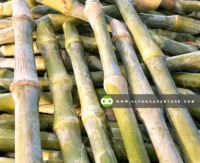
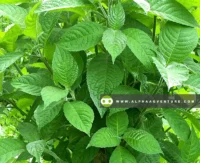
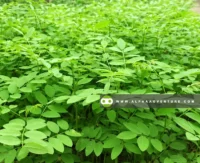
Transitioning to the Dry Season
By late October, as the rains weaken, I start preparing for the dry season. I check silage pits and hay storage to confirm feed reserves are secure. I also trim weeds and maintain irrigation ditches to retain moisture and improve the next forage cycle.
This transition period is also when I schedule health checks, record weight gains, and plan breeding. Early preparation ensures that feed shortages and animal stress are avoided during the dry months ahead.
Managing During the Dry Season
During the dry season, which usually runs from November to April, grass growth slows noticeably. To protect forage stands, I maintain the six paddocks, each about 0.4 to 0.5 hectare, but I adjust my system by combining limited grazing with stored feed. I move animals every three days so no paddock gets overgrazed, then let each rest for several weeks. While forage regrowth lags, I rely on fermented corn silage stored in drums and bags to sustain their condition and preserve vegetation cover.
This is also the ideal time for farm repairs and structural upkeep. I mend fences, disinfect pens, and inspect watering systems while the ground remains dry.
Month-by-Month Rhythm
Every month follows a pattern that complements animal cycles and forage growth.
- May to July: Forage planting and pasture recovery.
- August to September: Forage harvest and silage preparation.
- October: Feed storage and breeding checks.
- November to March: Dry-season feeding and maintenance.
- April: Paddock repairs and forage restocking.
By following this seasonal rhythm, a 3-hectare system can stay productive and self-sustaining. The goal is to maintain more than 80 percent feed self-sufficiency while preserving soil fertility and keeping the animals in optimal condition year-round.
Natural Disasters and Weather Extremes
I always start by identifying risks that could cripple farm operations. In the Philippines, the most frequent threats are typhoons, droughts, and flooding. A single typhoon can flatten fences, destroy forage, and injure livestock. To prepare, I plan for windbreaks, drainage channels, and elevated shelters. I also store feed reserves in waterproof containers. This way, even if transportation routes close, animals can still eat and drink safely for at least two weeks.
Disease Outbreak Preparedness
Disease outbreaks pose an invisible but equally devastating threat. I follow the Department of Agriculture–Bureau of Animal Industry (DA-BAI, 2020) livestock emergency response protocols. I keep records of vaccinations, deworming, and veterinary checkups. If any animal shows symptoms like fever, nasal discharge, or loss of appetite, I isolate it immediately. I also disinfect pens, feeding troughs, and tools to prevent spread. Regular sanitation remains my first line of defense against bacterial and viral infections.
Quarantine and Biosecurity Protocols
I implement strict movement control for both people and animals. Caretakers enter through a footbath containing disinfectant, and I provide clean boots for them. New or returning livestock undergo a 14-day quarantine before mixing with the herd. I also ask my caretakers to monitor sources of farm materials, such as rice straw and hay, to ensure they come from disease-free areas. Maintaining these biosecurity layers may seem tedious, but they reduce the chance of costly outbreaks that could wipe out years of work.
Market and Feed Price Fluctuations
Even without disasters or disease, market conditions can change overnight. Feed costs may rise, or buyers may reduce liveweight prices. To stay resilient, I grow part of my own forage and silage materials. I also establish multiple market links instead of relying on a single trader. By diversifying both supply and demand channels, I cushion the impact of sudden economic shifts that often catch smallholders unprepared.
Emergency Response Planning
I keep an emergency checklist for every possible scenario. For natural disasters, I prepare evacuation routes and safe pens. For disease events, I stock disinfectants and coordinate with local veterinarians. For market disruptions, I analyze cash flow to cover feed and labor for at least three months. Planning does not eliminate risk, but it minimizes downtime and prevents panic decisions during a crisis.
Long-Term Resilience
I treat risk management as a continuous process, not a one-time task. Each season, I advise my client to review what worked and what failed. Recording rainfall patterns, animal health trends, and forage performance helps refine strategies. The goal is to keep the 3-hectare livestock operation resilient and profitable, regardless of natural disasters, disease outbreaks, or market fluctuations.
Decision Matrix and Final Recommendation Framework
Weighted Scoring System
To help you decide which species to raise on your 3-hectare land, I use a weighted scoring system. I evaluate goats, sheep, and turkeys against five criteria: purchase and maintenance cost, labor requirements, efficacy in grasscutting, profit potential, and carbon emission reduction. Each criterion is assigned a weight depending on your priorities. This approach allows you to compare species objectively, showing which animal aligns best with your operational goals.
Scoring Table
Here is a sample decision matrix. Scores are illustrative and reflect relative performance based on Alpha Agventure Farms’ management practices, research, and published literature. Higher scores indicate better performance per criterion.
| SPECIES | COST (20%) | LABOR (20%) | GRASSCUTTING EFFICACY (20%) | PROFIT POTENTIAL | CARBON IMPACT (20%) | TOTAL SCORE |
|---|---|---|---|---|---|---|
| Goat | 16 | 14 | 17 | 16 | 15 | 78 |
| Sheep | 14 | 15 | 16 | 17 | 16 | 78 |
| Turkeys | 15 | 18 | 18 | 14 | 17 | 82 |
This table helps you visualize the trade-offs between species. For example, turkeys rank highest in grasscutting efficiency and carbon impact but slightly lower in profit potential. Goats provide a balance of profit and grasscutting. Sheep may lag in cost efficiency but offer moderate benefits across all criteria.
Interpreting the Matrix
When reading the matrix, consider your priorities. If your primary goal is to maximize carbon reduction and maintain pasture health with minimal labor, turkeys score the highest. If you are focused on steady income while still reducing grass overgrowth, goats offer a strong balance. Sheep provide an intermediate option, especially if you aim for niche markets or breeding stock.
Final Recommendation Framework
Using this weighted framework, I recommend that you integrate multiple species rather than relying on one. For instance, combining goats and turkeys allows you to harness goats’ grazing patterns and turkeys’ insect control and grasscutting abilities. This mixed system enhances carbon reduction, diversifies revenue streams, and spreads labor requirements more evenly across your 3-hectare land.
Aligning Decisions with Your Goals
Ultimately, your choice depends on your operational priorities: grasscutting efficiency, profit, or carbon mitigation. By applying this decision matrix, you can make a well-informed selection that aligns with your objectives. You can also adjust the weights to reflect your personal emphasis on cost, labor, or environmental impact. This framework ensures your decision is structured, transparent, and tailored to your goals while minimizing risks.
Sample 12-Month Implementation Plan
Initial Planning and Setup
When you begin planning for a 3-hectare property, I recommend first mapping the entire area. I suggest dividing the land into six paddocks, each roughly 0.4 to 0.5 hectare. This size provides flexibility for rotational grazing while ensuring each paddock gets sufficient rest. You should also identify areas for feed storage, water points, and shelter for goats, sheep, and turkeys. Proper layout upfront reduces labor and improves animal welfare.
Starter Herd Size
For a mixed-species system, I recommend starting with 15 to 20 hybrid goats, 10 to 12 sheep, and around 100 turkeys. This number allows you to manage grazing efficiently and observe animal behavior without overwhelming resources. It also provides enough animals for natural grasscutting and testing feed requirements. Adjust the initial herd based on your labor availability and budget constraints.
Budget Considerations
Your initial budget will cover animals, fencing, water infrastructure, feed storage, and shelter construction. I advise allocating at least 50% of the budget to high-quality starter animals. Another 20% should go to fencing and paddock setup. The remaining 30% covers feed reserves, equipment, and contingency funds. Proper allocation ensures that the herd grows healthily while maintaining sustainability throughout the first year.
Rotational Grazing Plan
I design rotation schedules around forage growth rates and parasite management. Move goats and sheep every three days to avoid overgrazing and minimize parasite exposure. Turkeys are rotated similarly but can range more widely within the paddock. During the dry season, I supplement goats and sheep with fermented corn silage to maintain condition while paddocks rest. I recommend using Alpha Agventure Farms’ corn silage, which I have formulated to be nutrient-dense and palatable, ensuring animals stay healthy even when pasture is limited.
Monthly Tasks
In the first month, focus on fencing, shelters, and sourcing starter animals. Months two to three involve establishing water points and introducing the herd gradually. From months four to six, observe grazing patterns, adjust rotation, and monitor health indicators. Months seven to nine include supplemental feeding adjustments and parasite control measures. In the last quarter, assess growth, harvest surplus, and plan for expansion or sales.
Monitoring and Record-Keeping
I maintain detailed records of animal weight, forage availability, feed consumption, and pasture condition. Monthly monitoring helps anticipate problems such as disease outbreaks, feed shortages, or pasture degradation. Tracking performance allows you to make timely decisions, adjust rotation schedules, and optimize productivity. Consistent documentation is critical for ensuring long-term success on a 3-hectare livestock operation.
To help you implement this plan successfully, I offer on-site technical training for you and your farm caretakers. Through hands-on consultancy, I demonstrate grazing management, feed preparation, and animal care techniques, ensuring your 3-hectare operation runs efficiently and sustainably.
Flexibility and Contingencies
Unexpected events, such as heavy rains or drought, require immediate adjustments. I recommend keeping additional feed reserves and flexible paddock access. If market conditions shift, having a contingency plan for selling surplus animals or adjusting rotation helps mitigate losses. Preparing for uncertainties ensures that your farm remains productive and that animals maintain good welfare standards throughout the year.
This 12-month implementation plan provides a practical, month-by-month roadmap for establishing a mixed-species grazing system on a 3-hectare property. It balances animal welfare, pasture management, and profitability while aligning with sustainable and climate-smart practices.
Partnering for Your 3-Hectare Grasscutting Success
Now that we have explored every aspect of raising goats, sheep, and turkeys for natural grasscutting, it is clear that a thoughtful plan, proper rotations, and sustainable management are key to success. If you want your 3-hectare land to not only stay productive but also generate income and reduce carbon emissions, I can provide the livestock, technical guidance, and hands-on training you need. Together, we can turn your pasture into a profitable, environmentally friendly operation. You can contact me through the CONTACT page of this website.
References
- Abegaz, S., Negesse, T., & Alemu, Y. (2019). Dry matter intake in small ruminants: A review. Journal of Animal Science Advances, 9(3), 132–145.
- Alpha Agventure Farms. (2024). How I Offset 5 Tons of Carbon Per Year Using Turkeys as Natural Grass Cutters.
- Alpha Agventure Farms. (2025). Internal livestock price records: goat, sheep, and turkey breeder sales.
- Bureau of Animal Industry (BAI). (2019). Meat inspection code of the Philippines. Quezon City: BAI.
- Calpe, C. (2019). Philippine native poultry production. Quezon City: Department of Agriculture.
- Caton, J. S., & Dhuyvetter, D. V. (1997). Influence of energy supplementation on grazing ruminants: Requirements and responses. Journal of Animal Science, 75(2), 533–542. https://doi.org/10.2527/1997.752533x
- Costales, A. (2014). Goat meat market in the Philippines. Philippine Journal of Veterinary and Animal Sciences.
- Department of Agriculture. (2021). Philippine Climate-Smart Agriculture Roadmap 2021–2030.
- Department of Agriculture. (2022). Philippine livestock industry performance. Quezon City, Philippines.
- Department of Agriculture. (2023). Philippine Small Ruminants Industry Roadmap.
- Department of Agriculture. (2023). Philippine Poultry Layer Industry Roadmap.
- Department of Agriculture – Bureau of Agricultural Research. (2018). Livestock housing systems in the Philippines. Quezon City, Philippines: DA-BAR.
- Devendra, C. (2007). Small ruminants in Asia: Contribution to food security, poverty alleviation and opportunities for productivity enhancement. Asian-Australasian Journal of Animal Sciences, 20(1), 1–16. https://doi.org/10.5713/ajas.2007.1
- Devendra, C. (2012). Goat and sheep production in smallholder systems: Importance, opportunities and constraints. Agricultural Systems, 108, 119–125. https://doi.org/10.1016/j.agsy.2012.03.010
- Escobar, E. N. (2004). Goat production in the Philippines. Los Baños, Laguna: University of the Philippines Los Baños.
- Food and Agriculture Organization (FAO). (2019). Profitability of small ruminant production.
- Food and Agriculture Organization of the United Nations. (2013). Tackling climate change through livestock: A global assessment of emissions and mitigation opportunities.
- Food and Agriculture Organization of the United Nations. (2021). Tackling climate change through livestock: A global assessment of emissions and mitigation opportunities. Rome: FAO.
- Gomez, T., Rola, A. C., & Francisco, H. A. (2018). Grazing management in Philippine uplands. Los Baños, Laguna: Philippine Institute for Development Studies.
- Hart, S. P. (2001). Goat nutrition and foraging behavior. Langston University, Agricultural Research and Extension Program.
- Hoste, H., Torres-Acosta, J. F. J., Aguilar-Caballero, A. J., et al. (2010). Mixed grazing and the control of gastrointestinal nematodes in ruminants. Veterinary Parasitology, 171(1–2), 1–14.
- OIE. (2019). Animal welfare standards. World Organisation for Animal Health.
- Owen, J. B., & Jayasuriya, M. C. N. (1989). Use of crop residues as animal feeds in developing countries. Rome: FAO.
- Philippine Animal Welfare Act (RA 8485, amended RA 10631).
- Philippine Council for Agriculture, Aquatic and Natural Resources Research and Development. (2020). Pasture management practices. Los Baños, Laguna: PCAARRD-DOST.
- Philippine Statistics Authority (PSA). (2022). Agricultural commodity prices. Quezon City: PSA.
- Philippine Statistics Authority (PSA). (2025). Agricultural commodity prices.
- Teague, R., & Barnes, M. (2017). Grazing management that regenerates ecosystem function. Rangelands, 39(2), 28–35. https://doi.org/10.1016/j.rala.2017.04.002
- Wilson, R. T. (1989). Reproductive performance of goats and sheep in the tropics. ILCA Bulletin.
Jaycee de Guzman is the owner of Alpha Agventure Farms, where he develops practical livestock production systems, agricultural marketing strategies, and farm business models. He writes regularly about livestock development, agricultural entrepreneurship, and public policy affecting Philippine agriculture.