

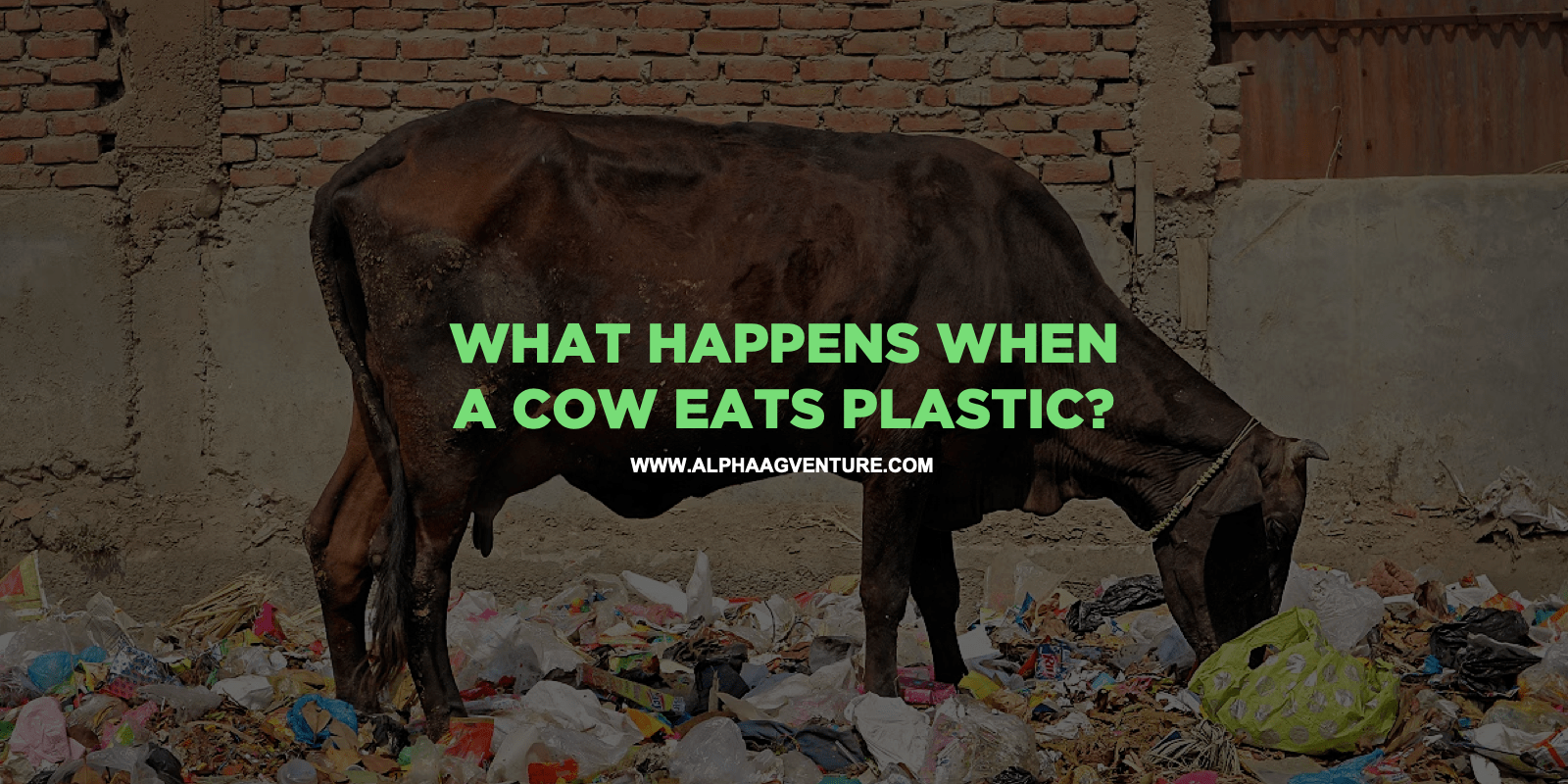
I Thought It Was Just Constipation
The first time I saw one of my cows passing dry, pellet-like manure for days, I didn’t panic. I thought, “Maybe it’s the heat.” I gave her more water. I adjusted her feed. I even mixed in some molasses, hoping to get things moving. But nothing changed. That cow stopped eating, started losing weight, and looked more uncomfortable each day. What I didn’t know then was that the real problem was something I couldn’t see—plastic inside her rumen.
Cattle aren’t picky eaters. If it smells like food—even just a little—they’ll eat it. And in a world where plastic is everywhere, that means our cows are quietly swallowing trouble. It’s a problem I’ve come to know well, not just as a livestock raiser, but as someone who has made mistakes and learned the hard way.
This article isn’t just about the science of rumen impaction. It’s about what really happens when a cow eats plastic, how you can spot it before it’s too late, and what you can do when surgery isn’t an option. I’ll also share how I’ve changed the way I run my farm to prevent this from happening again—and why I think you should, too.
If you’ve ever wondered why your cow’s appetite suddenly dropped… why its manure became hard and dry… or why one of your healthiest animals suddenly lost weight for no clear reason—this is for you.
How Does a Cow’s Stomach Actually Work?
I remember the first time I learned that cows have four stomach compartments. I thought it was just an interesting trivia—until I saw what could go wrong inside those compartments. Understanding how a cow digests its food is the first step in understanding why something as simple as plastic can be so dangerous.
Let me walk you through the basics the way I wish someone had explained it to me when I was just starting out.
Cattle are ruminants. That means they rely on fermentation to digest grass, hay, and other fibrous feeds. Unlike humans, their stomach has four separate compartments, and each one has its own job:
- Rumen – This is the largest part. Think of it as a massive fermentation chamber. It’s full of bacteria, fungi, and protozoa—tiny organisms that break down roughage into usable nutrients.
- Reticulum – This one’s shaped like a pouch with a honeycomb lining. It catches and traps heavy or foreign materials—like nails, stones, or plastic. Unfortunately, plastic loves to settle here.
- Omasum – This compartment squeezes out water and filters the digested material into finer particles.
- Abomasum – This is the “true” stomach where enzymes break down whatever nutrients are left before absorption.
If you’re one of those who attended or registered to my Goat Farming Seminar, you know I already explained these compartments in detail in Module 1. These four compartments are the same for all ruminants – big or small. Together, they form a highly efficient system for breaking down tough plant materials. But here’s the catch—none of these compartments are designed to deal with plastic.
If a cow eats grass, it gets broken down by microbes in the rumen and eventually passes through the rest of the digestive tract. If a cow eats plastic, it just sits there. It doesn’t dissolve. It doesn’t pass. It doesn’t ferment. It clogs.
And here’s where the problem begins.
Plastic usually ends up stuck in the reticulum or rumen, where it starts to interfere with the natural movement of digested materials. It can clump together and even get tangled with fiber, hay, or feed particles. Over time, this leads to rumen impaction—a dangerous condition where the cow can no longer digest or move material properly through its stomach.
According to Van Soest (1994), the rumen must maintain a constant flow of digested material and gas. Anything that blocks this flow—like plastic—slows everything down, damages fermentation, and can compromise nutrient absorption.
One of the biggest misconceptions I hear from new farmers is: “My cow wouldn’t eat garbage.” But let me be honest: if it smells like food, a cow will eat it. It’s that simple.
Plastic feed sacks, leftover wrappers, grocery bags—if there’s even a hint of molasses, rice bran, or feed dust on it, the cow will chew and swallow it like it’s lunch. And since cows are bulk eaters, they don’t nibble around. They grab big mouthfuls and gulp.
This isn’t just theory. Ayele et al. (2017) found that 31% of slaughtered cattle in a single municipal abattoir had plastic in their stomachs. That’s nearly one out of three animals.
And while we may not have hard data for rural towns in the Philippines, I’ve personally seen cases where plastic was removed during surgery—and it was enough to fill a rice sack.
I’ve made the mistake of thinking, “It’s just one wrapper.” But once plastic is inside the rumen, it stays there—day after day, week after week. And as it accumulates, it starts to cause problems: poor appetite, hard feces, reduced milk output, poor growth, and eventually, bloating or toxemia.
This is why understanding the cow’s digestive system isn’t just a matter of biology—it’s a matter of prevention.
We can’t solve what we don’t understand. And when it comes to plastic ingestion, prevention is a hundred times easier than treatment.
What Happens After a Cow Swallows Plastic?
The first time I saw a cow pass nothing but hard, dry feces for several days straight, I assumed it was a simple case of constipation. I gave it more water, more fiber, even a little salt. But nothing improved. What I didn’t know then was that inside that cow’s rumen, plastic had started to build up—and no amount of laxatives was going to push it out.
Once a cow swallows plastic, the trouble begins almost immediately—but silently. At first, there are no signs. The cow eats as usual. It chews the cud. It walks around normally. That’s why plastic ingestion is dangerous: the symptoms show up late, and by the time they do, the damage is already happening deep inside.
Plastic usually settles in the reticulum or the lower part of the rumen. This area, as I mentioned above, is where foreign materials tend to collect. Because plastic doesn’t dissolve, ferment, or pass easily, it simply stays lodged there—sometimes folded, sometimes twisted, sometimes compacted into balls. Over time, as more plastic accumulates, the flow of digested material slows down.
What follows is called rumen impaction, a condition where the rumen becomes abnormally full of indigestible substances. In a normal, healthy rumen, the digesta moves rhythmically—fermentation happens, gas is produced, the cow eructates (belches), and waste moves on. But in an impacted rumen, the motility decreases. Microbial fermentation is disrupted. Gas accumulates. And the cow begins to show signs: reduced appetite, poor rumination, hard or scanty feces, and sometimes bloating.
In more severe cases, the cow may stop eating entirely, stand apart from the herd, and show signs of discomfort—arched back, groaning, or straining during defecation. If left untreated, impaction can lead to toxemia, dehydration, weight loss, and eventually death.
Tesfaye et al. (2012) reported that plastic ingestion can cause secondary complications, including damage to the rumen lining, overgrowth of harmful bacteria, and systemic infection due to toxins entering the bloodstream. These aren’t just theoretical risks. I’ve personally lost one animal to rumen impaction that wasn’t diagnosed in time.
What makes this even more frustrating is that cows have no way of getting rid of plastic once it’s in their stomach. Unlike wire or nails that may be trapped and cause “hardware disease,” plastic tends to lie flat, making it difficult even for veterinarians to detect through palpation. Some plastics may be partially passed if they are small and flexible, but most will remain for months—or years—without surgical intervention.
Mwololo et al. (2020) found that even cows that appear clinically normal may have significant amounts of plastic in their rumen. In their study of slaughterhouse cattle, several had over a kilogram of plastic removed post-mortem, with no clear symptoms observed while the animals were alive. This shows how deceptive and hidden this problem can be.
Once plastic starts affecting digestion, the long-term consequences go beyond just constipation. The cow’s feed conversion drops. Growth slows. Milk production declines. Breeding efficiency suffers. It becomes a cascading problem—not just for the animal, but for your entire operation.
So what actually happens after a cow eats plastic? Nothing—at first. And that’s the most dangerous part. The problem builds slowly, day by day, until one morning you’re staring at an animal that looks bloated, weak, and uninterested in feed—and wondering how it got this bad.
I now treat every case of hard feces and slow digestion as a red flag. Because once plastic becomes part of the story, there’s no easy way out.
How I Learned to Spot the Warning Signs
It took me a while to connect the dots. In the early years of my cattle farming journey, I lost time—and money—because I didn’t know what to look for. I’d see a cow off-feed and think, “Maybe the grass was too dry.” I’d see firm manure and assume it was dehydration. But one case changed everything for me.
I had this three-year-old female that started passing unusually dry, compacted dung. At first, I blamed the feed. I switched to softer forage, increased water, even added molasses. But she didn’t improve. In fact, she started eating less and spent more time lying down. That’s when I started documenting everything—the timing of feeding, water intake, the look and smell of the feces, and her behavior. I wish I had done that from the beginning.
Here’s what I learned through experience and from field vets: cows that have ingested plastic often show slow-onset, subtle signs. And the earlier you catch them, the better the outcome. In my experience, these are the red flags you should never ignore:
First, there’s the feces. Cows passing hard, pebble-like dung repeatedly over several days without any changes in diet are sending you a message. This isn’t just dehydration—it’s likely a sign that digestive flow is impaired. In one case, I even found thin streaks of mucus in the feces, which my vet said indicated strain on the large intestine, possibly due to back-pressure from an impacted rumen.
Then, there’s rumination. I’ve found that a cow chewing her cud less frequently than normal is a quiet but serious warning. Rumination is a sign that fermentation is happening well in the rumen. If a cow stops chewing cud for long stretches of time, something is interfering with that process—and plastic might be the culprit.
Another sign I watch for is a drop in appetite without fever. When a cow suddenly eats half of what she normally would, yet shows no signs of infection (no fever, normal respiratory rate, no nasal discharge), I start thinking rumen problem. More than once, that pattern led me to discover foreign body impaction.
You might also notice poor coat quality—dull, rough, or patchy hair. This is a secondary symptom. When fermentation is compromised, vitamin production—especially B-vitamins—suffers. The coat tells you more than you think.
But here’s the trickiest part: some cows hide their symptoms well. Mwololo et al. (2020) showed that several cows with significant ruminal plastic impaction appeared clinically normal at slaughter. That’s why I now treat behavioral changes with suspicion. If a usually active cow starts hanging back, isolating herself from the group, or stands still for too long after urinating or defecating, I take a closer look.
It’s easy to miss these signs when you’re busy with other tasks. But I’ve trained myself to slow down when I check my cattle. I no longer just count them—I study them. I walk behind and watch how they defecate. I note which ones take longer to chew cud. I check the dung with a stick—not fun, but necessary. These observations have saved more than one animal on my farm.
I’ve also learned to ask my caretakers more detailed questions. “Who didn’t finish their feed today?” “Did anyone spit up cud?” “Was anyone bloated this morning?” You’d be surprised how much useful information you get by asking the right questions.
So how did I learn to spot the warning signs? By missing them first. But now, every change in behavior, every abnormal dung pile, and every skipped meal triggers a checklist in my mind. Because once you’ve seen what plastic can do inside a cow, you’ll never ignore a subtle symptom again.
What Your Vet Can (and Can’t) Do About It
The first time I asked a veterinarian to examine a cow I suspected had eaten plastic, I was hoping for a quick fix—maybe a bolus, maybe some fluids, and we’d be back to normal in a few days. What I got instead was a long silence, followed by the words: “We can’t treat what we can’t see.”
That moment stuck with me. It taught me that while veterinarians are essential partners, they also work with limitations—especially in rural settings where diagnostic tools are scarce.
Let me walk you through what your vet can realistically do when faced with a cow that may have ingested plastic.
In most cases, the vet starts with a physical examination. That includes listening to the rumen’s motility (how often it contracts), checking for signs of bloating, measuring the cow’s temperature, and assessing the consistency of the manure. They may also perform a rectal palpation—inserting an arm through the rectum to feel for distension or abnormal pressure.
Sometimes, this gives clues. For example, a distended rumen with reduced motility is a strong indicator that something is obstructing fermentation. However, plastic is notoriously difficult to detect this way. Unlike metal or bone, it doesn’t have a defined texture. It folds. It hides. It adapts to the shape of the rumen contents.
In well-equipped urban clinics or universities, a vet might recommend ultrasound or X-ray imaging. But let’s be honest: how many of us have access to that out in the barangay? Even if portable ultrasound is available, plastic doesn’t always show up clearly. It lacks density. That’s why many cases remain uncertain until either recovery or death reveals the cause.
In severe cases—especially when the animal is bloated, off-feed, and deteriorating fast—the vet might recommend a rumenotomy. This is a surgical procedure that involves opening the cow’s left side and removing the rumen contents manually. It’s messy, labor-intensive, and not always successful, especially if the cow is already systemically compromised. But I’ve seen it save lives.
One of the heifers of my client underwent a rumenotomy after refusing to eat for five days and showing signs of dehydration and toxemia. When we opened her up, we pulled out almost half a sack of balled-up plastic feed wrappers. It was horrifying to see how much plastic a cow could eat without any outward signs—until it was almost too late.
That experience made me realize two things. First: surgical intervention is the last resort, not the first. Second: prevention is always cheaper than surgery, both in pesos and in pain.
Hailat et al. (1996) noted that in many rumenotomy cases, death still occurs if plastic has already caused systemic damage like rumen wall necrosis or bacterial translocation into the bloodstream. That’s why timing is everything. If your vet says the window for surgery has passed, believe them.
So what can your vet do? A lot—but not miracles. They can guide you in observation, suggest supportive therapy, recommend diet adjustments, and perform surgery if needed. But they can’t reverse what months of accumulated plastic have already done. That part is up to us.
I now call my vet early—when signs are still subtle—because waiting too long only makes their job harder. I also don’t expect confirmation of plastic ingestion unless we go into surgery. That way, I’m not chasing a diagnosis that may never come from palpation or fecal exams alone.
The vet’s role is crucial, but so is ours as farmers. We’re the ones who see the cows every day. We’re the ones who can act before it’s too late. And when it comes to plastic, early suspicion is the best treatment.
How I Keep My Cattle from Eating Plastic
After everything I’ve experienced—and lost—I no longer treat plastic as a minor nuisance on the farm. I treat it like a toxin. Because once it gets inside a cow, there’s no natural way out. That’s why prevention isn’t just part of my daily routine anymore—it’s the backbone of how I manage my herd.
I used to think a clean feeding area was enough. But it turns out, cattle can find plastic in the most unexpected places. One morning I found a bull calf chewing on a piece of candy wrapper that had flown in from the roadside. Another time, an old feed sack that had been repurposed as shade cloth got torn by the wind and eaten. That’s when I realized plastic is everywhere—and I had to change the way I managed my entire environment.
Now, the first line of defense is environmental control. I walk the grazing area every few days, especially after a storm or strong winds, to check for plastic debris. I no longer allow garbage pits near the cattle pens, and any plastic waste—feed bags, wrappers, twine—is stored in sealed drums until it’s properly disposed of. If it can be chewed, it’s a risk.
I’ve also changed how we handle feeding materials. Forage is never served on the ground anymore. We use elevated troughs or bamboo platforms to prevent mixing feed with soil, garbage, or leftover packaging. All feed sacks are inspected before being emptied to ensure no bits of plastic liner remain inside. Even the ropes used to tie sacks are kept out of reach—because I’ve seen cows chew through them, too.
Caretaker training has become a non-negotiable part of our system. Everyone who works with the cattle learns the same rule: no plastic near livestock. I even created a checklist posted in our feed storage area—reminders like “Cut open sacks away from pens” and “Collect all wrappers immediately after feeding.”
I also noticed something interesting over time—cows get bored. And boredom leads to chewing. That’s why I started including rough, fibrous material like rice straw or corn stalks in between feedings. Even if it’s not highly nutritious, it gives them something to chew and digest safely. This reduces the risk of “exploratory chewing” on foreign objects.
Another layer of prevention is consistent roughage availability. A cow with an empty rumen will eat whatever is available, even if it’s inedible. By ensuring constant access to hay, grass, or corn silage—even in small amounts—I lower the chances of them turning to plastic out of hunger.
Ayele et al. (2017) emphasized that most plastic ingestion incidents occur during feed shortages or droughts, when cattle are hungrier and more desperate. I’ve seen that happen here during the dry season. That’s why I now stockpile roughage and dry feed ahead of time.
There’s also the matter of feed additives. I now use certain fiber boosters or rumen stimulants when cows show early signs of slowed digestion. While these won’t remove plastic, they help maintain healthy motility and microbial balance. Think of them as a defense mechanism against minor disruption—because once the rumen slows down, everything else follows.
All of this takes effort, but I’ve seen the results: fewer cases of constipation, better feed intake, improved energy, and—most important—no plastic-related deaths in the last two years. That kind of peace of mind is worth every extra hour of inspection and every peso spent on better handling.
There’s no silver bullet for this issue. But by changing how I manage my farm—from how we feed to how we handle waste—I’ve reduced plastic risk to nearly zero. That’s not luck. That’s prevention.
What I Do When Surgery Isn’t an Option
Not every cattle farmer has access to a veterinarian who can perform surgery. I certainly didn’t, especially in the early days. The first time a vet told me that a rumenotomy would cost more than half the value of my cow—and that I had to bring the animal to a facility two towns away—I realized I had to prepare for situations where surgery just wasn’t an option.
It’s a painful reality, but it’s one many small-scale farmers like us face. So what do you do when you suspect plastic impaction but can’t afford, access, or justify surgery?
When surgery isn’t possible, my first move is supportive care. I don’t try to force out the plastic—that’s almost never effective. Instead, I work to support the rumen’s natural function, even if that function is limited. The goal is to keep the cow comfortable, hydrated, and eating as much safe fiber as possible.
I start with palatable, high-fiber feed. I avoid overly rich feeds like concentrates and give plenty of grass, rice straw, or chopped corn stalks. These help stimulate chewing and salivation, which in turn support rumen motility. Even if the cow doesn’t eat much, the act of chewing keeps the digestive system active.
Next, I use rumen stimulants or probiotics. These aren’t miracle cures, but they can help maintain the microbial balance in the rumen. I usually dissolve commercial rumen powder in lukewarm water and drench the cow once or twice a day for several days. It helps re-establish fermentation activity, especially if the cow has stopped chewing cud.
In cases where the cow is showing signs of discomfort—arched back, straining, minimal dung output—I use liquid paraffin or vegetable oil as a lubricant. This is only done under advice from my vet. Administered slowly through a drenching bottle, it may help lubricate the intestines and ease the movement of partially digested material. But let me be clear: this doesn’t move plastic. It just reduces secondary complications like dry feces or intestinal backup.
I also focus on hydration. Cows dealing with impaction often reduce their water intake. I offer electrolyte solutions to help restore balance, especially during hot days. Sometimes I use a mix of molasses and salt in water to encourage drinking. If necessary, I ask the vet to administer fluids subcutaneously or intravenously—particularly if the cow is visibly dehydrated.
During these interventions, I keep a close eye on three things: appetite, cud chewing, and manure quality. If I see even a small improvement—say, softer dung or a return to chewing cud—I take that as a sign that the digestive system is coping. If there’s no change after 3 to 4 days, I reassess with the vet.
Unfortunately, there are cases where nothing works. I had a client who lost cows despite doing everything right. Tesfaye et al. (2012) documented that in many cases of advanced rumen impaction, even aggressive medical intervention fails if systemic damage has already occurred. I’ve learned to accept this. It’s a hard truth, but it reminds me why prevention is still the best strategy.
In one unforgettable case, I had a client with an old cow named Rosario. She had been off-feed for a week, passed only dry pellets, and refused water. The nearest surgical facility was 40 kilometers away. We tried everything—hydration, drenches, massage, even acupressure—but nothing worked. She passed away quietly in the night. When we opened her rumen the next morning, we found more than two kilograms of tangled plastic packaging. It was heartbreaking.
Rosario’s case taught me something else: when surgery isn’t possible, you need a plan, a system, and a clear understanding of when to keep trying and when to let go. Every farmer needs to build that judgment over time. And it starts with knowing what’s within your control.
So when surgery isn’t an option, I don’t panic. I fall back on the basics—hydration, fiber, movement, and microbial support. Sometimes it works. Sometimes it doesn’t. But what matters is that I act early, observe closely, and learn something every single time.
The Bigger Problem: Waste, Grazing, and Responsibility
At first, I thought cows eating plastic was just a farm-level problem—a result of careless handling or a messy feed shed. But the deeper I got into cattle raising, the more I saw the bigger picture. This isn’t just about my cattle, or your cattle. It’s about the way our communities, towns, and barangays manage waste. And unfortunately, it’s something we’ve all ignored for too long.
Many of us let our cows graze along roadsides, riverbanks, or empty lots. It’s practical. Grass is free, the space is open, and it stretches our limited feed resources. But let’s be honest—those same areas are often littered with plastic. Biscuit wrappers. Cellophane. Junk food packaging. Feed sack scraps. Cows don’t care. If it smells like food, they’ll eat it.
I once followed a neighbor’s steer that had wandered off to graze along the barangay road. Within 10 minutes, it had swallowed part of a junk food bag and two pieces of rice packaging. And nobody even noticed.
The problem isn’t just what’s lying around—it’s how we manage what we throw away. Feed sacks are often reused as shade, trash bags, floor mats, even roofing. When they tear or fray, bits of plastic fall into the soil. Over time, grazing animals come across these fragments and ingest them without us knowing.
According to Ayele et al. (2017), most plastic ingestion in cattle is linked to poor municipal waste handling and indiscriminate disposal of household garbage. And the Philippines is no exception. In fact, a report by Jambeck et al. (2015) ranked the country as one of the top contributors to plastic waste leakage into the environment—much of which ends up in the countryside.
We have to stop pretending this isn’t our responsibility. Yes, our cows are affected. But we are the ones who decide where they graze. We are the ones who leave used plastic sacks in the corner of the pen or let wrappers pile up near the fence. Every piece of plastic that reaches the field is a potential killer.
I’ve made it a point now to speak with neighbors and fellow farmers about local waste control. I’ve offered old drums for garbage collection.
It’s a slow change. Sometimes people laugh or shrug. But sometimes, they help. And when they do, I know that one less cow might suffer from something so preventable.
The fight against plastic ingestion in cattle is not just veterinary—it’s social, environmental, and behavioral. If we want healthy herds, we have to fix more than just our feed sheds. We have to fix our habits.
So yes, I’ve changed how I manage waste on my farm. But I’ve also taken it upon myself to raise awareness beyond my own fences. Because even the cleanest farm can’t protect its cattle if the community around it is drowning in plastic.
What This Has Taught Me About Being a Farmer
I never thought I’d spend this much time thinking about plastic. When I started raising cattle, I focused on feed formulations, parasite control, breeding plans, and weight gain targets. But over the years, I’ve learned that being a farmer isn’t just about production—it’s about responsibility. And nothing taught me that more clearly than losing an animal to something as stupidly preventable as plastic.
When I first encountered the problem, I thought it was an isolated case—a fluke. But the more I listened to other small-scale farmers, the more I realized it wasn’t. We were all dealing with it. Silent symptoms. Constipated cows. Hard feces. Sudden losses. And most of us didn’t talk about it because we didn’t know how, or we didn’t want to admit we had let our guard down.
I’ve learned that part of being a responsible farmer is learning to see things before they become problems. A rumen isn’t just a digestive chamber—it’s the heart of the animal’s entire productivity. If we compromise that, we compromise everything: growth, fertility, milk, immunity, and even the animal’s will to live.
Plastic is quiet. It doesn’t act like a poison. It doesn’t cause fevers. It doesn’t scream for attention. It just sits there. That’s what makes it so dangerous. And that’s why I now take small warning signs seriously: a missed meal, a dry manure pile, a cow standing too still in the corner.
I’ve also realized that what we leave lying around matters. That feed sack you toss behind the pen, that plastic string you didn’t pick up —they all count. I now think of plastic like a trap. If I leave it out, one of my animals might walk into it.
But this experience didn’t just teach me about cattle—it taught me about myself. About my habits. About how easily we justify inaction when the consequences aren’t immediate. I used to tell myself, “It’s just a wrapper,” or “I’ll clean that up later.” Not anymore. Not after seeing a cow suffer for something I could have prevented.
It’s also taught me that farming is about constant observation. I no longer just feed and water my animals. I read them. I watch their eyes, their manure, their breathing, their posture. I don’t just look at them—I try to understand what they’re not saying.
And more than anything, I’ve learned that being a farmer means taking responsibility not just for what goes into your animals, but for what’s around them too. You can give the best feeds and supplements in the world, but if there’s plastic in the pasture, you’re still putting them at risk.
So what has all this taught me about being a farmer?
That it’s not enough to raise livestock. We have to raise our standards.
References
- Ayele, A., Alemu, D., Sisay, T., & Bekele, M. (2017). Prevalence of indigestible foreign bodies in rumen and reticulum of ruminants slaughtered at Jimma Municipal Abattoir, Ethiopia. Journal of Veterinary Science & Technology, 8(2), 429. https://doi.org/10.4172/2157-7579.1000429
- Hailat, N. Q., Nouh, S. M., Lafi, S. Q., Al-Darraji, A. M., Al-Ani, F. K., & Al-Qudah, K. M. (1996). Prevalence and pathology of foreign body ingestion in Awassi sheep. Small Ruminant Research, 24(1), 43–48. https://doi.org/10.1016/S0921-4488(96)00993-6
- Jambeck, J. R., Geyer, R., Wilcox, C., Siegler, T. R., Perryman, M., Andrady, A., … & Law, K. L. (2015). Plastic waste inputs from land into the ocean. Science, 347(6223), 768–771. https://doi.org/10.1126/science.1260352
- Mwololo, M., Nguhiu, P., Gathumbi, P., & Kihurani, D. (2020). Foreign bodies in the fore-stomach of slaughtered cattle in Kenya: A pathologic and public health perspective. Veterinary Medicine International, 2020, 1–6. https://doi.org/10.1155/2020/6597452
- Tesfaye, D., Derso, S., & Getachew, T. (2012). Rumen impaction in cattle with indigestible foreign bodies: A case report. Global Veterinaria, 9(3), 349–353.
- Van Soest, P. J. (1994). Nutritional ecology of the ruminant (2nd ed.). Cornell University Press.
Jaycee de Guzman is the owner of Alpha Agventure Farms, where he develops practical livestock production systems, agricultural marketing strategies, and farm business models. He writes regularly about livestock development, agricultural entrepreneurship, and public policy affecting Philippine agriculture.