

An Opportunity to Build Momentum
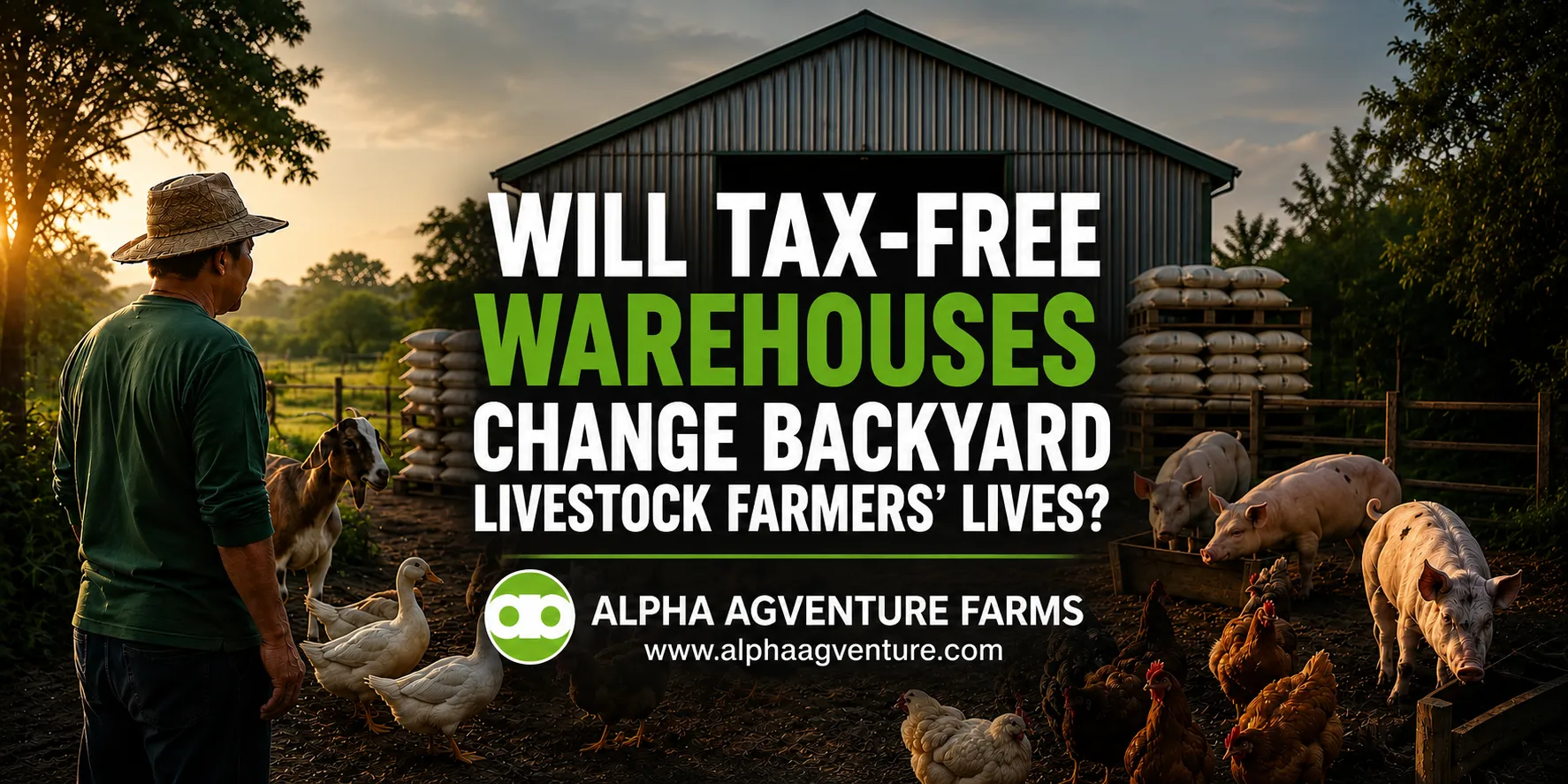
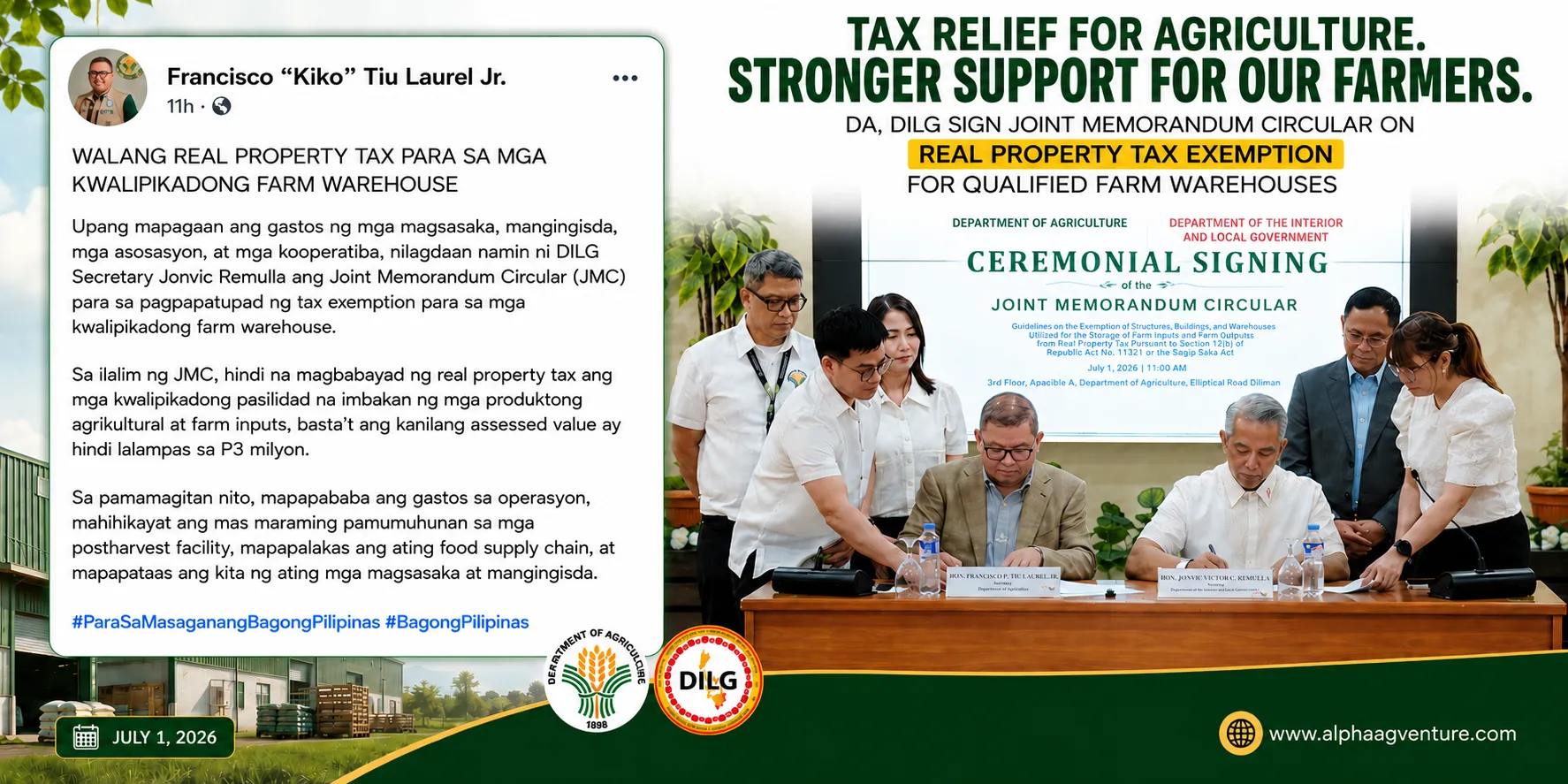
Agriculture Secretary Francisco P. Tiu Laurel Jr. and Department of the Interior and Local Government Secretary Jonvic Remulla recently signed a Joint Memorandum Circular. The measure implements the real property tax exemption for qualified farm warehouses under existing law. I sincerely welcome this initiative because practical reforms deserve recognition whenever meaningful opportunities emerge. Every positive development creates another chance to strengthen Philippine agriculture through thoughtful public policy.
As someone actively involved in backyard livestock farming, I naturally viewed this announcement differently. My first thought was not whether I would eventually own a warehouse. My first question asked whether this reform could eventually improve smallholder livestock farming. That question became the inspiration behind everything I share throughout this opinion piece.
Many backyard livestock raisers may initially conclude this announcement has little relevance for them. Most family farms operate without dedicated warehouses or large postharvest facilities. I believe worthwhile reforms sometimes produce broader opportunities beyond their immediate beneficiaries.
Good public policy often begins with one practical improvement before encouraging another meaningful step. That pattern gives me confidence whenever government introduces reforms that reduce unnecessary agricultural burdens. I prefer viewing every successful initiative as an opportunity to continue meaningful progress instead of treating it as a final destination.
My purpose is not to question the value of this Joint Memorandum Circular. Instead, I hope to explore how today’s momentum can inspire tomorrow’s practical reforms. I believe backyard livestock farmers deserve thoughtful discussions that focus upon realistic opportunities rather than endless complaints. Every section that follows reflects that perspective and the possibilities I believe deserve consideration.
Why This Matters to Backyard Livestock Farmers
Many backyard livestock farmers may initially believe this policy has little relevance for them. Most of us neither own nor expect to build qualified farm warehouses anytime soon. That reaction is completely understandable because we naturally evaluate policies through our own farms. If we receive no immediate benefit, why should this announcement matter to us?
I believe we sometimes overlook how agriculture truly works. A backyard goat raiser may spend every day caring for animals inside the pen because those goats provide the family’s livelihood. Those goats still depend upon quality feeds, veterinary medicines, breeding stock, transport services, processors, traders, and reliable buyers outside the fence. If one supporting part becomes stronger, the entire livestock enterprise also becomes stronger even though nothing changed inside the pen.
That is why I believe agricultural policies should never be judged only by their immediate beneficiaries. Agriculture succeeds because many sectors quietly support one another every single day. Practical reforms that strengthen one important part of the agricultural system can gradually create opportunities for many others throughout the entire value chain. Sometimes the benefits simply take longer before they finally reach backyard livestock farmers.
The most encouraging message I see extends beyond warehouses or tax exemptions themselves. I see a government willing to introduce practical reforms that remove unnecessary costs from agriculture instead of accepting old burdens indefinitely. That gives me optimism because meaningful progress often develops through one practical improvement after another. My hope is that this same willingness to innovate eventually reaches more areas that directly strengthen backyard livestock farmers across the Philippines.
I appreciate the indirect value this reform may eventually create for backyard livestock farmers. I also believe we should continue pursuing reforms that benefit them more directly. If this initiative starts the momentum, what practical reforms should come next for backyard livestock farmers?
Every Livestock Dispersal Program Should Include Continuous Accountability
One practical reform I strongly encourage involves continuous accountability throughout every livestock dispersal program. Too many programs appear complete once beneficiaries receive their assigned animals. Distribution day becomes the milestone everyone celebrates, yet the real challenge begins afterward. I believe every livestock dispersal program should include mandatory, calendared follow-up visits from the very beginning.
Those scheduled visits should serve a genuine purpose rather than satisfy administrative requirements alone. They should never become compliance exercises or planned photo opportunities for accomplishment reports. Program leaders should sincerely want to know whether public investments are producing measurable success. Animal health, breeding performance, productivity, mortality, and overall project progress should receive consistent professional evaluation throughout the monitoring period.
Every visit should also become an opportunity to reinforce good management while correcting preventable mistakes early. Beneficiaries who consistently demonstrate responsible livestock management deserve recognition and greater opportunities through future government programs. Those who struggle should first receive practical guidance, additional coaching, and reasonable opportunities to improve before corrective actions become necessary. The primary objective should always remain successful farmers rather than compliant beneficiaries.
This approach also gives government something equally valuable through reliable field information collected over time. Officials can identify which management practices consistently produce successful livestock enterprises under actual conditions. Future dispersal programs can improve through measurable outcomes instead of isolated success stories or occasional observations. Public funds deserve careful stewardship, and honest evaluation helps ensure every succeeding program becomes better than the last.
For me, the true success of a livestock dispersal program is not the number of animals distributed. It is the number of beneficiaries who eventually become confident, self-sustaining, and profitable backyard livestock farmers. Does your barangay or municipality continue monitoring livestock dispersal beneficiaries after distribution, or does the program usually end once the animals are handed over? Do you agree that continuous accountability could produce better long-term results?
Every Livestock Dispersal Program Should Build the Next Generation of Farmers
Another reform I strongly encourage begins before the Department of Agriculture distributes the first animal. Many of the Department’s livestock dispersal programs require only the qualified parent, who is often the father, to attend mandatory meetings, orientations, and technical briefings. I believe that requirement should change to include at least one able-bodied and age-appropriate son or daughter. From the very beginning, the Department should treat that parent and child as accountable beneficiaries working together throughout the entire program.
I believe this simple change could help address one of Philippine agriculture’s most persistent long-term challenges. The country continues discussing the aging farmer population, yet many programs still focus almost entirely upon today’s farmers. We cannot realistically expect younger generations to replace their parents without meaningful participation and practical responsibility. Livestock dispersal programs already provide the perfect opportunity to begin that transition within every beneficiary household.
Many young Filipinos grew up believing agriculture offers little opportunity for personal or financial success. They watched their parents work tirelessly while enduring difficult economic conditions throughout many years. It should not surprise us when they eventually choose careers outside agriculture. Real participation can gradually replace those long-held perceptions because experience often becomes a more convincing teacher than words alone.
The Department should view every livestock dispersal program as an opportunity to develop two generations instead of one. A son or daughter who regularly attends meetings, receives technical guidance, helps manage daily farm activities, and shares responsibility throughout the program gains practical knowledge that cannot be learned from occasional observation. Even if the parent eventually becomes unable to continue because of age, illness, or other circumstances, the family already has someone prepared to carry the enterprise forward.
I believe every successful livestock dispersal program should produce future farmers together with productive livestock. The Department of Agriculture has invested significant resources through the years to improve the genetics of our livestock, and I fully support that commitment. I simply hope the Department devotes the same intentional effort toward building the next generation of Filipino livestock farmers by mandatorily requiring at least one able-bodied and age-appropriate son or daughter to become an accountable beneficiary alongside the parent throughout the entire livestock dispersal program. Every successful breeding program also deserves a successful succession plan.
Every Livestock Beneficiary Should Master Agricultural Marketing
One knowledge gap continues to stand out whenever I observe many livestock dispersal programs. The Department of Agriculture naturally places strong emphasis upon cultural management because healthy livestock always comes before successful production. Beneficiaries receive valuable instruction covering nutrition, breeding, housing, disease prevention, and general animal care. I believe the Department should give agricultural marketing the same importance because successful production alone does not guarantee profitable farming.
That realization became even clearer while I expanded my own corn silage business. I once asked three corn farmers in our barangay why they never considered selling corn silage despite regularly seeing my operation. Their answer immediately caught my attention. They told me they knew how to grow corn and had enough land, yet they had absolutely no idea how they would ever find buyers for the finished product.
That conversation convinced me the knowledge gap often begins after production successfully ends. Farmers who cannot confidently market their products usually depend upon whoever happens to buy first. That dependence weakens their negotiating position and limits future business opportunities. The Department can help close that gap by treating agricultural marketing as a practical farming skill instead of an optional business topic.
This proposal also strengthens my earlier recommendation involving family succession. Many older farmers understandably have limited experience with modern marketing platforms and digital business tools. Their sons and daughters, however, often possess basic familiarity with social media, online marketplaces, and digital communication because they grew up with those technologies. The Department can take advantage of those complementary strengths by allowing parents to focus on livestock production while younger family members gradually assume greater responsibility for agricultural marketing. That simple partnership can help transform a livestock enterprise into a family business that grows through teamwork rather than individual effort alone.
Financial Stewardship Should Become a Core Livestock Skill
Another important skill I believe deserves equal attention involves basic accounting and financial literacy. The Department of Agriculture already equips beneficiaries with valuable technical knowledge for livestock production. The Department should also help beneficiaries understand the financial side of every livestock enterprise. Sustainable backyard livestock farming depends upon financial discipline as much as successful animal husbandry and agricultural marketing.
One observation continues to concern me whenever I speak with fellow farmers. Many know exactly how much money they received after selling their livestock. Far fewer know how much profit they actually earned after deducting every production expense. The amount they receive often becomes their perceived profit because no financial records exist to show otherwise.
Basic accounting can immediately change that way of thinking. Every beneficiary should learn practical methods for recording expenses, sales, income, and profits using simple recordkeeping systems appropriate for smallholder livestock farmers. Beneficiaries should also understand the difference between gross profit and net profit because those concepts influence every important business decision. Better financial records reveal whether a livestock enterprise truly creates wealth or merely generates cash flow.
Another common practice also deserves careful attention. Many farmers place no financial value upon their own labor because they personally performed the work. Basic accounting recognizes that labor always carries economic value regardless of who performs it. Farmers who overlook their own labor costs often believe they earned more than the enterprise actually produced.
My earlier proposal involving a parent and child tandem also becomes valuable in this area. Many older farmers had limited educational opportunities during their younger years and may understandably feel less comfortable learning even basic accounting concepts later in life. That reality does not reflect a lack of intelligence or willingness to learn. It simply reflects different educational opportunities across generations.
Their sons and daughters, however, often enter adulthood with more recent exposure to mathematics, bookkeeping fundamentals, spreadsheets, and digital tools that simplify everyday financial recordkeeping. The Department of Agriculture can take advantage of those complementary strengths by allowing parents to focus primarily upon livestock management while younger family members gradually assume greater responsibility for financial records, budgeting, and enterprise analysis. That partnership strengthens today’s enterprise while preparing tomorrow’s farm manager.
I also hope the Department of Agriculture considers agricultural marketing and basic accounting as core competencies that deserve their own dedicated training modules. Those subjects should never become brief discussions delivered only for compliance before everyone returns home. After all, what good does it make to raise the healthiest chickens if you do not know how to sell them? Successful production without capable marketing eventually creates a marketing problem instead of a production success. Likewise, what good does it make to become an excellent marketer if you have little understanding of basic accounting? Without sound financial discipline, farmers often struggle to preserve the capital necessary for future expansion.
I believe sustainable backyard livestock farming rests upon three equally important building blocks: cultural management, agricultural marketing, and basic accounting. Weakness in any one of those three eventually limits the long-term success of the entire enterprise. Healthy livestock alone cannot build healthy farm businesses without healthy financial decisions.
Create the Market Before the Livestock
One reform I strongly encourage the Department of Agriculture to consider involves the order in which many livestock dispersal programs begin. Too often, animals reach beneficiaries before dependable markets ever exist. I believe that sequence should change. The Department should first help establish reliable buyers before the first animal reaches every participating household.
Production without a market creates unnecessary uncertainty for every livestock farmer. Beneficiaries may successfully raise healthy animals yet still struggle to convert that success into dependable household income. Confidence naturally weakens whenever farmers remain uncertain about future sales. A stronger market provides the stability that encourages long-term commitment and responsible business planning.
I witnessed that reality firsthand during the COVID-19 pandemic. Several smallholder livestock raisers approached me because they wanted to sell their animals immediately, even at bargain prices. They preferred accepting lower prices instead of continuously spending money on feeds without knowing when buyers would eventually appear. That experience reminded me that uncertainty often becomes a heavier burden than temporary financial losses.
Those conversations also changed how I think about livestock development. We should never encourage Filipinos to raise livestock simply because agriculture has become popular or fashionable on social media. Livestock farming should strengthen personal food security while creating sustainable family income through profitable enterprises. The goal should never stop at producing more farmers because the greater goal is developing more agripreneurs.
That belief inspired a Pekin duck distribution model I previously developed. Instead of asking beneficiaries to search independently for egg buyers, the local government becomes the initial institutional purchaser. Fresh duck eggs can then support employee distribution programs or appropriate nutrition initiatives within public schools, subject to existing laws, procurement requirements, and nutritional standards. Farmers begin production with dependable buyers already waiting for their products.
That simple change also transforms how both project leaders and beneficiaries approach the entire program. Project leaders can confidently encourage beneficiaries to think beyond production because a practical business opportunity already exists. Beneficiaries also become more willing to invest additional effort because the market no longer feels uncertain. It becomes much easier to develop agripreneurs when profitable opportunities already have identifiable customers.
People often say we should never count our chicks before the eggs hatch. That advice makes perfect sense when uncertainty surrounds future outcomes. Business planning, however, follows a different principle whenever dependable buyers already stand ready to purchase future production. Farmers can confidently project future chicks before the eggs hatch because demand already exists to support responsible expansion.
I believe this principle extends beyond ducks and duck eggs alone. Different livestock enterprises naturally require different marketing strategies based upon local opportunities and available institutional buyers. The important lesson remains exactly the same regardless of species or location. Market development deserves the same careful planning already devoted to animal production.
I respectfully encourage the Department of Agriculture to give market development the same strategic attention already devoted to livestock distribution. Livestock dispersal programs should strive to produce confident agripreneurs instead of anxious sellers searching for buyers after production already succeeds. Imagine how many more backyard livestock enterprises could expand sustainably if every dispersal program began with dependable markets instead of hoping markets eventually appeared.
Build Upon Today’s Momentum
I sincerely welcome the Department of Agriculture’s decision to reduce unnecessary costs through the recent tax exemption for qualified farm warehouses. Practical reforms deserve recognition because meaningful progress rarely begins with dramatic changes alone. Many worthwhile improvements begin through thoughtful decisions that gradually strengthen Philippine agriculture over time. I believe this initiative deserves appreciation because it demonstrates a willingness to remove unnecessary burdens from the agricultural sector.
That is precisely why I hope this momentum continues rather than stops here. Every proposal I shared came from the perspective of someone who wants backyard livestock farmers to succeed beyond the distribution of animals alone. I believe stronger accountability, family succession, agricultural marketing, financial stewardship, and dependable markets can complement the Department’s existing livestock development efforts. Those ideas do not replace today’s reform. They simply build upon the same spirit of practical improvement.
I also hope more conversations about agriculture move beyond identifying problems toward developing workable solutions. Farmers, agricultural technicians, local governments, cooperatives, private businesses, and the Department of Agriculture all have valuable roles within the same agricultural ecosystem. Philippine agriculture becomes stronger whenever good ideas receive thoughtful discussion regardless of where those ideas originate. Progress becomes much easier whenever people choose collaboration instead of unnecessary division.
My hope remains simple because I believe meaningful agricultural transformation grows through one practical reform after another. Every worthwhile policy should inspire another thoughtful improvement that brings more Filipino families closer to sustainable and profitable agriculture. The strongest agricultural future will never emerge because one reform solved every challenge before us. It will emerge because every successful reform inspired the courage to pursue the next one.
Jaycee de Guzman is the owner of Alpha Agventure Farms, where he develops practical livestock production systems, agricultural marketing strategies, and farm business models. He writes regularly about livestock development, agricultural entrepreneurship, and public policy affecting Philippine agriculture.