

Before the First Ostrich Steps Onto Your Farm
After understanding ostrich behavior and handling limits, proper facility planning becomes the next serious responsibility afterward. Based on my observations, many beginners underestimate how tropical weather rapidly damages poorly planned facilities. Extreme heat, heavy rainfall, and seasonal typhoons create structural pressures that imported designs rarely address properly.
From what I have seen on local farms, poor drainage creates expensive sanitation problems after continuous rainfall. Mud accumulation weakens fence foundations while workers lose efficiency during daily feeding and cleaning activities. Proper facility layouts also reduce unnecessary movement, especially during difficult weather conditions across many Philippine provinces. In my assessment, strong planning supports safer operations while reducing future maintenance costs significantly.
Ostriches possess tremendous physical strength, therefore weak fencing eventually creates dangerous situations for nearby communities and handlers. Several facility designs copied from foreign countries completely ignore Philippine humidity, soil conditions, and storm exposure risks. I strongly recommend durable construction materials because structural failures often happen during severe monsoon periods.
Meanwhile, shelter placement directly affects bird comfort, feed protection, and operational efficiency throughout different Philippine seasons. From my experience, poor airflow inside shelters increases heat stress during extremely humid summer afternoons nationwide. Careful infrastructure decisions also protect investment capital because major structural repairs demand substantial unexpected expenses afterward. For that reason, every successful ostrich facility should begin with calculated planning long before construction starts.
Dry Ground, Sun Path, and Farm Access Planning
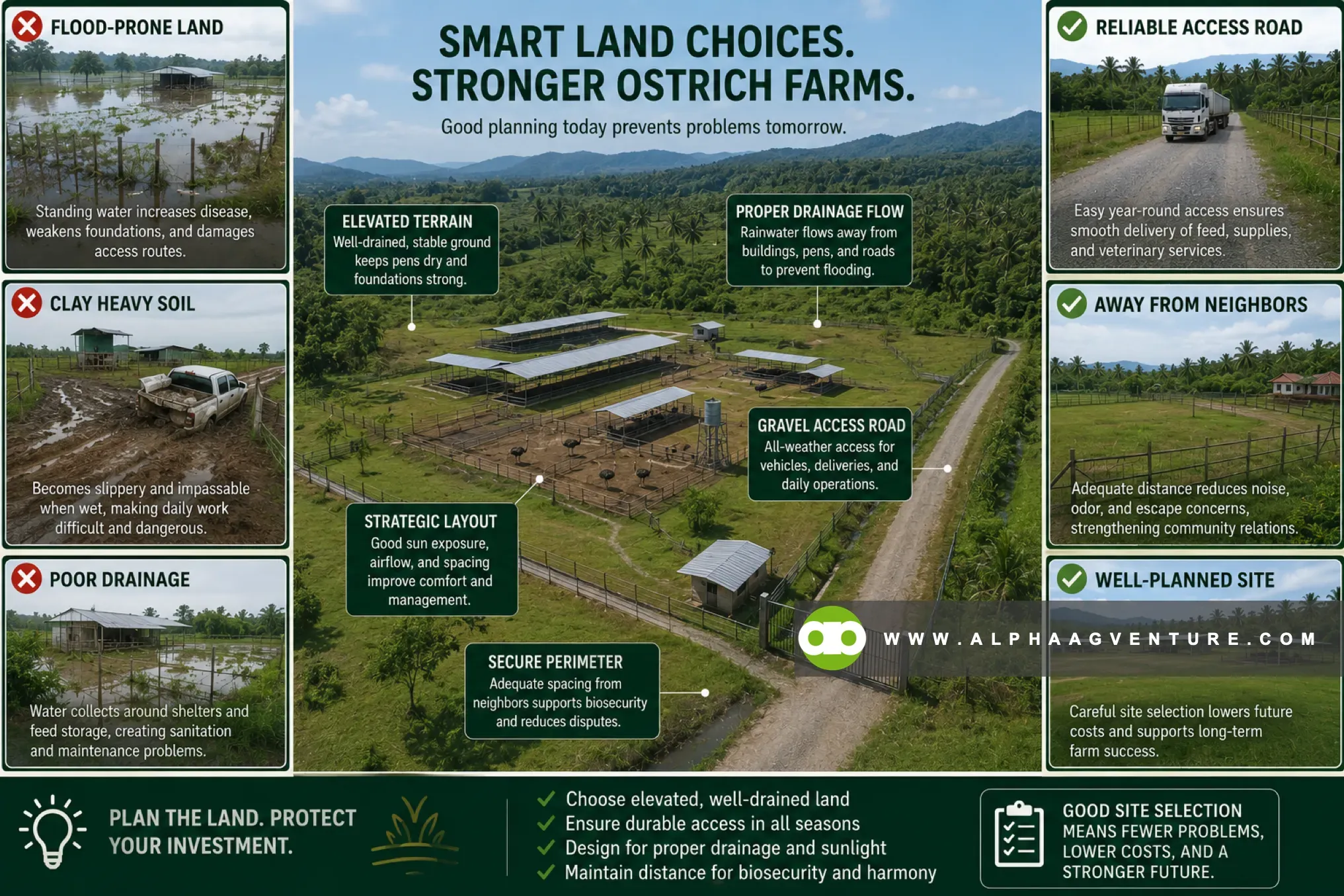
Once structural priorities become clear, proper land selection deserves equal attention before construction begins. Based on my assessment, unsuitable locations create operational problems long before ostriches reach maturity. Several Philippine farms suffer preventable losses because owners prioritize cheap land above practical infrastructure.
From what I have observed, flood prone areas create constant sanitation and disease pressures. Heavy monsoon rainfall frequently overwhelms shallow drainage canals across low elevation agricultural properties. I strongly recommend elevated terrain because standing water weakens foundations and damages surrounding access routes.
Likewise, clay heavy soil creates additional complications during extended rainy periods throughout many Philippine provinces. Vehicles often lose reliable traction whenever saturated ground conditions soften internal farm pathways after continuous rainfall. In my experience, compacted gravel pathways provide better long term durability under difficult tropical weather conditions.
Meanwhile, proper drainage flow requires careful evaluation before excavation work or fence installation begins. Rainwater should move naturally away from shelters, feed storage areas, and primary service roads. From my perspective, poorly designed drainage systems eventually increase maintenance costs across the entire property.
Road accessibility also deserves serious consideration before ostrich facilities operate under commercial Philippine conditions. Feed deliveries, construction materials, and veterinary supplies require dependable transportation access throughout every season. Several remote properties become logistical burdens after heavy rainfall damages nearby public road networks.
Finally, adequate spacing from neighboring farms supports stronger biosecurity and fewer unnecessary community disputes. Residential areas located beside ostrich facilities sometimes generate complaints about noise, odor, or unexpected escapes. Based on my assessment, strategic site selection prevents operational headaches long before commercial expansion starts.
Fence Height, Post Depth, and Wire Strength Rules
After selecting suitable land, fencing specifications become the next critical priority for Philippine ostrich facilities. Based on my assessment, weak perimeter structures eventually create dangerous escape risks during stressful environmental conditions. Several beginners underestimate ostrich strength until damaged fencing produces expensive repairs and difficult animal recovery situations.
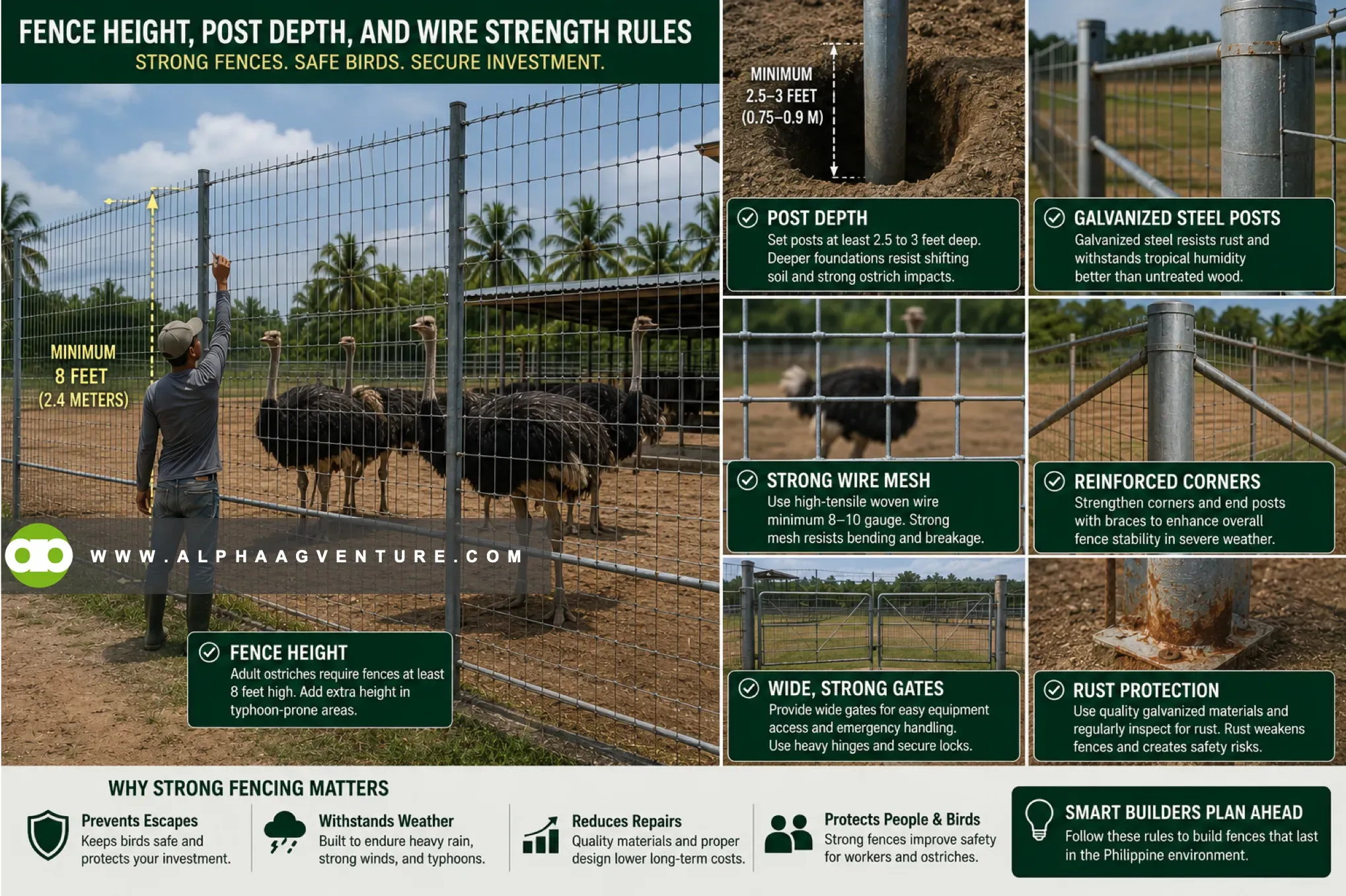
From what I have observed, adult ostriches require fences reaching at least eight feet above ground. Shorter barriers rarely provide dependable containment once mature birds experience fear, aggression, or territorial defensive behavior. I strongly recommend additional height allowances whenever farms operate within typhoon exposed agricultural regions nationwide.
Likewise, post depth deserves serious attention because Philippine soil conditions often weaken structural stability rapidly. Soft terrain loses compactness after prolonged monsoon rainfall saturates surrounding fence lines and service pathways completely. In my experience, deeper foundations provide better resistance against shifting ground and powerful ostrich impact pressure.
Meanwhile, galvanized steel posts generally withstand tropical humidity better than untreated wooden fencing materials nationwide. Several untreated wooden structures eventually weaken because excessive moisture accelerates deterioration throughout rainy Philippine agricultural seasons. Based on my assessment, reinforced corner posts also improve overall fence durability during severe tropical weather disturbances.
Wire mesh selection directly affects long term safety, maintenance requirements, and overall operational reliability afterward. From my perspective, high tensile woven wire provides better structural performance under difficult tropical farm conditions. Thin mesh materials frequently bend after repeated impact from frightened ostriches or nearby livestock pressure.
Gate dimensions also require careful planning because narrow access points complicate equipment movement and emergency animal control. Several Philippine farms experience avoidable handling difficulties because service entrances restrict vehicle access during urgent situations. I strongly recommend durable gate frames supported by heavy hinges and secure locking reinforcement systems.
Finally, structural weaknesses usually appear first where builders ignore Philippine weather and soil limitations entirely. Based on my observations, rust formation accelerates rapidly whenever low quality metal components remain exposed continuously. Careful material selection ultimately protects both ostriches and workers from preventable accidents throughout long term farm operations.
Pen Space Ratios for Tropical Ostrich Conditions
Beyond strong fencing specifications, proper stocking density greatly affects ostrich welfare under demanding Philippine climate conditions. Based on my assessment, overcrowded pens create unnecessary stress that gradually reduces overall flock performance afterward. Excessive population density also increases aggression, sanitation difficulties, and disease exposure throughout commercial ostrich facilities nationwide.
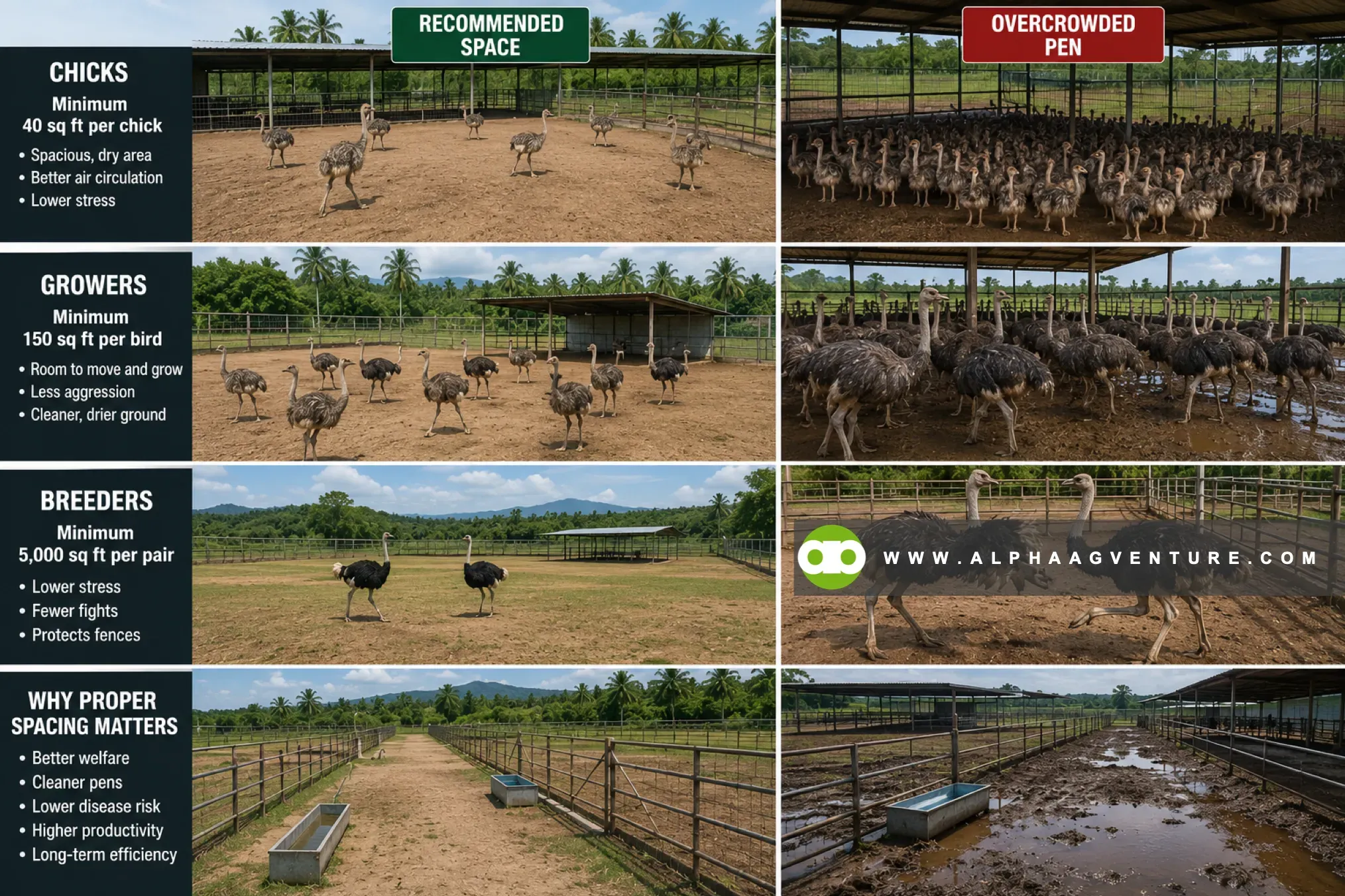
From what I have observed, young ostrich chicks require spacious dry areas despite smaller body dimensions. Chick pens usually perform better whenever each bird receives at least forty square feet comfortably indoors. Philippine humidity rapidly worsens respiratory risks whenever excessive crowding traps heat and moisture inside enclosed structures. I strongly recommend wider spacing because damp flooring conditions frequently contribute toward sanitation and foot related complications.
Likewise, grower ostriches require larger exercise areas because body size and physical strength increase rapidly afterward. Growing birds generally need at least one hundred fifty square feet per head under tropical Philippine conditions. In my experience, restricted movement areas often trigger unnecessary pecking behavior and heightened territorial aggression between flock members. Mud accumulation also develops faster whenever excessive stocking density concentrates repeated foot traffic across smaller enclosure spaces.
Meanwhile, breeding groups demand even greater spacing because mature ostriches become increasingly territorial during reproductive periods. Breeder pairs commonly require paddocks measuring at least five thousand square feet for safer long term management. Several smaller breeding pens eventually experience damaged fencing because aggressive adults repeatedly challenge territorial boundaries during stressful conditions.
From my perspective, proper spacing ultimately protects bird welfare, sanitation standards, and operational efficiency simultaneously nationwide. Overstocked pens usually retain moisture longer after rainfall, especially across clay heavy agricultural properties afterward. Careful stocking calculations therefore reduce preventable stress while supporting healthier ostrich behavior throughout tropical Philippine environments.
Roof Materials and Shade Systems for Hot Weather
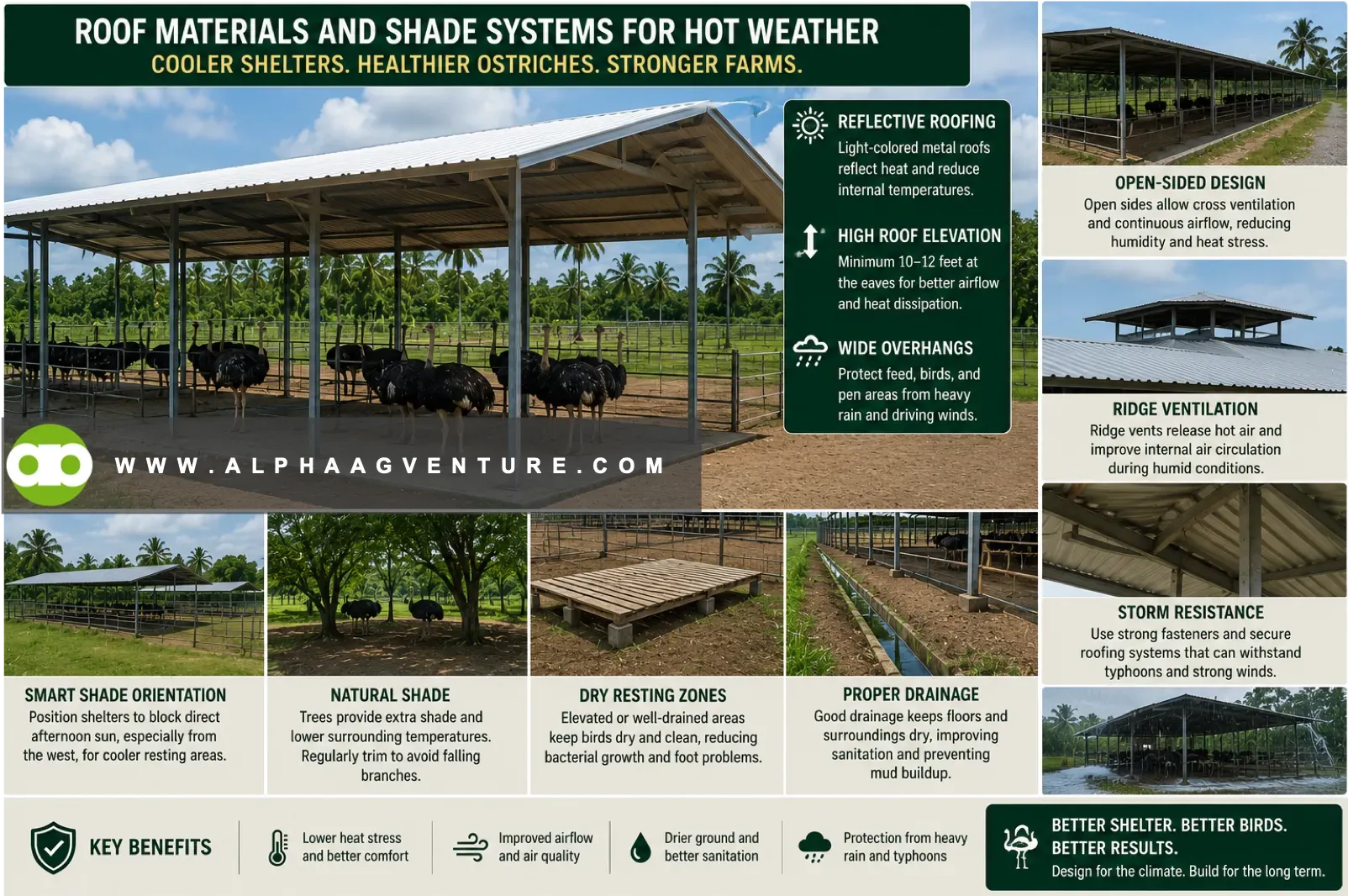
After establishing proper stocking density, shelter systems deserve equal attention under harsh Philippine weather conditions. Based on my assessment, poorly designed roofing structures trap excessive heat and worsen humidity related stress afterward. Several imported shelter designs fail quickly because tropical rainfall and typhoon exposure demand stronger structural considerations.
From what I have observed, reflective roofing materials usually reduce internal heat accumulation during extremely hot afternoons. Light colored long span metal roofing often performs better than darker materials under direct tropical sunlight. I strongly recommend adequate roof elevation because low ceiling clearance restricts airflow during humid Philippine summers. Proper roof overhang dimensions also protect feeding areas from heavy sideways rainfall during monsoon periods nationwide.
Likewise, shade orientation significantly affects ground temperature and resting comfort throughout different seasons annually. Shelters positioned against direct afternoon sunlight generally provide cooler resting areas during extremely humid weather conditions. In my experience, western sun exposure creates excessive heat buildup whenever shade placement ignores seasonal sunlight direction. Natural tree shade also helps lower surrounding temperatures, although falling branches require serious safety consideration afterward.
Meanwhile, strong airflow remains essential because Philippine humidity rapidly increases discomfort inside enclosed ostrich shelters nationwide. Open sided structures usually perform better whenever cross ventilation allows continuous movement of outside air naturally. Several fully enclosed facilities eventually retain excessive moisture because restricted airflow slows surface drying after rainfall. Based on my perspective, ridge ventilation systems also improve internal temperature control during prolonged humid weather periods.
Dry resting zones deserve careful planning because wet flooring conditions increase sanitation risks and unnecessary physical stress. From what I have observed, elevated resting sections usually remain cleaner during extended periods of continuous rainfall. Damp ground conditions frequently encourage bacterial growth whenever shelters lack proper drainage and sufficient roof protection.
Finally, storm resistance should never become an afterthought for Philippine ostrich shelter construction projects nationwide. Based on my assessment, weak roof fasteners commonly fail first during severe tropical storms and strong typhoons. Durable shelter systems ultimately protect ostriches, feed supplies, and operational continuity throughout unpredictable Philippine weather conditions.
Water Access, Feed Placement, and Worker Routes
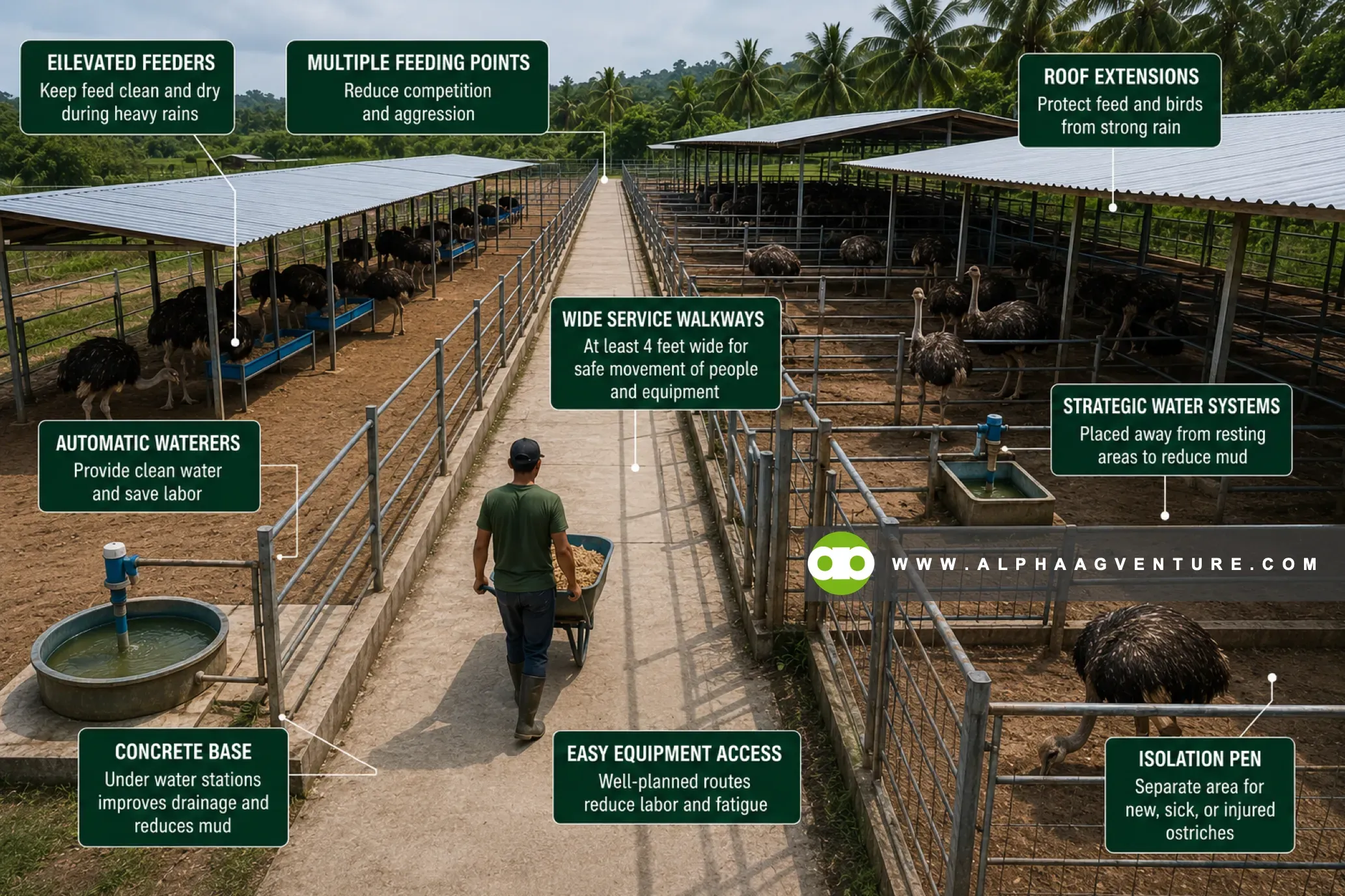
Beyond durable shelter systems, internal pen organization greatly affects efficiency across everyday Philippine farm operations afterward. Based on my assessment, poor equipment placement wastes labor hours and increases unnecessary worker fatigue daily. Several ostrich facilities become difficult workplaces because layouts ignore practical maintenance requirements during challenging tropical weather conditions.
From what I have observed, feeders should remain elevated slightly above surrounding ground during heavy rainfall periods. Feed stations positioned beneath roof extensions usually experience less moisture contamination during strong monsoon weather conditions. I strongly recommend multiple feeding points because overcrowded stations often trigger unnecessary aggression between larger ostriches. Proper feeder placement also reduces feed wastage whenever birds compete aggressively inside limited enclosure areas.
Likewise, water systems require strategic positioning because excessive mud formation creates sanitation complications very quickly afterward. Water troughs placed directly beside resting areas frequently produce damp unsanitary conditions throughout surrounding enclosure spaces. In my experience, concrete flooring beneath water stations improves drainage while reducing dangerous slippery ground conditions. Automatic watering systems also simplify labor requirements whenever larger ostrich populations occupy commercial Philippine facilities nationwide.
Meanwhile, service walkways deserve careful planning because daily maintenance becomes physically demanding under tropical farm conditions. Wide access paths measuring at least four feet usually allow safer movement of equipment and feed carts. Several farms experience avoidable delays whenever narrow walkways restrict worker movement during routine cleaning procedures afterward. Based on my observations, isolation sections also strengthen disease control whenever injured or newly arrived ostriches require separation.
Finally, efficient pen organization supports easier sanitation, safer operations, and more predictable labor management throughout production cycles. From my perspective, properly arranged facilities reduce unnecessary stress for both workers and ostriches during daily activities. Careful internal layout decisions therefore improve operational consistency while supporting long term farm sustainability under Philippine conditions.
Dangerous Pen Mistakes Found on Local Ostrich Farms
Despite proper planning principles, several Philippine ostrich facilities still repeat preventable structural mistakes repeatedly afterward. Based on my assessment, many problems originate from shortcuts during initial construction and material selection stages. Small design flaws eventually become major operational hazards once mature ostriches occupy the facility permanently.
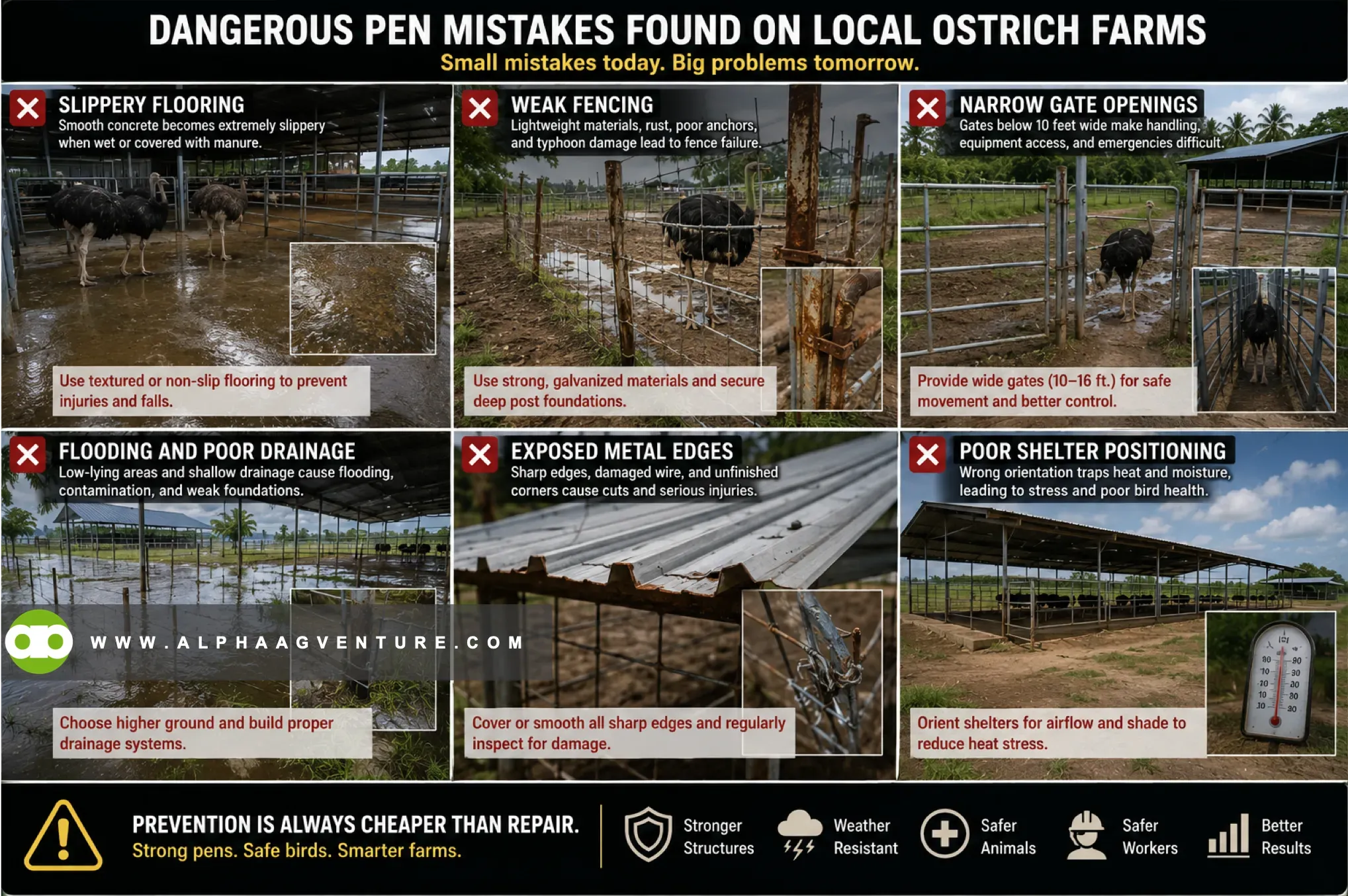
From what I have observed, slippery flooring creates serious injury risks for both ostriches and farm workers. Smooth concrete surfaces usually become extremely dangerous whenever heavy rainfall combines with accumulated manure afterward. I strongly recommend textured flooring materials because sudden leg injuries often require difficult long term rehabilitation efforts.
Likewise, weak fencing commonly appears after strong typhoons damage poorly reinforced perimeter structures across agricultural provinces. Several local farms rely upon lightweight materials unable to withstand repeated tropical storm exposure conditions nationwide. In my experience, rust weakened fencing connections frequently fail first during severe weather disturbances and animal impact. Poorly anchored posts also shift gradually whenever prolonged monsoon rainfall softens surrounding ground conditions afterward.
Meanwhile, narrow gate openings create unnecessary handling difficulties whenever equipment or stressed ostriches require movement. Service entrances measuring below ten feet often restrict safe maneuverability during maintenance and emergency situations. Several facilities experience preventable accidents because frightened ostriches collide with confined passageways during stressful handling activities. Based on my observations, wider gates usually support safer livestock control and faster operational efficiency afterward.
Flooding issues also remain extremely common because many facilities occupy low elevation agricultural properties throughout the Philippines. From my perspective, shallow drainage canals rarely provide adequate water diversion during intense monsoon rainfall periods nationwide. Standing water eventually weakens fence foundations while increasing bacterial contamination across feeding and resting areas afterward.
Exposed metal edges deserve serious attention because ostriches frequently collide with nearby structures during panic situations. Sharp roofing materials, damaged wire sections, and unfinished gate corners commonly produce preventable laceration injuries afterward. I strongly recommend regular structural inspections because minor defects rapidly become dangerous hazards under commercial production conditions.
Finally, poor shelter positioning often traps excessive heat and moisture inside resting sections throughout humid Philippine seasons. Based on my assessment, incorrect roof orientation reduces airflow while worsening temperature buildup during hot afternoons nationwide. Careful facility evaluation therefore remains essential before ostrich farms expand under demanding tropical environmental conditions.
Reliable Ostrich Facilities Begin With Smarter Plans
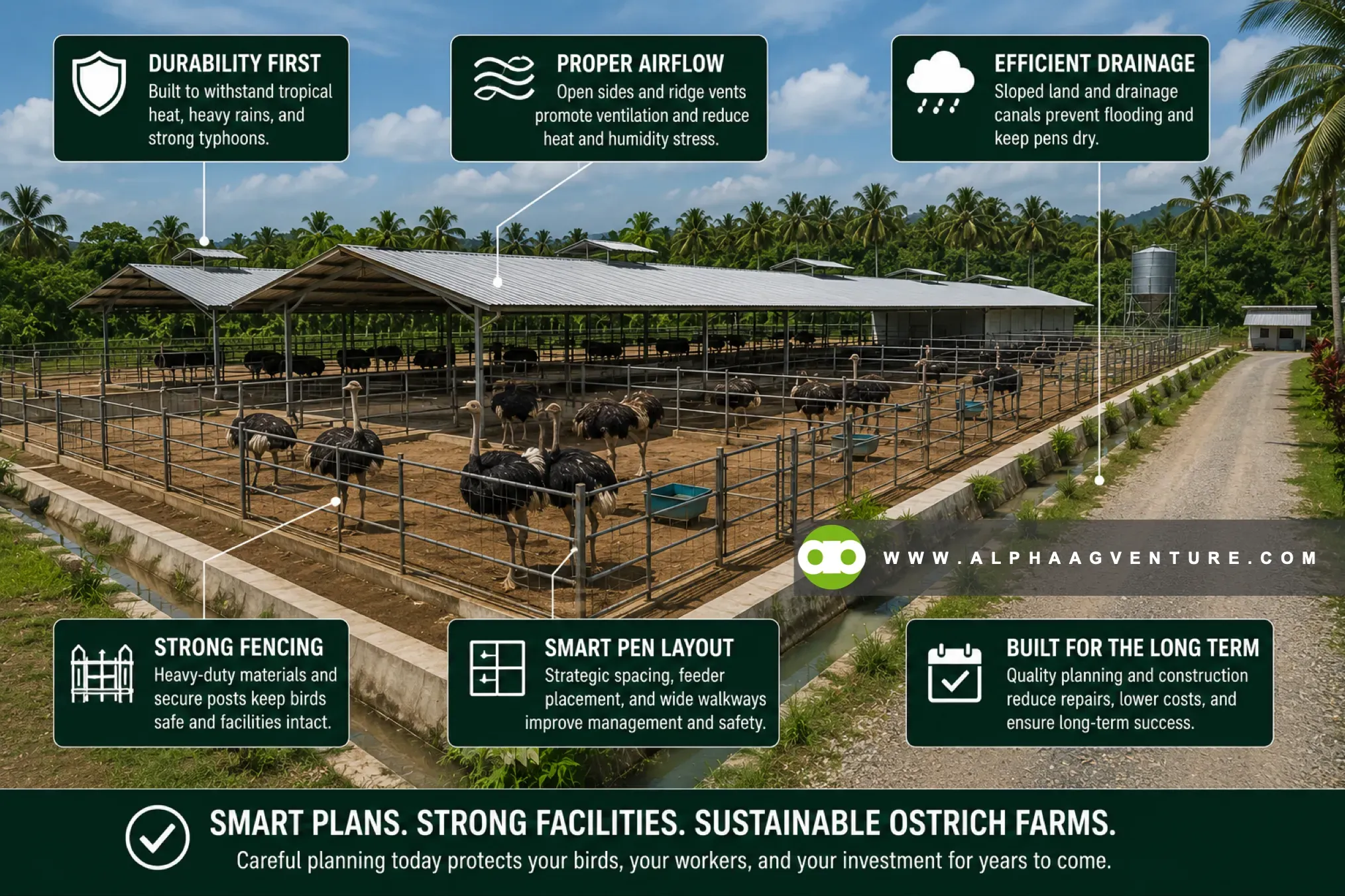
After understanding common structural mistakes, practical long term planning becomes even more important for future operations. Based on my assessment, successful Philippine ostrich farms prioritize durability instead of temporary low cost construction decisions. Tropical heat, heavy rainfall, and seasonal typhoons require infrastructure specifically designed for demanding local environmental conditions.
From what I have observed, copied foreign facility layouts frequently perform poorly under unpredictable Philippine weather patterns. Several imported designs ignore excessive humidity, monsoon flooding, and difficult soil conditions across many agricultural provinces. I strongly recommend localized planning because tropical environments expose structural weaknesses much faster than temperate foreign climates. Careful infrastructure decisions also reduce future repair expenses while supporting safer long term ostrich management practices.
Likewise, durable fencing, efficient drainage, proper airflow, and strategic pen organization all work together continuously afterward. In my experience, strong facility design improves sanitation standards while reducing unnecessary labor difficulties during rainy seasons. Well planned shelters also provide more reliable protection whenever severe weather conditions threaten operational continuity nationwide.
Ultimately, ostrich farming success depends heavily upon infrastructure capable of enduring demanding Philippine environmental realities consistently. Based on my perspective, proper facility planning protects animal welfare, worker safety, and long term operational sustainability simultaneously. Careful preparation therefore remains one of the most valuable investments any serious Philippine ostrich farmer can prioritize.
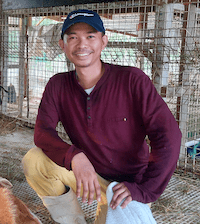
Jaycee de Guzman is the owner of Alpha Agventure Farms, where he develops practical livestock production systems, agricultural marketing strategies, and farm business models. He writes regularly about livestock development, agricultural entrepreneurship, and public policy affecting Philippine agriculture.