

Feed Mistakes Quietly Destroy Ostrich Profits
Many smallscale ostrich farmers underestimate how strongly daily nutrition affects long term farm stability. Even proper ostrich housing and pen structure cannot compensate for weak nutritional management inside production systems. Poor feed decisions usually create hidden financial losses before visible physical problems finally appear. A proper ostrich feeding program depends upon consistent schedules, balanced nutrition, and reliable ingredient quality daily.
Weak feeding programs often reduce growth rates and delay proper skeletal development among young ostriches. Nutritional deficiencies also weaken immune response, which increases disease exposure under stressful environmental conditions. Feed waste increases whenever birds reject poorly balanced rations or inconsistent ingredient mixtures repeatedly.
Many beginners focus heavily upon fencing systems while overlooking nutritional planning during early farm development. Mature breeding ostriches require balanced nutrient intake since fertility declines after prolonged dietary imbalance develops internally. Egg production also suffers whenever breeders consume excessive energy sources without proper mineral and protein support. Small feed mistakes eventually create expensive operational setbacks that many farmers incorrectly blame upon genetics instead.
Consistent feeding practices help small farms maintain predictable operational expenses despite unstable agricultural market conditions. A structured ostrich feeding program also reduces unnecessary ingredient waste through controlled daily nutritional quantities. Careful observation remains extremely important since ostriches often display nutritional imbalance before serious health complications emerge visibly. Strong ostrich farming systems usually begin with feeding consistency rather than expensive equipment or oversized facilities.
Local Ingredients Decide Feed Costs and Quality
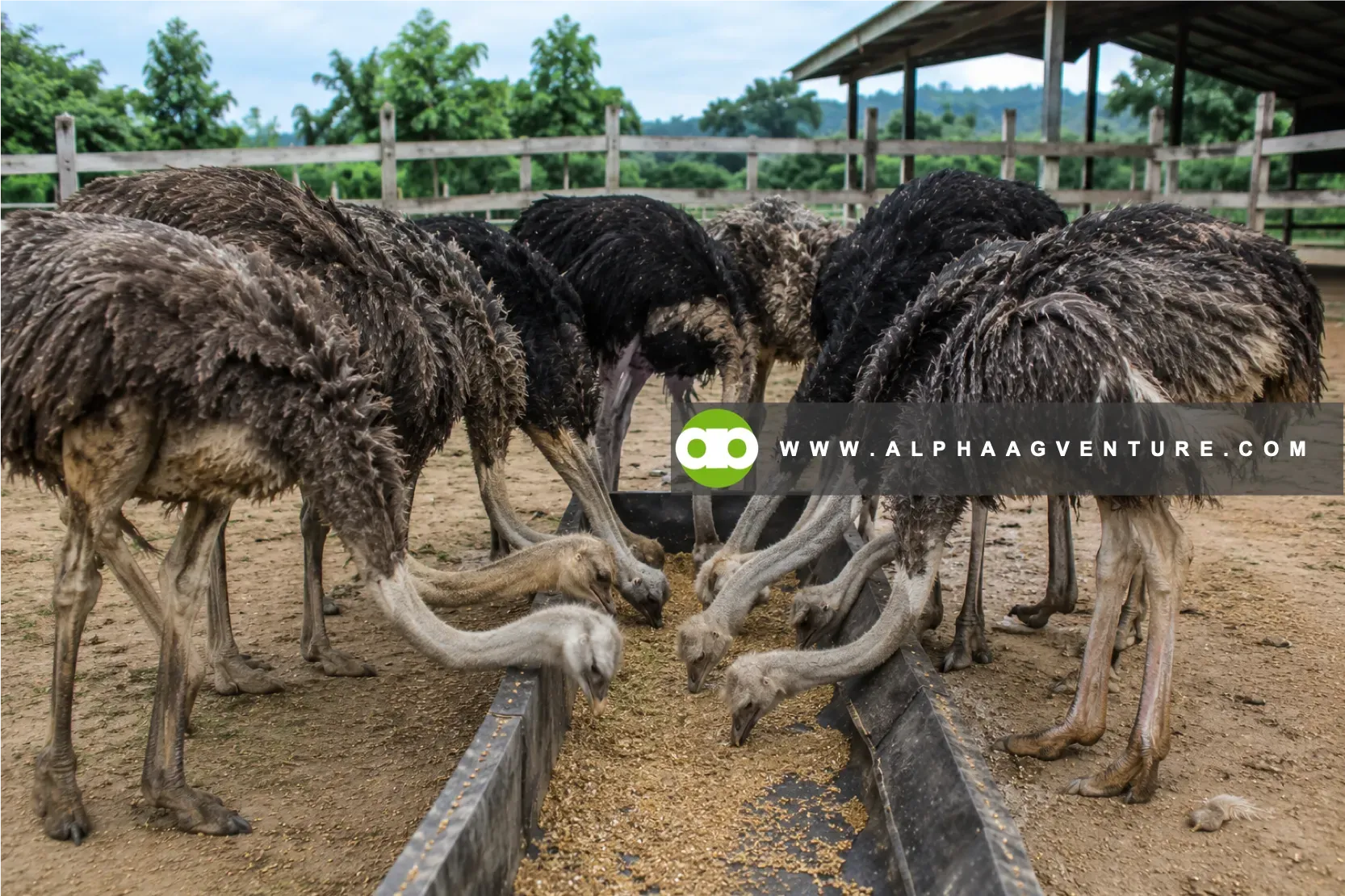
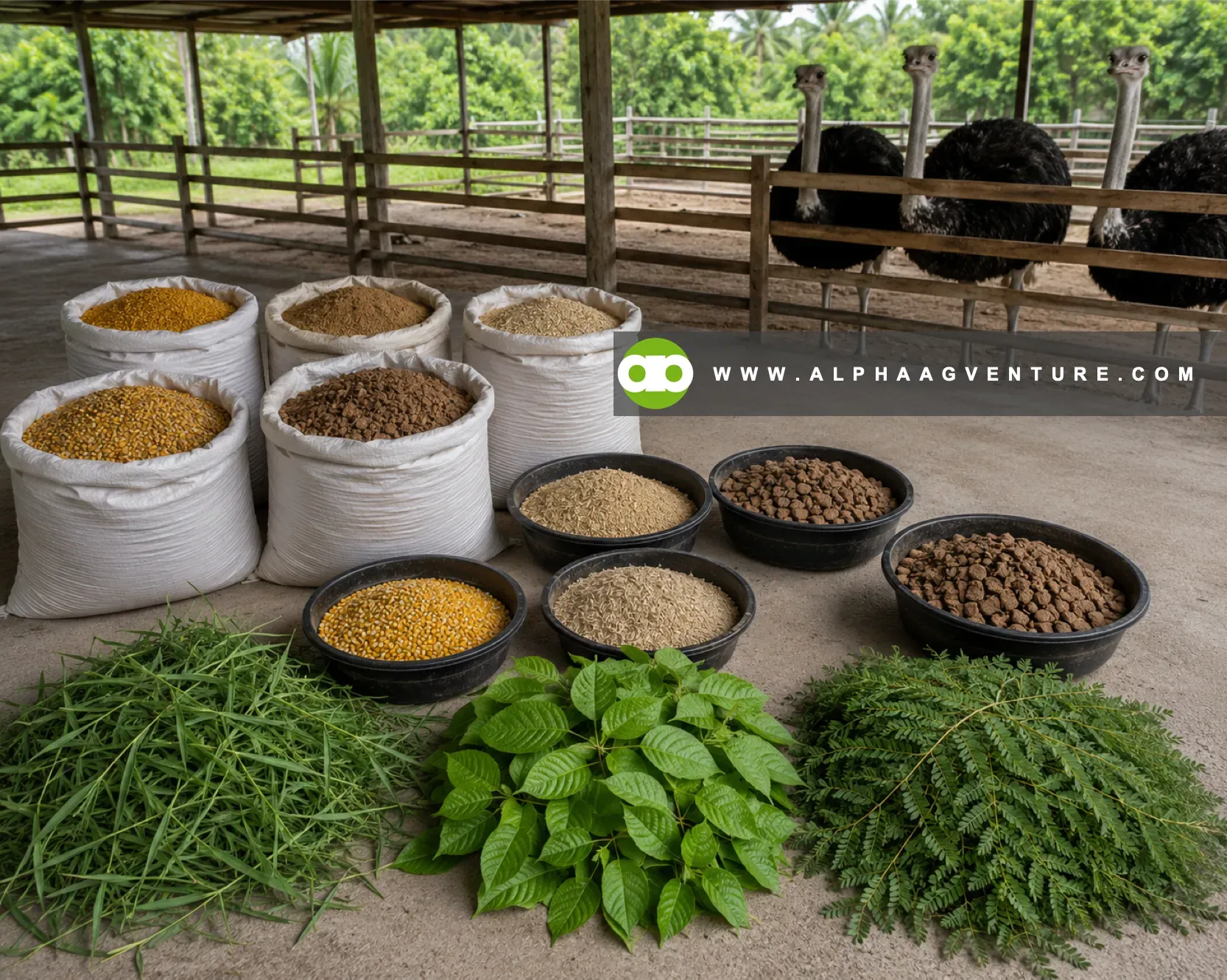
Local ingredient availability strongly influences daily ostrich feed expenses across many small Philippine farming operations. Imported ingredients frequently create unstable operational costs whenever transportation expenses suddenly increase across regional supply chains. Reliable local suppliers of yellow corn, rice bran, copra meal, and soybean meal help maintain nutritional consistency throughout different seasons.
Ingredient selection directly affects long term ostrich health, fertility, and overall feed conversion efficiency. Low quality corn grits, spoiled rice bran, and mold contaminated copra meal frequently create serious nutritional inconsistencies afterward. Careful sourcing practices protect small farms from avoidable veterinary expenses and disappointing production results.
Philippine weather patterns frequently disrupt ingredient availability across many agricultural provinces during severe typhoon periods. Corn supplies sometimes decline sharply after prolonged drought conditions damage regional harvest production significantly. Rice bran prices also fluctuate whenever commercial feed manufacturers compete aggressively for limited agricultural resources. Soybean meal and pollard prices sometimes increase rapidly whenever imported agricultural shipments encounter transportation delays afterward. A flexible ostrich feeding program remains extremely important under unpredictable Philippine agricultural conditions.
Many beginners purchase ingredients strictly through price comparisons without proper nutritional evaluation beforehand. Cheap rice bran sometimes contains excessive rice hull content, which reduces actual nutritional value significantly. Poor quality fish meal occasionally develops foul odor because improper storage weakens ingredient stability afterward. Inconsistent ingredient quality also causes unpredictable feed intake among sensitive breeding ostrich populations. Nutritional value matters far more than temporary ingredient discounts inside a practical ostrich feeding program.
Local coconut meal occasionally serves as an affordable supplemental energy source for mature ostrich flocks. Farmers also use madre de agua leaves, ipil ipil leaves, and chopped napier grass during ingredient shortages. However, excessive inclusion rates may reduce feed palatability and weaken nutritional balance among breeding birds. Farmers should also examine moisture levels carefully before large ingredient purchases from provincial suppliers. Dry storage conditions remain extremely important since tropical humidity quickly damages poorly protected feed materials.
Strong ostrich feed systems depend heavily upon realistic ingredient choices under actual Philippine farming conditions. Successful farmers evaluate ingredient reliability, nutritional value, storage stability, and supplier consistency simultaneously throughout operations. Disciplined ingredient selection protects long term profitability more effectively than expensive nutritional supplements alone. Practical ostrich nutrition requires careful preparation since agricultural supply conditions constantly shift throughout regional markets. Smart feed decisions usually separate stable ostrich farms from financially vulnerable operations during difficult market periods.
Young Ostriches Need Different Feeding Priorities
Young ostriches require carefully balanced nutrition since rapid physical development creates serious nutritional demands during early life stages. Many beginners underestimate how quickly poor nutrition damages immature skeletal structures during sensitive developmental periods. Early feeding mistakes often create irreversible leg weakness, poor posture, and reduced long term survivability rates.
Newly hatched ostrich chicks require highly digestible feed sources with balanced protein and mineral concentrations daily. Excessive energy intake sometimes accelerates body weight increases beyond healthy skeletal development capacity. Weak calcium and phosphorus balance also increases serious bone deformity risks among rapidly developing chicks. A balanced ostrich feeding program helps young ostriches develop stronger immune response during vulnerable growth stages.
From my observation, many beginners fail to adjust feed quantities according to developmental requirements afterward. Young ostriches cannot safely consume identical feed quantities across all stages of physical maturity. Sudden overfeeding frequently creates skeletal stress because body weight increases faster than proper bone development. Practical feeding adjustments therefore become extremely important throughout different growth phases inside commercial and smallscale ostrich farming systems.
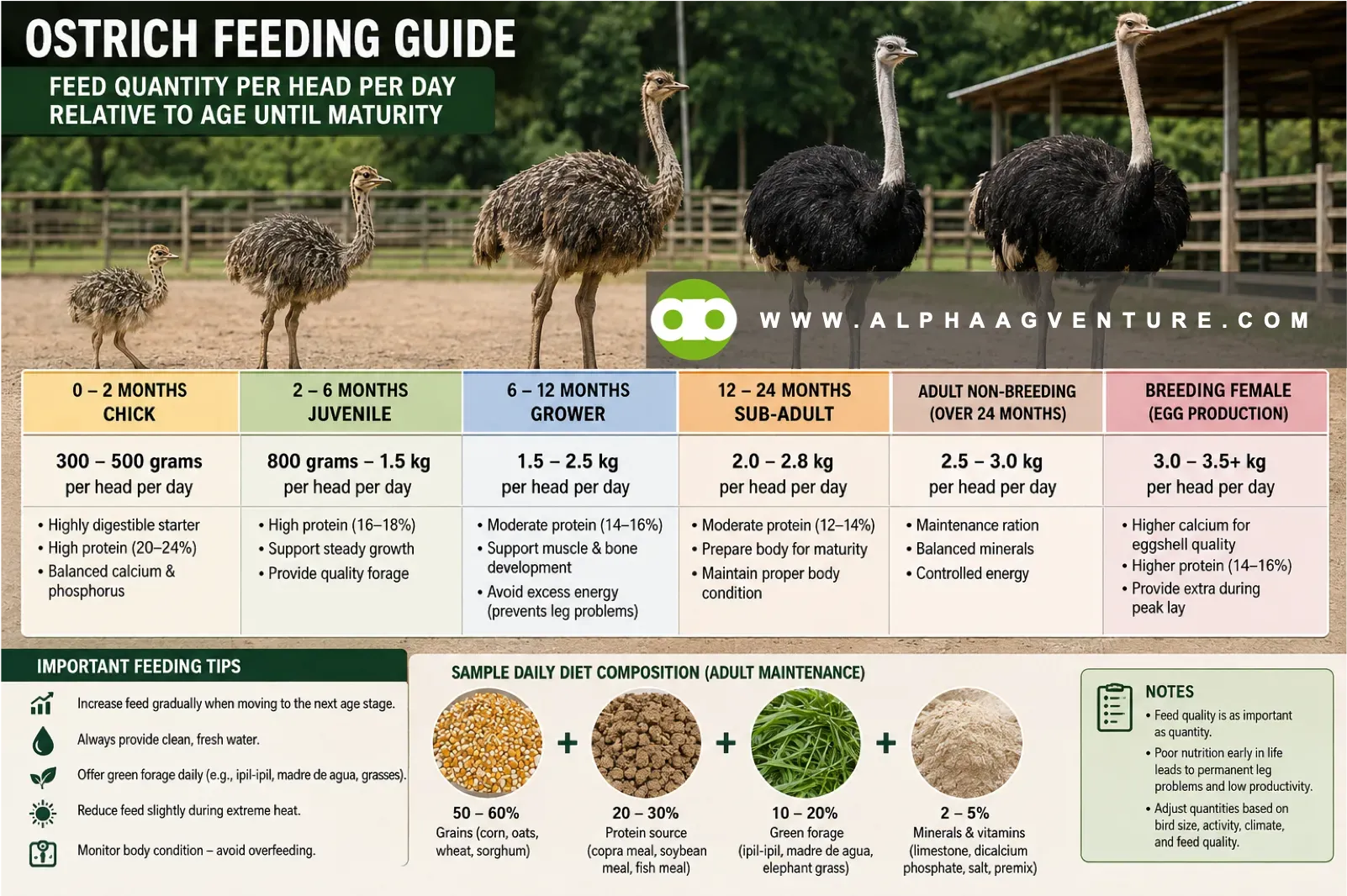
The following feeding quantities usually serve as practical starting references under ordinary Philippine farming conditions:
- Newly hatched chicks up to 2 months old usually consume approximately 300 to 500 grams daily.
- Juvenile ostriches from 2 to 6 months old usually consume approximately 800 grams to 1.5 kilograms daily.
- Grower ostriches from 6 to 12 months old usually consume approximately 1.5 to 2.5 kilograms daily.
- Mature nonbreeding ostriches usually consume approximately 2.5 to 3 kilograms daily.
- Breeding females sometimes consume more than 3 kilograms daily during active egg production periods.
Grower ostriches require gradual dietary adjustments as nutritional demands shift throughout physical development stages. Feed programs should support steady muscle growth without excessive fat accumulation during intermediate development periods. Inconsistent protein levels often reduce feather quality and weaken natural disease resistance among grower ostriches. Poor nutritional management during grower stages frequently creates permanent structural weaknesses difficult to correct later.
Mature ostriches require different nutrient priorities since body maintenance replaces rapid developmental requirements gradually afterward. Adult breeding birds need balanced mineral intake because eggshell quality depends heavily upon nutritional stability. Excessive dietary energy sometimes reduces breeding efficiency since overweight ostriches experience reproductive complications more frequently. Mature ostriches also require controlled feed quantities because unrestricted intake may increase unnecessary operational expenses. A structured ostrich feeding program usually supports stronger fertility and healthier long term production consistency.
Many small farms apply identical feed formulations across all ostrich age classifications without necessary adjustments. Uniform feeding systems usually create nutritional imbalance since developmental requirements change significantly between different growth stages. Young chicks cannot process excessive fiber efficiently because digestive development remains incomplete during early life stages. Mature birds also waste expensive high protein rations originally intended for rapidly developing juvenile ostriches. Proper nutritional separation helps farmers reduce feed waste while supporting healthier ostrich development simultaneously.
Nutritional deficiencies rarely appear immediately after poor feeding practices begin across immature ostrich populations. Many skeletal deformities develop gradually before obvious physical symptoms finally become visible among affected birds. Weak leg structures often originate from prolonged mineral imbalance during sensitive developmental stages. Reduced immune strength also increases mortality risks whenever stressful environmental conditions affect vulnerable juvenile ostriches directly.
Disciplined nutritional management determines whether young ostriches develop strong physical foundations for future productivity later. Balanced developmental nutrition protects skeletal strength more effectively than expensive corrective treatments applied afterward. Practical ostrich farming requires age specific feeding adjustments since developmental priorities constantly change throughout maturity stages. Strong juvenile nutrition usually creates healthier adult ostriches capable of better long term reproductive performance.
Breeding Ostriches Require More Than Extra Feed
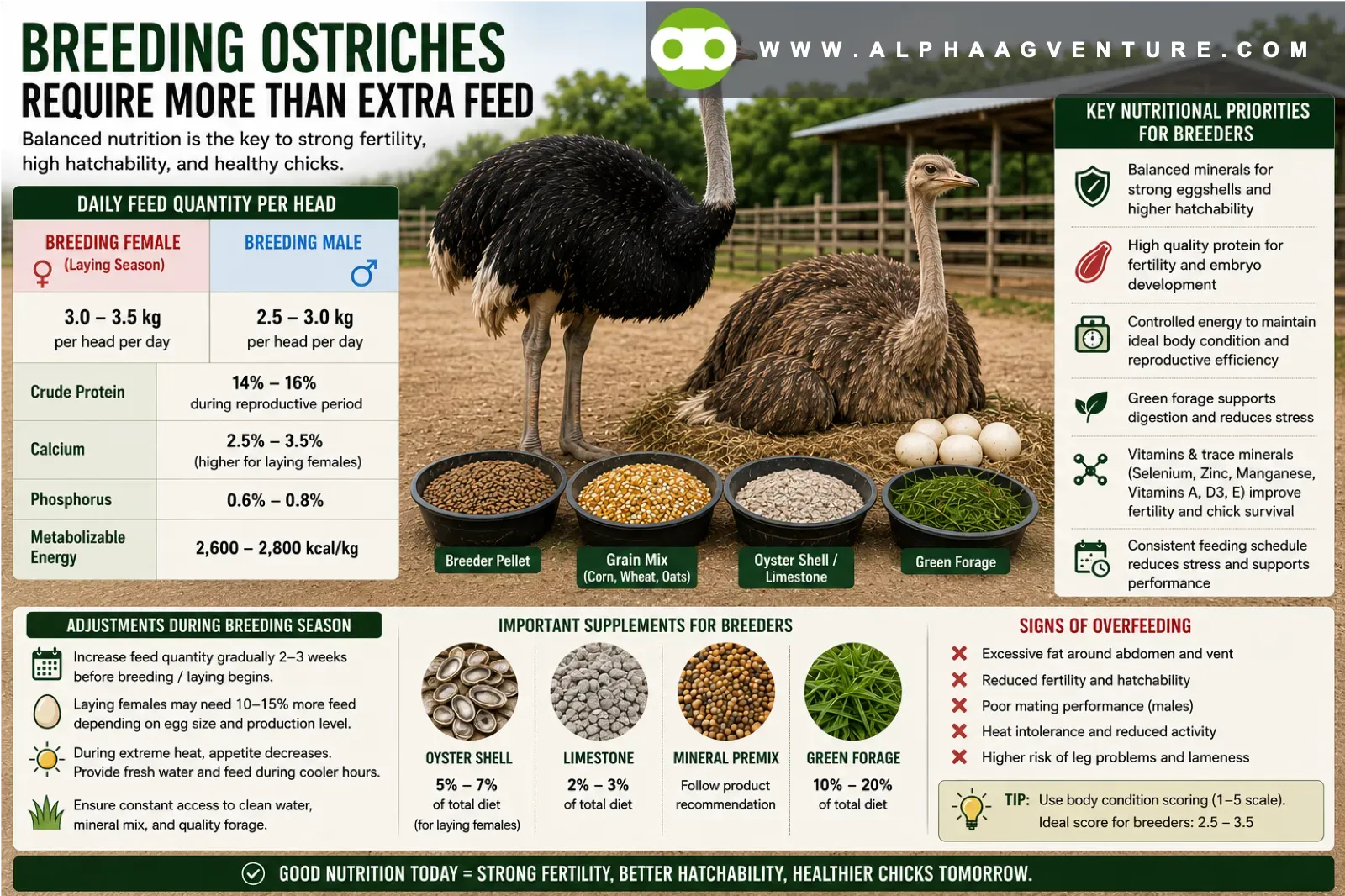
Breeding ostriches require carefully balanced nutrition since reproductive demands differ greatly from ordinary maintenance requirements afterward. Many farmers mistakenly increase feed quantities without correcting nutritional imbalance inside breeding rations properly. Excessive feed intake alone rarely improves fertility whenever mineral deficiencies or protein imbalance remain unresolved internally.
Breeding females require higher calcium availability because eggshell quality depends heavily upon stable mineral nutrition daily. Weak mineral balance frequently reduces hatchability because fragile eggshells increase internal contamination risks significantly. Protein quality also affects embryo development since poor amino acid balance weakens chick viability before hatching. Controlled energy intake remains extremely important because overweight breeding females often experience reduced reproductive efficiency.
From my observation, breeding ostriches usually perform better whenever nutritional targets remain stable throughout reproductive periods afterward. Breeding females commonly consume approximately 3 to 3.5 kilograms daily during active egg production seasons. Breeding males usually consume approximately 2.5 to 3 kilograms daily under controlled body condition programs. Most breeder rations commonly target approximately 14% to 16% crude protein during active reproductive cycles. Calcium levels for breeding females often range between approximately 2.5% to 3.5% during intensive laying periods.
The following nutritional priorities usually help maintain stronger breeder performance under practical farm conditions:
- Controlled energy intake helps prevent obesity related reproductive complications.
- Oyster shell and limestone commonly support stronger eggshell quality among breeding females.
- Green forage intake often supports digestive stability and calmer breeder behavior daily.
- Selenium, zinc, manganese, and vitamin balance strongly influence fertility and hatchability rates.
- Consistent feeding schedules usually reduce unnecessary breeder stress during reproductive periods.
Breeding males also require balanced nutrition since fertility depends upon physical condition and reproductive health stability. Excessive body fat frequently reduces mating performance because overweight males lose necessary physical mobility afterward. Inconsistent feeding schedules also create unnecessary stress among breeding ostriches during active reproductive periods. A breeding ostrich feeding program usually supports stronger semen quality and healthier reproductive performance.
Vitamin and trace mineral deficiencies often create hidden reproductive complications among breeding ostrich populations unexpectedly afterward. Weak nutritional management sometimes causes infertile eggs despite apparently healthy breeding pairs inside production environments. Many reproductive failures originate from long term dietary imbalance instead of obvious infectious disease complications. Extreme environmental heat also reduces breeder appetite because ostriches naturally decrease feed intake during stressful weather conditions. Careful feed formulation protects breeding performance more effectively than expensive emergency corrective treatments later.
Successful ostrich reproduction depends heavily upon nutritional precision instead of simple feed quantity increases alone afterward. Balanced breeding rations help farms maintain stronger fertility rates, healthier chicks, and better hatchability consistency overall. Disciplined breeding nutrition protects long term productivity more effectively than aggressive supplemental feeding strategies alone. Practical ostrich reproduction requires nutritional stability since reproductive performance responds strongly to dietary inconsistency.
Water Access Shapes Feed Intake More Than Expected
Water availability directly influences ostrich appetite, digestion efficiency, and overall physical performance across production systems daily. Many small farms prioritize feed quality while overlooking proper water management throughout regular farm operations. Weak water access frequently reduces feed intake because dehydrated ostriches naturally consume fewer nutrients each day.
Clean drinking water remains extremely important because contaminated water sources quietly spread harmful bacterial infections rapidly. Dirty containers also discourage normal water intake because ostriches avoid foul smelling drinking sources consistently. Poor water hygiene frequently increases digestive complications, which eventually reduce nutrient absorption efficiency significantly. Consistent water sanitation protects flock health more effectively than expensive emergency veterinary interventions later.
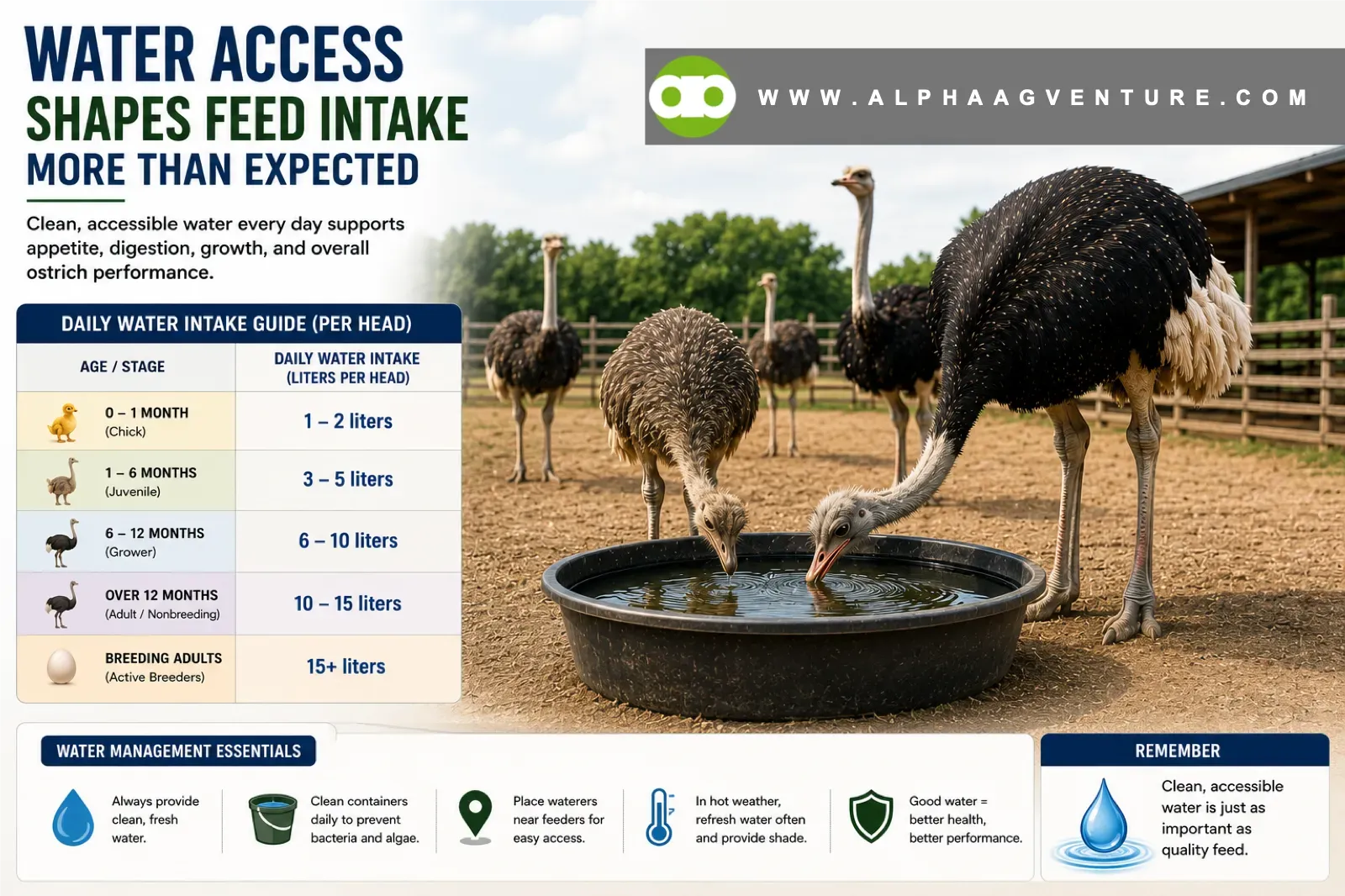
From my observation, many beginners underestimate how strongly daily water intake changes throughout different ostrich developmental stages afterward. Young ostriches naturally consume lower water volumes because body size and feed intake remain relatively limited initially. Mature ostriches require significantly higher daily water intake because digestion efficiency depends heavily upon adequate hydration afterward. Extreme environmental heat also increases water demand because ostriches lose moisture rapidly during prolonged daytime exposure.
The following intake ranges usually serve as practical water consumption references under ordinary Philippine farming conditions:
- Newly hatched chicks commonly consume approximately 1 to 2 liters daily under moderate environmental temperatures.
- Juvenile ostriches commonly consume approximately 3 to 5 liters daily during active developmental stages.
- Grower ostriches commonly consume approximately 6 to 10 liters daily depending upon feed intake and climate conditions.
- Mature nonbreeding ostriches commonly consume approximately 10 to 15 liters daily under ordinary farm conditions.
- Active breeding ostriches sometimes consume more than 15 liters daily during extreme heat and reproductive periods.
Water placement strongly affects consumption patterns across both juvenile and mature ostrich populations inside farm environments. Poorly positioned containers sometimes create overcrowding because dominant birds block weaker flock members from drinking access. Excessive walking distance between feeders and water sources also reduces efficient daily intake among flocks. Practical pen layouts should encourage comfortable movement between feed stations and clean water access points.
Tropical heat conditions frequently increase dehydration risks across Philippine ostrich farming environments during dry seasons annually. Warm water temperatures sometimes discourage normal consumption because ostriches prefer cooler and fresher drinking sources instead. Reduced water intake quietly weakens digestion because feed materials require sufficient moisture for proper nutrient absorption. Dehydrated ostriches also display lower energy levels, weaker growth performance, and inconsistent reproductive behavior patterns. Careful water management becomes increasingly important whenever extreme environmental temperatures affect daily ostrich activity levels.
Disciplined water management supports stronger feed efficiency and healthier ostrich performance across small farming operations consistently. Balanced nutrition loses effectiveness whenever dehydration prevents proper digestion and efficient nutrient utilization internally. Reliable water access deserves equal importance alongside every practical ostrich feeding program today. Successful ostrich farms usually maintain consistent water cleanliness, accessibility, and temperature management throughout difficult environmental conditions.
Feed Waste Often Begins Inside Poor Pen Layouts
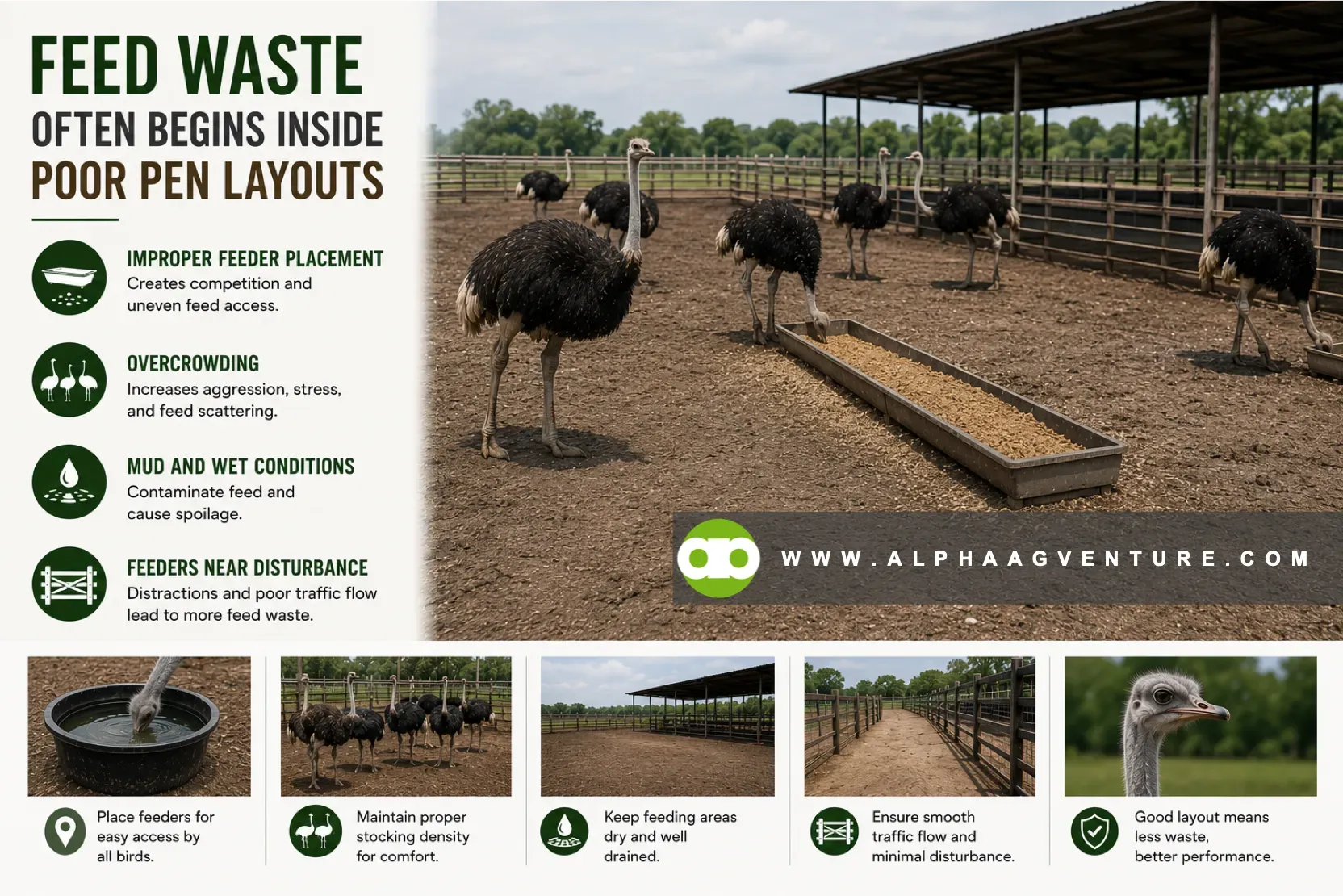
Physical farm layout strongly influences feeding efficiency across both smallscale and commercial ostrich production systems today. Many farmers focus heavily upon feed formulation while overlooking structural problems inside actual feeding environments. Poor pen organization frequently increases feed waste long before obvious financial losses become noticeable operationally.
Improper feeder placement often creates unnecessary competition among ostriches during scheduled feeding periods throughout daily operations. Dominant birds sometimes block weaker flock members from consistent feed access inside crowded pen conditions. Uneven feed access usually reduces nutritional consistency because timid ostriches consume insufficient daily nutrient quantities. Strategic feeder positioning helps farms maintain more balanced intake patterns across different ostrich age classifications.
Overcrowded pens also increase aggressive behavior because limited space intensifies competition between physically dominant ostriches afterward. Feed scattering frequently occurs whenever birds push aggressively against feeders during crowded feeding periods each day. Excessive flock density also increases stress levels, which eventually reduces feeding efficiency and digestive stability. Practical stocking density remains extremely important because poor space allocation quietly increases avoidable operational expenses.
Mud accumulation creates additional feeding complications across many Philippine ostrich farms during prolonged rainy weather conditions. Wet ground conditions frequently contaminate spilled feed because moisture encourages bacterial growth and fungal development afterward. Muddy feeding areas also discourage normal movement because unstable footing increases physical discomfort among ostriches daily. Feed spoilage therefore increases rapidly whenever farms neglect drainage systems surrounding active feeding locations. Proper ground preparation protects feeding efficiency more effectively than repeated feed replacement throughout difficult weather conditions.
Some farms also install feeders too closely beside fences, gates, or high traffic operational areas afterward. Frequent disturbance near feeding zones sometimes reduces normal intake because ostriches become easily distracted during feeding periods. Poor traffic flow inside pens also increases unnecessary feed spillage whenever birds move aggressively between crowded sections. Comfortable feeding environments help maintain calmer flock behavior and more efficient nutrient consumption daily.
An efficient ostrich feeding program depends heavily upon practical pen design and organized feeder placement. Careful layout planning helps farms reduce feed waste, behavioral stress, and unnecessary operational inefficiencies simultaneously. Strong feeding performance rarely depends upon nutrition alone because environmental structure directly affects flock behavior patterns. Well organized pens usually support cleaner feeding conditions, healthier ostrich movement, and more predictable production stability.
Small Farms Need Feed Plans That Survive Reality
Efficient ostrich feeding programs must function properly under actual farm conditions instead of laboratory assumptions afterward. Many textbook recommendations ignore practical limitations that small Philippine farms face throughout ordinary production cycles. Feed systems therefore require flexibility because agricultural conditions constantly change across different farming environments annually.
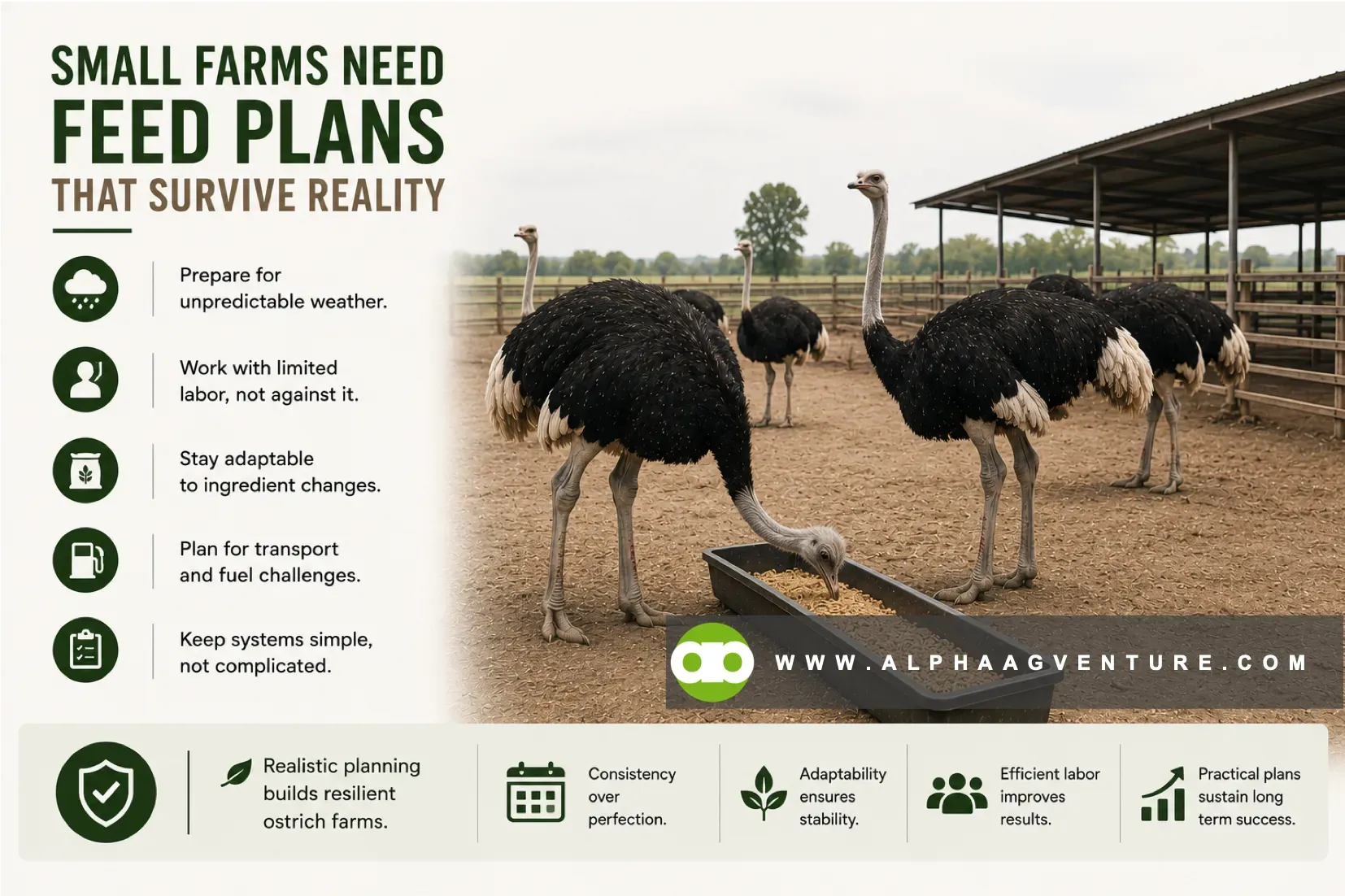
Severe weather conditions frequently disrupt feed availability across rural provinces during typhoon and monsoon periods annually. Heavy rainfall sometimes damages stored ingredients because excessive moisture encourages mold development inside storage facilities. Transport delays also increase operational uncertainty whenever flooded roads restrict ingredient deliveries across agricultural regions. Practical feed programs should therefore include alternative ingredient options during unstable seasonal supply conditions.
Labor limitations also affect feeding consistency because many small farms operate with extremely limited manpower afterward. Delayed feeding schedules sometimes reduce intake efficiency because ostriches respond poorly to inconsistent daily routines. Poor labor allocation also increases feed waste whenever feeders remain improperly cleaned or poorly maintained afterward. Organized farm systems help smaller operations maintain stable feeding performance despite limited available workforce capacity.
Unexpected ingredient shortages frequently force farms to modify feed formulations without extensive preparation beforehand. Sudden price increases sometimes make certain ingredients financially unrealistic for long term operational sustainability afterward. Many small farms therefore rely upon adaptable feeding strategies instead of rigid nutritional formulations permanently. Flexible ingredient selection helps farms maintain nutritional stability despite unpredictable agricultural market disruptions throughout different seasons. Practical feed systems should prioritize consistency and sustainability instead of unrealistic nutritional perfection afterward.
Fuel prices also influence feeding expenses because transportation costs affect ingredient pricing across many rural locations. Long delivery routes frequently increase operational costs whenever farms depend heavily upon distant commercial suppliers afterward. Poor transport accessibility also creates scheduling difficulties during emergency ingredient shortages or severe weather conditions. Efficient feed planning therefore requires realistic logistical preparation alongside nutritional formulation and ingredient selection. Stable supply chains often protect small farms from avoidable operational disruptions throughout unpredictable agricultural market conditions.
Some farms also attempt overly complex feeding systems unsuitable for actual smallscale farm management conditions afterward. Excessive formulation complexity frequently increases preparation mistakes because workers struggle with unrealistic operational procedures daily. Overcomplicated systems also reduce long term consistency because difficult routines eventually become operational burdens afterward. A reliable ostrich feeding program should remain practical enough for ordinary farm conditions without constant supervision.
Successful ostrich feeding programs depend heavily upon realistic planning under unpredictable agricultural production environments afterward. Sustainable farm systems usually prioritize adaptability, ingredient availability, labor efficiency, and operational consistency simultaneously. Practical feeding strategies often outperform theoretically perfect systems that collapse under actual farm pressures later. Strong ostrich operations usually survive difficult conditions because realistic preparation supports long term management stability.
Strong Ostrich Flocks Depend Upon Daily Discipline
Reliable ostrich production depends heavily upon consistent daily feeding discipline across every stage of farm operations. Expensive supplements rarely compensate for weak management habits or inconsistent nutritional practices throughout production systems. Many long term production problems originate from repeated small feeding mistakes instead of sudden catastrophic failures. Stable feeding routines usually protect flock performance more effectively than temporary corrective nutritional interventions afterward.
Some farmers search constantly for expensive shortcuts while overlooking ordinary management responsibilities inside practical farm environments. Irregular feeding schedules frequently create unnecessary stress because ostriches respond strongly to routine disruptions afterward. Poor consistency also weakens production stability since nutritional imbalance gradually affects growth, fertility, and overall flock condition. Careful feed management should therefore remain a permanent operational priority instead of a routine daily obligation.
Successful ostrich farming requires discipline because strong production systems rarely develop through temporary effort alone afterward. Consistent nutritional management helps farms maintain healthier flocks, lower operational waste, and more stable financial performance. Long-term ostrich stability usually depends upon disciplined daily execution rather than occasional expensive solutions.
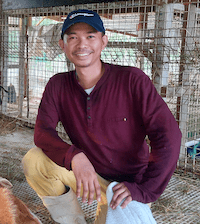
Jaycee de Guzman is the owner of Alpha Agventure Farms, where he develops practical livestock production systems, agricultural marketing strategies, and farm business models. He writes regularly about livestock development, agricultural entrepreneurship, and public policy affecting Philippine agriculture.