

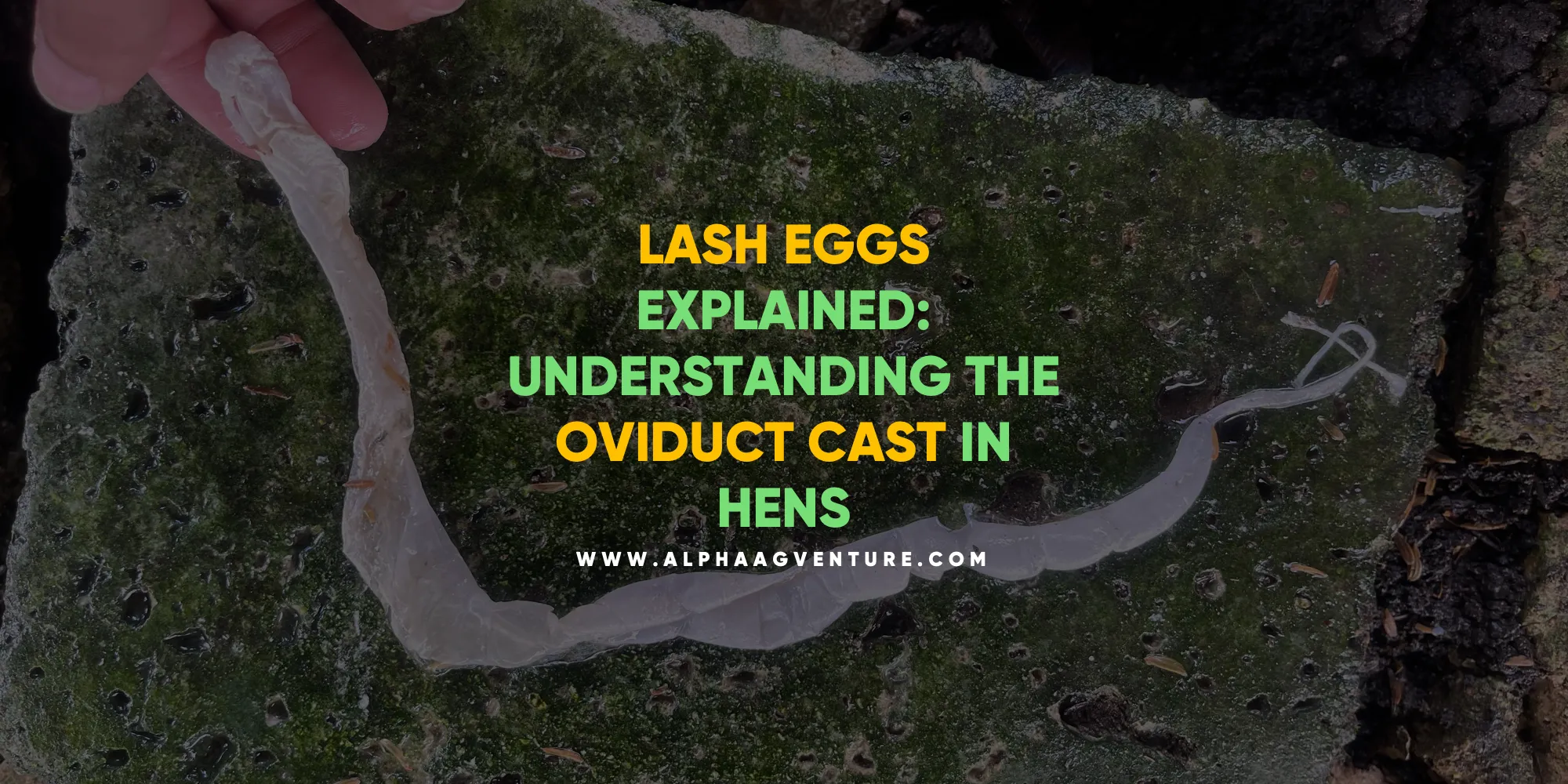
Earlier today, I received an email from one of my customers that immediately caught my attention. He had previously purchased Rhode Island Red and Black Australorp breeders from Alpha Agventure Farms, and if I remember correctly, he also subscribed to my pre-recorded Chicken Farming Seminar around a year or two ago. Since then, we had occasionally exchanged messages whenever he had questions about raising his flock. Today’s email, however, was unlike any I had received from him before.
This was his email:
Good day sir Jaycee!
I found something unusual with the Rhode Island Red breeders I bought from you. Inside the partition consisting of 1 rooster and 3 hens, I found an “intestinal” looking egg on their nesting box. I found it strange because all 3 hens already laid their eggs this morning and then I found this strange, soft, long intestine looking egg around 1pm. All 3 eggs laid that morning were all normal. I did notice this 1 hen that wasn’t consistent in laying her eggs. Could this strange egg be one of the cause that made her inconsistent in laying? I will send a picture of this strange egg. Please tell me anything you know about it.
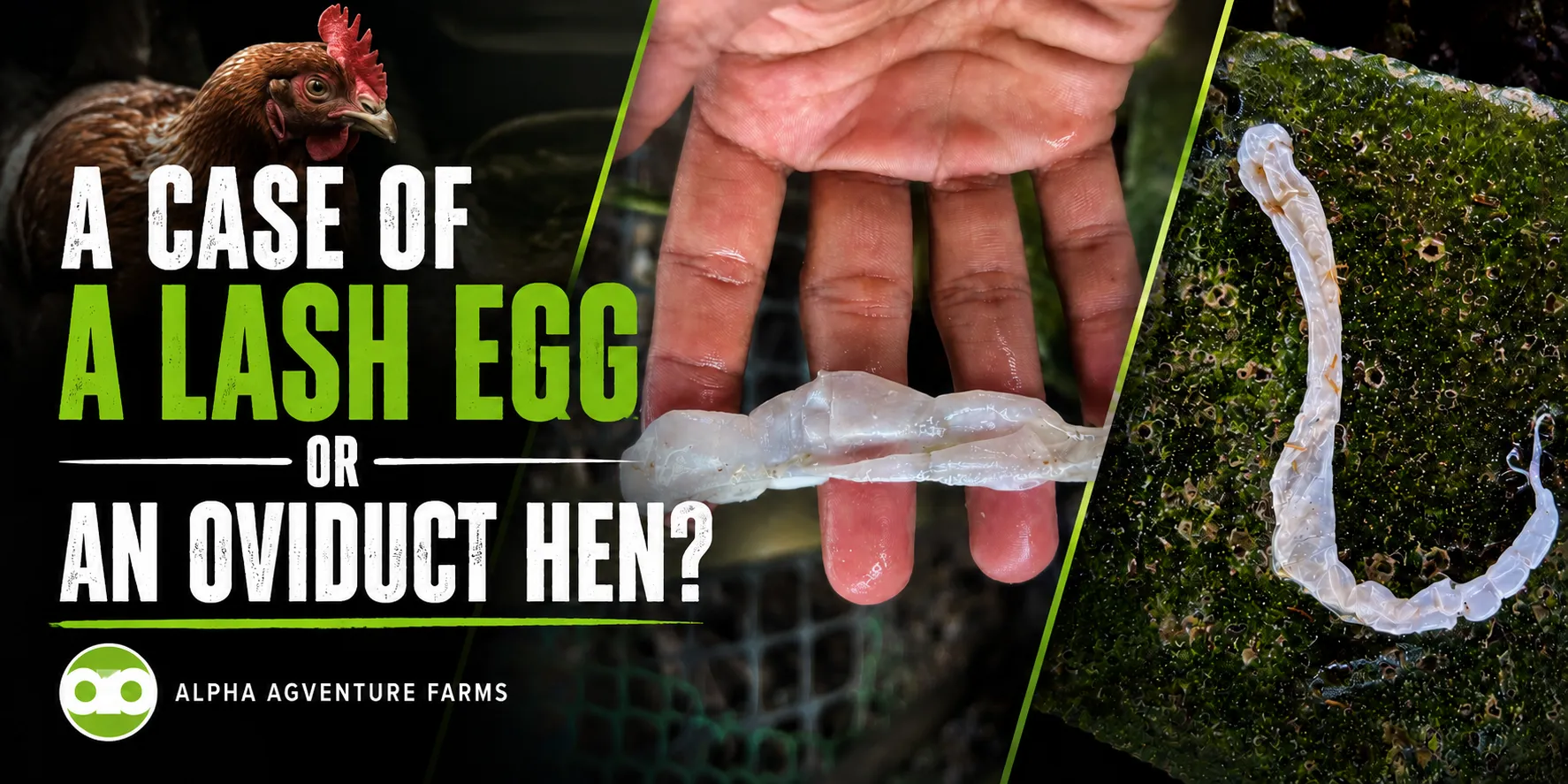
A Lash Egg Is Not Actually an Egg
One of the first things I explained to my customer was that the term “lash egg” is actually somewhat misleading. Despite its name, a lash egg is not a true egg at all.
When people hear the word “egg,” they naturally imagine a yolk surrounded by egg white, enclosed by membranes and a shell. A lash egg develops in an entirely different way. Rather than being formed from a normal ovulation, it is made up primarily of inflammatory material that has accumulated inside the hen’s reproductive tract.
Depending on the individual case, a lash egg may contain mucus, fibrin, proteins, dead cells, inflammatory tissue, bacteria, and occasionally fragments of yolk that failed to develop normally. Instead of becoming a healthy egg, these materials gradually collect together before eventually being expelled by the hen.
This explains why lash eggs can look so unusual. Some resemble pieces of cooked meat. Others appear rubbery, cheesy, or rope-like. In the case of my customer’s photographs, the long, twisted, translucent appearance made it resemble a section of intestine rather than anything most people would associate with an egg.
Why It Is Also Called an Oviduct Cast
The second name for this condition, oviduct cast, actually provides a better clue about what is happening.
The oviduct is the long reproductive tube responsible for forming a normal egg. After a yolk is released from the ovary, it enters the oviduct, where different sections add the albumen, shell membranes, and finally the hard calcium shell before the egg is laid.
When the lining of the oviduct becomes inflamed, damaged, or infected, it may begin shedding layers of tissue and inflammatory material. These layers can gradually mold themselves into the shape of the inside of the oviduct.
Eventually, the hen expels this molded mass.
Because the material essentially forms a cast of the oviduct, many veterinarians prefer the term oviduct cast over lash egg. In my opinion, it is a more anatomically accurate description of what the hen is actually producing.
Why Does an Oviduct Become Inflamed?
One question naturally follows another.
If a lash egg results from inflammation inside the reproductive tract, what causes that inflammation in the first place?
Unfortunately, there is no single answer.
One of the more common causes involves bacterial infections. Bacteria such as Escherichia coli, commonly known as E. coli, normally exist in the environment and may sometimes enter the reproductive tract. Once inside, they can trigger inflammation that interferes with normal egg formation.
Inflammation may also occur following injury to the reproductive tract, retained egg material, egg yolk leakage into the abdominal cavity, or chronic irritation of the oviduct. Certain viral diseases affecting laying hens may also damage the reproductive system and contribute to abnormal egg production.
Sometimes, despite careful examination, no definitive cause is ever identified.
That uncertainty is one reason why lash eggs occasionally surprise even experienced poultry breeders.
Can a Lash Egg Explain Inconsistent Egg Production?
This was perhaps the most important question my customer asked.
He mentioned that one of his hens had not been laying consistently before this strange object appeared.
I told him that the answer was yes.
When the reproductive tract becomes inflamed, normal egg production is often disrupted. The hen may begin skipping laying days, producing soft-shelled eggs, shell-less eggs, wrinkled eggs, or eggs with unusual shapes. In some cases, she eventually expels an oviduct cast before her reproductive tract either recovers or continues to deteriorate, depending on the underlying cause.
Because only one hen in his breeding group had been laying inconsistently, she was the most likely bird to have produced the lash egg.
Of course, without directly observing the flock or conducting diagnostic testing, no one can identify the specific hen with complete certainty. Nevertheless, her laying history makes her the most probable source.
Does One Lash Egg Mean the Hen Will Die?
Fortunately, the answer is no.
One of the biggest misconceptions surrounding lash eggs is that they automatically signal the end of a hen’s life. While they should certainly not be ignored, they do not necessarily carry a poor prognosis.
Some hens produce a single lash egg, recover from the underlying inflammation, and eventually return to laying normal eggs. Others continue laying irregularly but otherwise remain healthy for quite some time.
Unfortunately, there are also hens whose reproductive disease continues progressing despite passing the lash egg.
The outcome largely depends on what caused the inflammation in the first place and how severely the reproductive tract has been affected.
This is why I always encourage poultry raisers to observe the bird rather than judging her condition solely by what she expelled.
Watch the Hen, Not Just the Lash Egg
Finding an unusual object in the nesting box naturally captures everyone’s attention.
However, once the initial surprise passes, I believe the most important thing is to shift attention back to the hen herself.
Is she eating normally?
Is she drinking enough water?
Is she active and alert?
Does she continue scratching the ground, interacting with the flock, and behaving like the other birds?
These observations often tell us much more about her health than the lash egg itself.
A hen that remains bright, active, and maintains a healthy appetite deserves careful observation rather than immediate panic.
Warning Signs That Require Closer Attention
Although many hens recover, there are situations where closer monitoring becomes essential.
If the affected hen stops eating, becomes unusually quiet, isolates herself from the flock, or loses weight, those changes deserve attention.
A swollen abdomen may indicate accumulation of inflammatory material or fluid inside the body.
Some hens develop what poultry keepers commonly describe as a “penguin posture,” standing more upright because of discomfort within the abdomen.
Repeated straining without producing normal eggs, foul-smelling discharge, repeated lash eggs, or complete cessation of laying may also indicate that the underlying reproductive disease is becoming more serious.
Whenever these signs appear, seeking assistance from a veterinarian experienced with poultry becomes the most appropriate next step.
Can This Condition Be Prevented?
No management program can completely eliminate reproductive disorders.
Even well-managed flocks occasionally produce hens that develop problems within their reproductive systems.
However, good husbandry certainly reduces many of the risk factors associated with bacterial infections.
Keeping nesting boxes clean, replacing wet litter promptly, maintaining good ventilation, providing balanced nutrition, ensuring continuous access to clean drinking water, and practicing proper biosecurity all contribute to healthier birds.
While these practices cannot guarantee that a lash egg will never occur, they help create conditions that support overall reproductive health.
Should Antibiotics Be Given Immediately?
This is another question I frequently hear whenever reproductive problems are discussed.
Personally, I do not believe antibiotics should be given automatically simply because a hen has produced a lash egg.
Although bacterial infections are one possible cause, they are not the only cause.
Using antibiotics without a clear indication may expose birds to unnecessary medication and contributes to the broader problem of antimicrobial resistance.
Instead, I believe treatment decisions should be based on the overall condition of the bird, the number of affected hens, clinical signs, and, whenever possible, veterinary evaluation.
Every flock is different, and every case deserves individual assessment.
What I Recommended to My Customer
After reviewing his photographs and reading his observations, I advised him to monitor the hens closely over the coming days.
I suggested paying particular attention to the hen that had been laying inconsistently because she was the most likely source of the lash egg.
If she continued eating well, remained active, and eventually resumed laying normal eggs, there would be reason to believe that the reproductive tract had recovered from a temporary episode of inflammation.
However, if she stopped eating, became lethargic, developed abdominal swelling, repeatedly produced abnormal eggs, or completely stopped laying, I recommended seeking veterinary assistance for a more thorough examination.
Observation often provides valuable clues before more invasive diagnostic procedures become necessary.
Every Strange Discovery Is an Opportunity to Learn
One of the things I appreciate most about staying connected with customers after they purchase birds from Alpha Agventure Farms is that learning never truly stops.
Every unusual observation shared by a poultry raiser becomes an opportunity to discuss real-world situations that many books barely mention. Some lessons are learned through experience, while others come from listening carefully to the experiences of fellow breeders.
The email I received today reminded me that poultry farming is full of surprises. Even experienced chicken keepers occasionally encounter something they have never seen before. Rather than immediately assuming the worst, I believe it is always better to remain calm, gather as much information as possible, examine the evidence carefully, and seek reliable explanations before reaching conclusions.
Every Unusual Egg Tells a Story Worth Understanding
When I first read my customer’s email describing what looked like an “intestinal” egg, I immediately understood why he was concerned. The photographs certainly showed something that would alarm almost anyone unfamiliar with lash eggs. Fortunately, the images strongly suggested that the object was not part of the digestive tract but rather an oviduct cast, a condition that, while abnormal, is well recognized among poultry veterinarians and experienced breeders.
The fact that one hen had already been laying inconsistently made the explanation even more reasonable. Although no one can diagnose every case from photographs alone, the combination of the bird’s laying history and the appearance of the expelled material pointed strongly toward inflammation of the reproductive tract.
For me, this email served as another reminder that successful poultry farming depends on more than simply collecting eggs every day. It requires paying close attention to the small details that birds reveal through their behavior, their health, and even the eggs they produce. Sometimes those details are ordinary. Other times, they appear in the form of something as unusual as a lash egg. When we take the time to understand what we are seeing instead of reacting with fear, we become better poultry raisers, make more informed decisions, and ultimately provide better care for the birds entrusted to us.
Jaycee de Guzman is the owner of Alpha Agventure Farms, where he develops practical livestock production systems, agricultural marketing strategies, and farm business models. He writes regularly about livestock development, agricultural entrepreneurship, and public policy affecting Philippine agriculture.