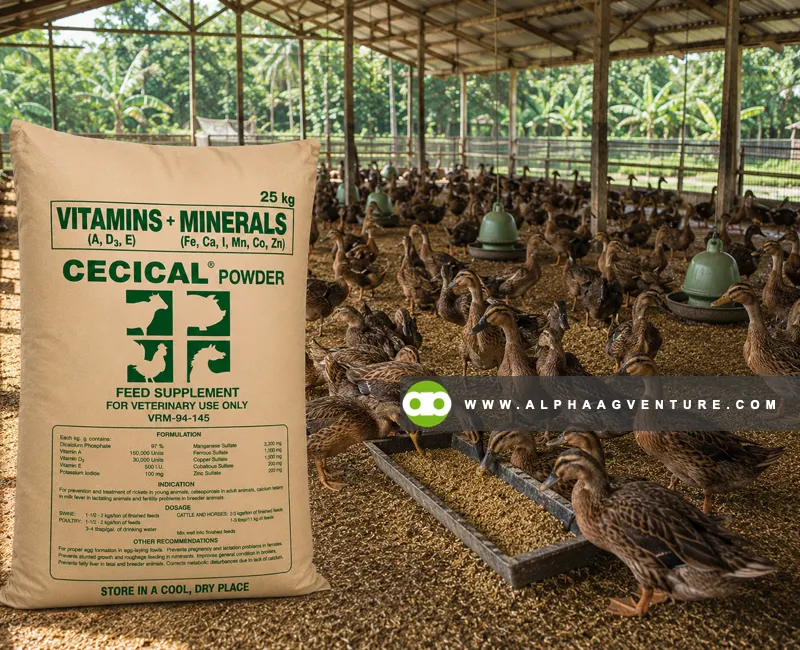
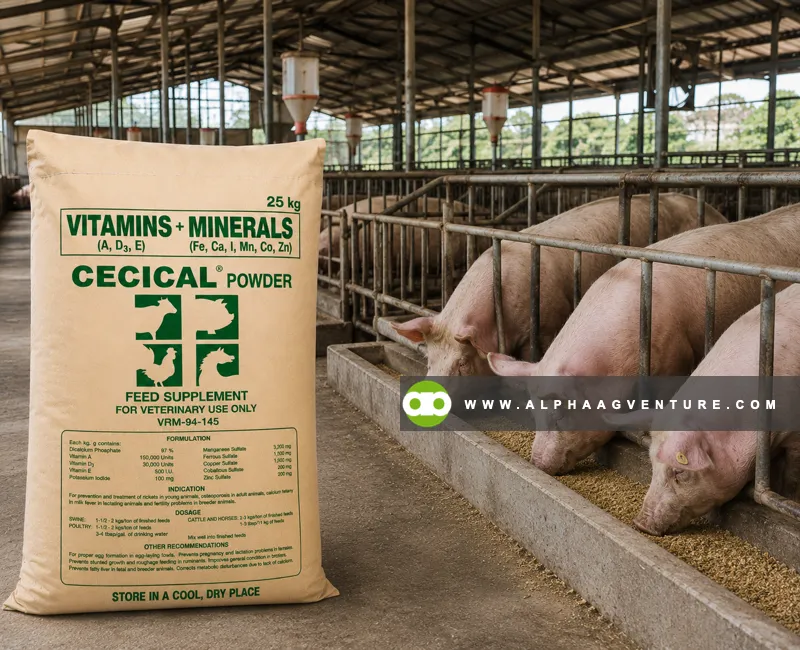
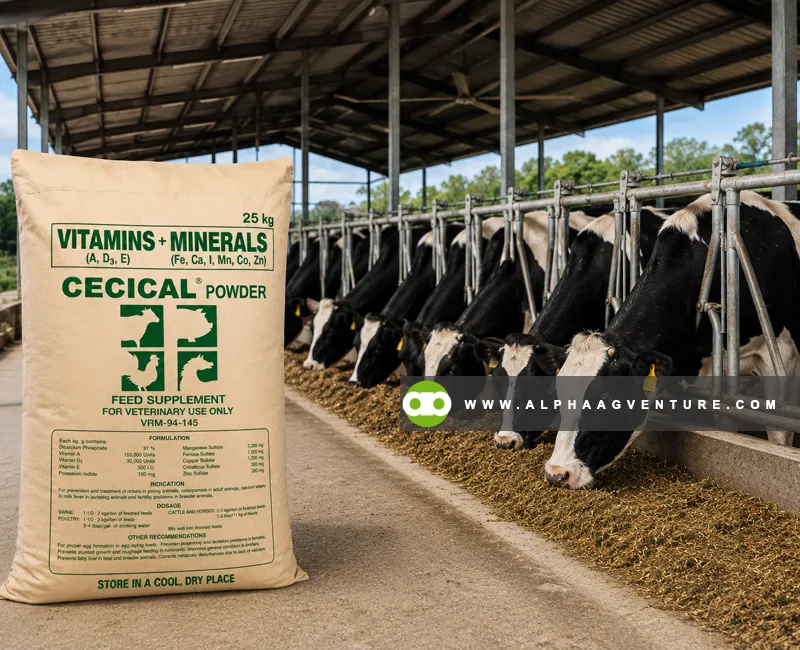
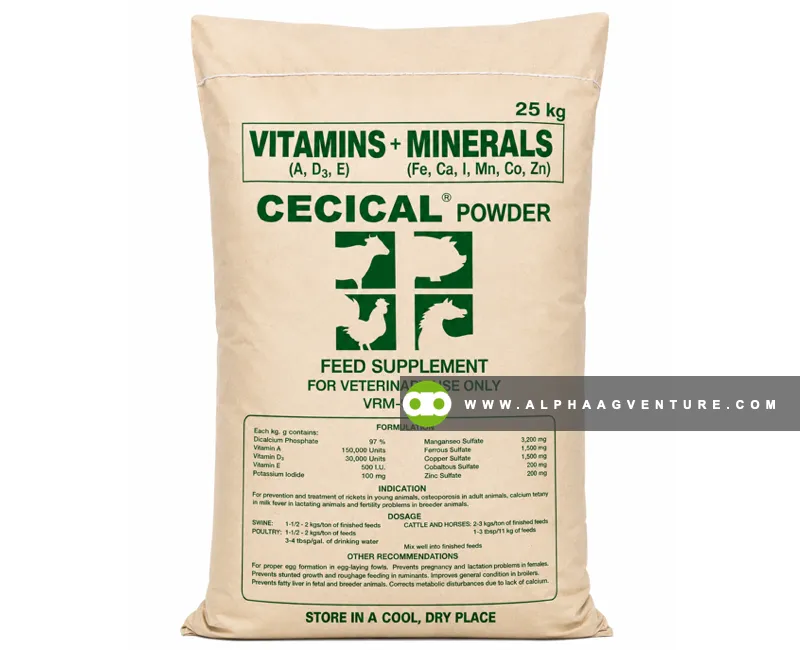
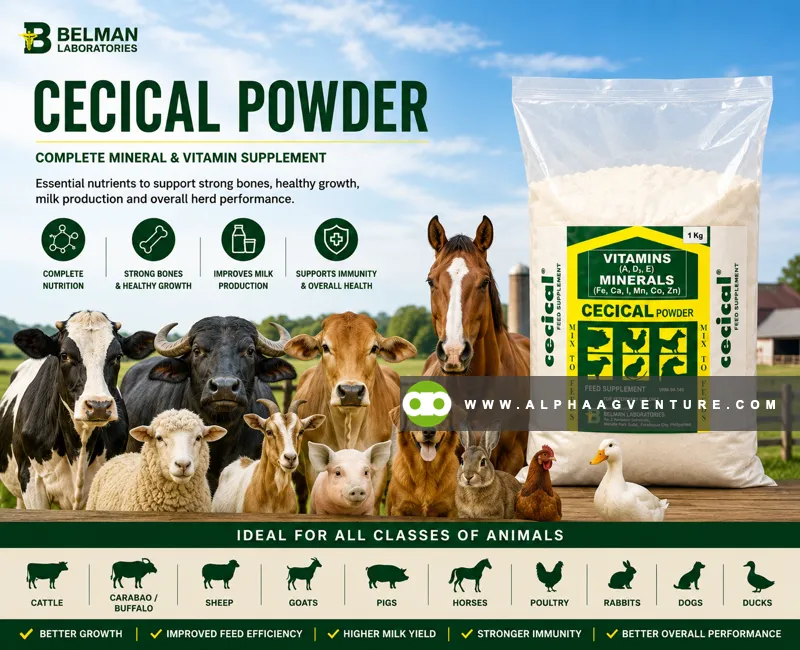
Description
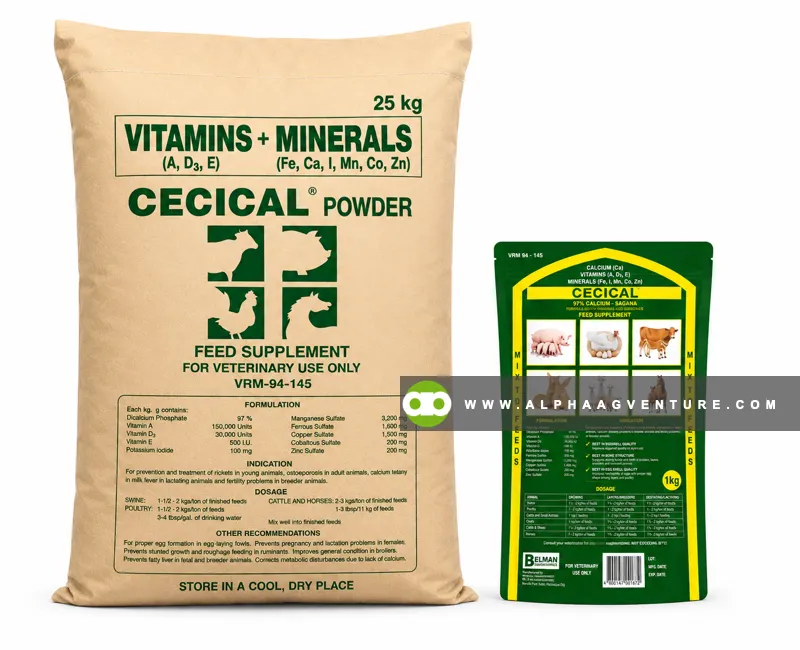
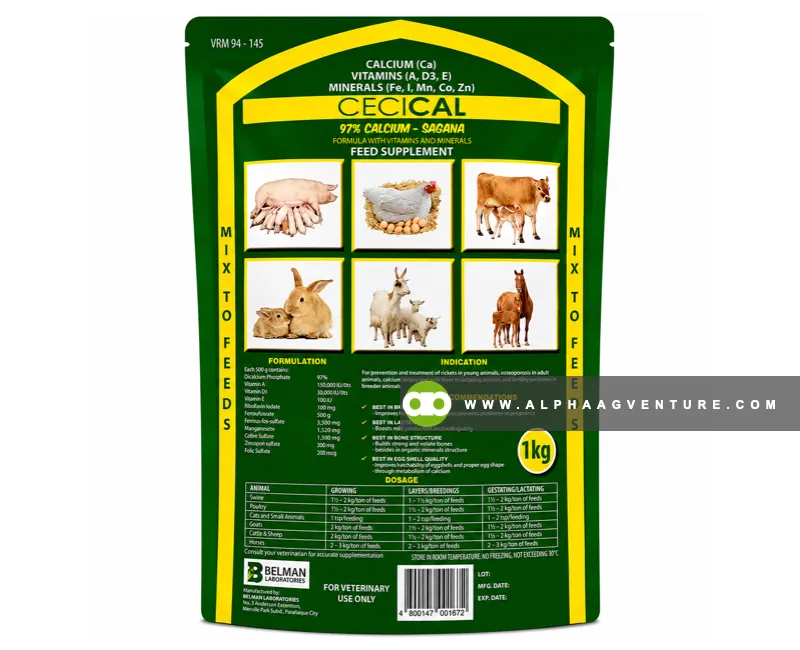
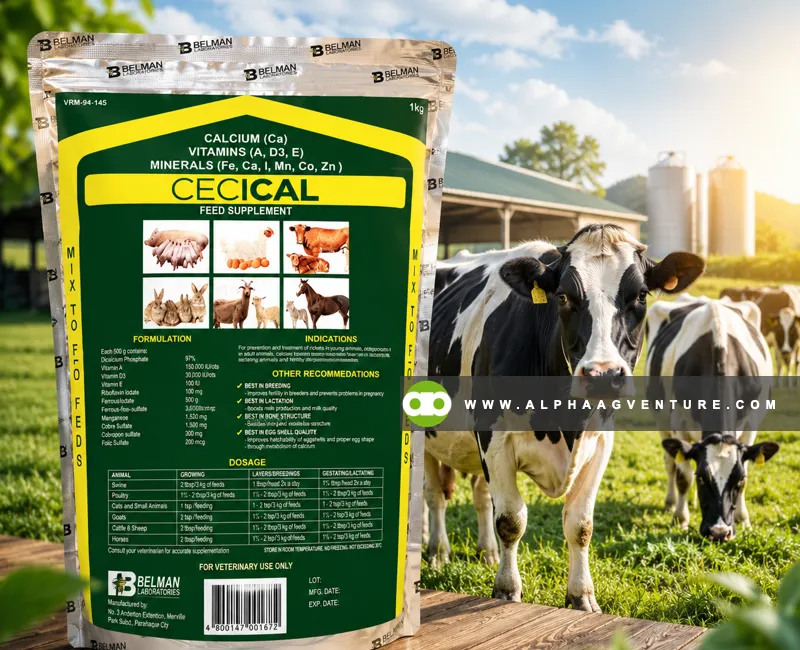
GUARANTEED ANALYSIS: CECICAL MINERAL PREMIX
| COMPOSITION | PARAMETER |
| Dicalcium Phosphate | 97% |
| Vitamin A | 150,000 I.U. |
| Vitamin D3 | 30,000 I.U. |
| Vitamin E | 500 I.U. |
| Potassium Iodide | 100 mg |
| Manganese Sulfate | 3,500 mg |
| Ferrous Sulfate | 3,500 mg |
| Copper Sulfate | 1,500 mg |
| Cobalt Sulfate | 1,500 mg |
| Zinc Sulfate | 200 mg |
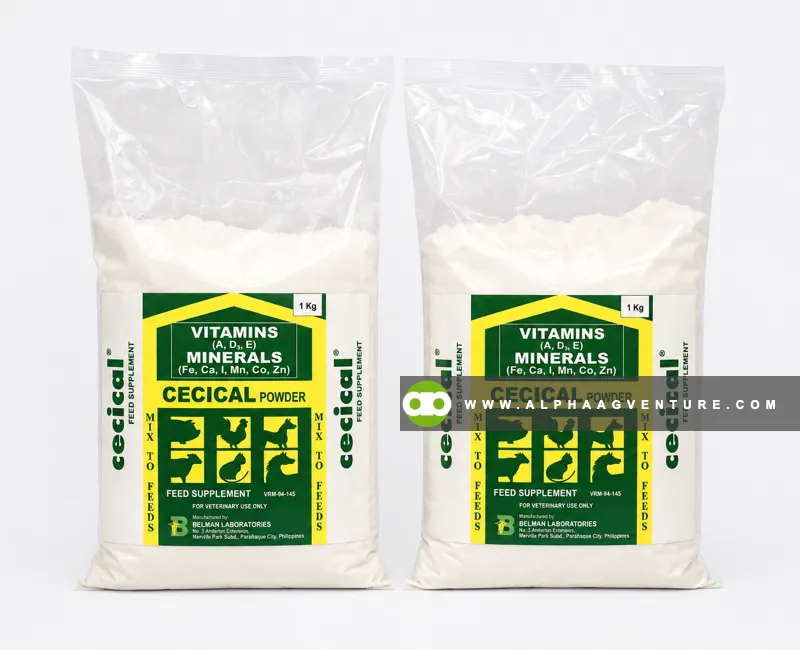
CECICAL MINERAL PREMIX FOR SALE
Why do some livestock operations experience declining fertility despite maintaining seemingly adequate feeding programs? Many raisers actively search for Cecical mineral premix for sale because nutritional deficiencies quietly affect reproduction, appetite, milk production, fetal development, feed conversion efficiency, immunity, and overall herd performance during demanding production cycles across different ruminant farming environments.
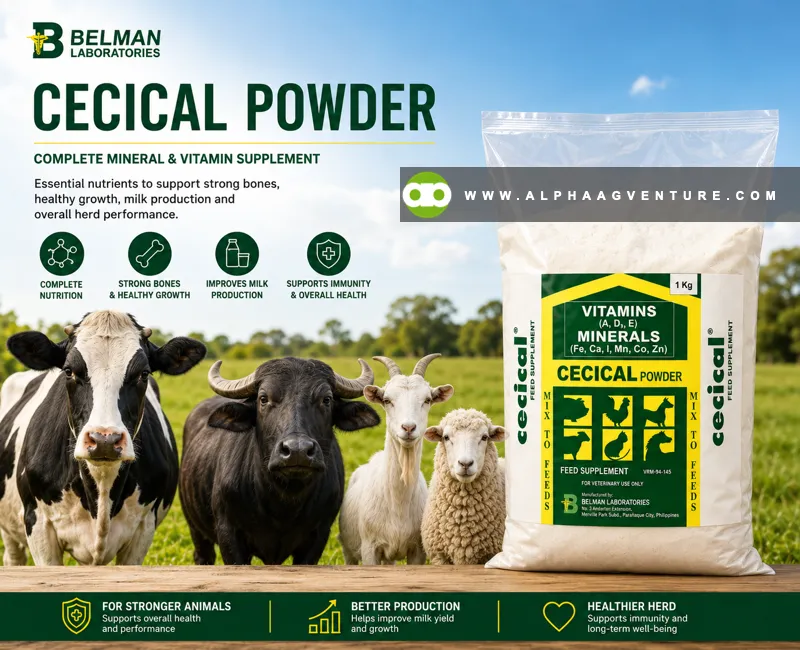
Cecical mineral premix is commonly used to support balanced mineral intake among goats, sheep, buffaloes, and cattle under varying management systems. Proper mineral supplementation contributes to stronger skeletal development, reproductive stability, metabolic efficiency, healthier pregnancies, milk quality, and improved recovery during stressful environmental and physiological production conditions affecting ruminants regularly.
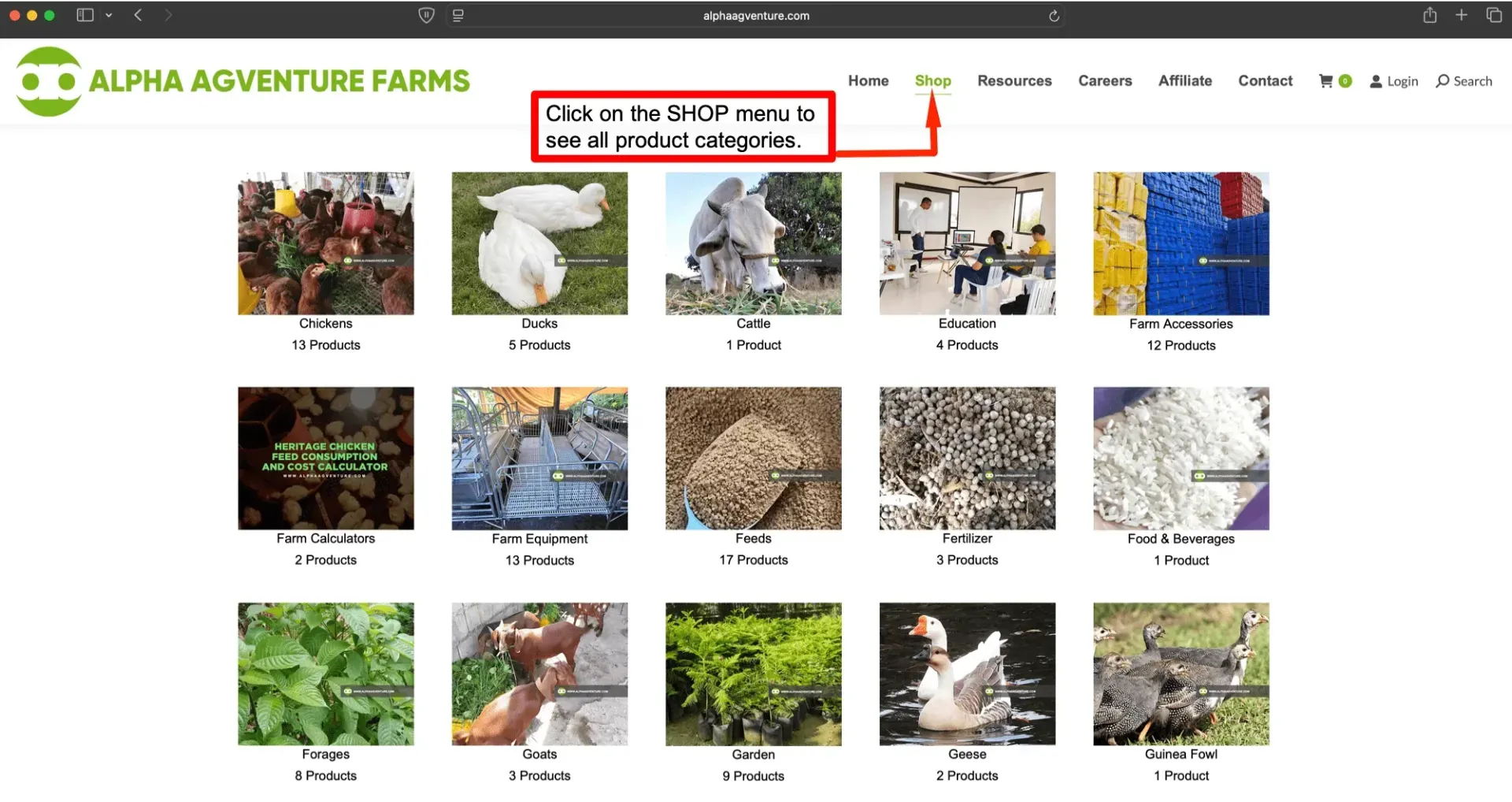
Some farmers hesitate purchasing supplements because they worry about counterfeit products, poor ingredient quality, or inconsistent nutrient concentrations. Understanding where to buy Cecical mineral premix becomes important when evaluating manufacturing reliability, nutritional specifications, storage conditions, ingredient transparency, feeding guidance, and technical support provided for commercial livestock production systems and breeding programs.
Others assume inexpensive supplements automatically provide identical benefits regardless of formulation quality or mineral bioavailability within digestive systems. The price of Cecical mineral premix often reflects ingredient sourcing, production standards, nutrient consistency, trace mineral quality, packaging reliability, and technical support. Inferior products sometimes contain poorly absorbed minerals reducing supplementation effectiveness significantly.
Selecting a trusted supplier of Cecical mineral premix may greatly influence herd consistency, feeding reliability, and long term reproductive performance outcomes. Alpha Agventure Farms provides nutritional guidance, feeding recommendations, proper storage instructions, and technical support helping livestock raisers integrate mineral supplementation with forage diets, silage feeding systems, concentrates, and commercially formulated feeds used during intensive ruminant production operations.
Farmers also question whether mineral supplementation remains necessary when animals already consume green forage and fortified concentrate feeds regularly. Nutritional gaps still occur because forage mineral content varies according to soil conditions, seasonal climate changes, feed storage quality, lactation demands, pregnancy requirements, transportation stress, disease recovery, and rapid growth stages experienced throughout production cycles.
Correct supplementation practices remain important because excessive mineral intake may create digestive disturbances, reduced feed consumption, or metabolic imbalances among sensitive animals. Following recommended feeding guidelines helps avoid unnecessary over supplementation while maintaining proper mineral balance. Balanced nutritional programs generally support safer long term herd management compared with excessive supplementation practices alone.
Livestock raisers prioritizing sustainable reproductive performance and improved milk production increasingly invest in scientifically balanced nutritional supplementation programs today. Cecical mineral premix may support gestating and lactating goats, sheep, buffaloes, and cattle when used responsibly within balanced feeding systems. Many commercial producers continuously search for Cecical mineral premix for sale throughout expanding agricultural markets.
FREQUENTLY ASKED QUESTIONS
What’s the recommended Cecical mineral premix to feed ratio?
Cecical mineral premix is commonly administered according to species specific feeding recommendations to support balanced mineral supplementation safely. Recommended dosage includes:
- Swine: 1½ to 2 kilograms per ton of finished feeds
- Poultry: 1½ to 2 kilograms per ton of finished feeds
- Cattle and horses: 2 to 3 kilograms per ton of finished feeds
- Dogs and cats: one-half tablespoon per ration
- Large breed dogs: 1 teaspoon per ration
Proper mixing with finished feeds helps maintain consistent nutrient distribution throughout feeding programs while reducing risks associated with uneven mineral intake.
Is Cecical mineral premix safe for pregnant goats, sheep, buffaloes, and cattle?
Cecical mineral premix may be suitable for gestating and lactating goats, sheep, buffaloes, and cattle when used responsibly within balanced feeding programs and recommended supplementation levels. Proper mineral nutrition supports fetal development, reproductive stability, milk production, immune function, and metabolic performance during demanding production stages. However, livestock raisers should avoid excessive supplementation because overfeeding minerals may negatively affect sensitive pregnant animals.
Can mineral premix cause toxicity in livestock when used continuously?
Mineral premixes generally remain safe when administered according to recommended feeding guidelines and balanced nutritional programs. Problems usually arise from excessive supplementation, improper mixing, or simultaneous use of multiple fortified products without nutritional evaluation. Farmers should consider existing feeds, mineral blocks, injectable supplements, and water quality before increasing supplementation rates unnecessarily within livestock operations.
Can mineral premix be suitable for pregnant and lactating animals?
Balanced mineral supplementation may support gestating and lactating goats, sheep, buffaloes, and cattle during nutritionally demanding production stages. Trace minerals and vitamins contribute to fetal development, milk production, reproductive recovery, immune function, and metabolic stability. However, proper feeding rates remain important because excessive mineral intake may create nutritional imbalances affecting sensitive animals negatively.
Can forage and natural grazing alone already provide sufficient minerals?
Natural forage may contain inconsistent mineral levels depending on soil quality, rainfall patterns, seasonal conditions, harvesting practices, and storage methods. Some grazing areas naturally lack important trace minerals required for reproductive performance and milk production. Supplementation helps address nutritional gaps commonly developing during pregnancy, lactation, rapid growth, transportation stress, and intensive commercial feeding operations.
Will mineral premix immediately increase milk production after feeding?
Mineral supplementation should not be treated as an instant production enhancer producing overnight improvements within livestock operations. Results commonly depend on overall feeding management, forage quality, genetics, animal health, disease control, environmental stress, and water availability. Consistent long term nutritional balance generally produces better reproductive stability, feed efficiency, and sustainable milk production performance.
Can mineral premix replace high quality forage and concentrates completely?
Mineral supplementation cannot compensate for poor forage quality, inadequate protein intake, contaminated feeds, or improper feeding management practices. Livestock still require balanced energy, protein, fiber, clean water, and proper housing conditions supporting normal metabolic processes. Mineral premix functions best as part of a complete nutritional strategy rather than as an independent feeding solution alone.
Is mineral premix only beneficial for large commercial livestock operations?
Small scale raisers may also benefit from balanced mineral supplementation because nutritional deficiencies affect animals regardless of operation size. Backyard farms commonly experience reproductive delays, weak offspring, poor growth, and inconsistent milk production caused by mineral deficiencies. Proper supplementation may support healthier breeding animals while improving long term productivity within smaller livestock management systems.
Can mineral premix still remain effective during hot weather conditions?
Heat stress may increase mineral losses, reduce feed intake, weaken immune response, and negatively affect reproductive efficiency among livestock populations. Balanced supplementation may help animals maintain metabolic stability during stressful environmental conditions. Farmers should also prioritize adequate hydration, proper ventilation, shade availability, and clean housing conditions supporting overall herd performance during prolonged hot weather periods.
Are imported mineral premixes automatically better than locally available products?
Product effectiveness depends more on formulation quality, ingredient consistency, manufacturing standards, storage conditions, and nutritional suitability than country of origin alone. Some imported products perform well, while others may not suit local feeding systems or forage conditions properly. Evaluating technical specifications and supplier reliability remains more important than relying solely upon marketing claims or branding.
Can mineral premix help animals recovering from transportation and disease stress?
Transportation stress, environmental changes, and disease recovery commonly increase nutritional demands among goats, sheep, buffaloes, and cattle. Balanced mineral supplementation may support appetite recovery, metabolic stability, immune function, and improved physical condition during stressful periods. However, mineral supplementation should complement proper veterinary care, hydration management, sanitation practices, and balanced feeding programs for better recovery outcomes.
How should mineral premix be stored to maintain product quality?
Mineral premixes should remain stored inside cool, dry, and properly ventilated environments protected from excessive moisture, direct sunlight, pests, and contamination risks. Improper storage may reduce vitamin stability, create clumping issues, and compromise nutrient consistency over time. Farmers should tightly seal containers after use while monitoring expiration dates and product appearance regularly.