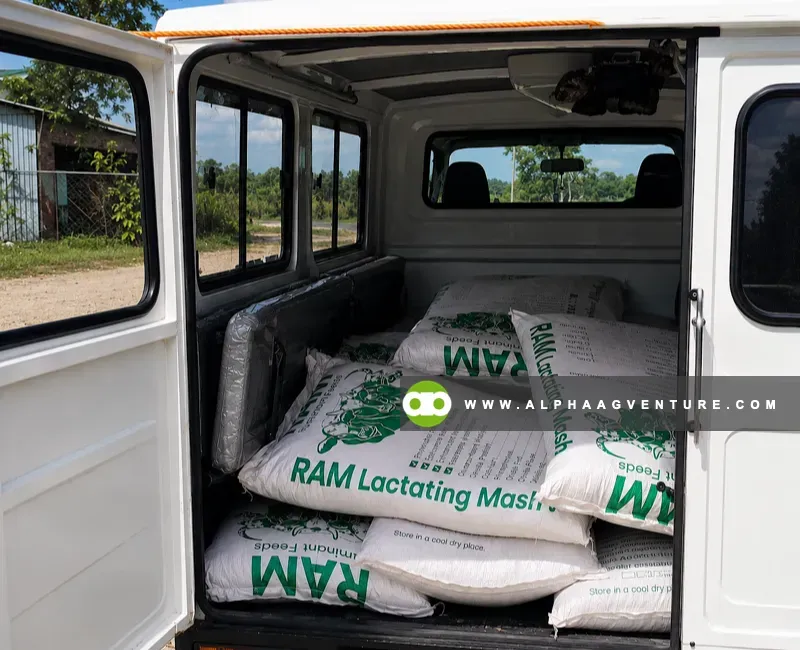
Description
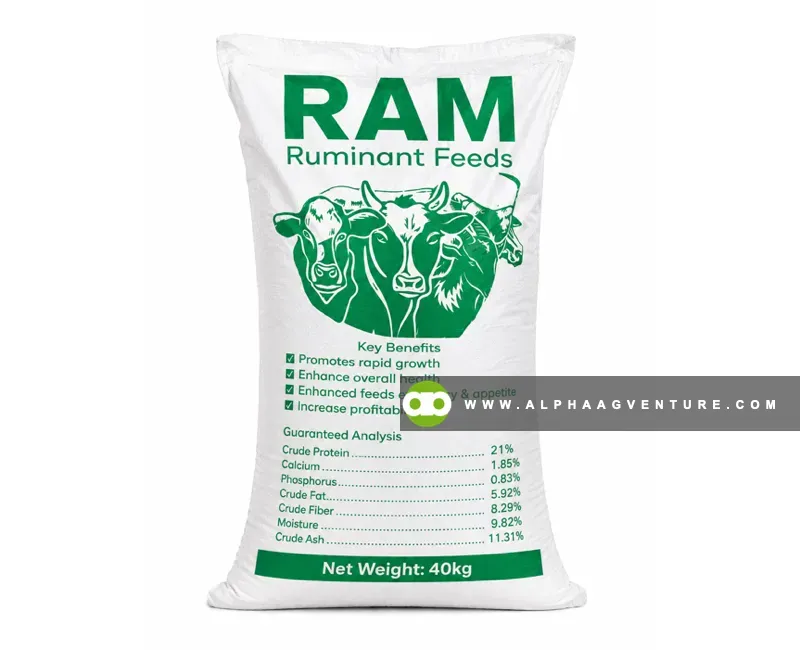
GUARANTEED ANALYSIS: RAM LACTATING MASH FOR RUMINANTS
| NUTRITIONAL COMPOSITION | PARAMETER |
| Crude Protein | 20.31% |
| Crude Fiber | 8.29% |
| Crude Fat | 5.92% |
| Calcium | 0.88% |
| Phosphorus | 0.83% |
| Ash | 11.31% |
| Moisture | 9.82% |
RAM LACTATING MASH FOR RUMINANTS FOR SALE
Are your lactating goats, sheep, cattle, or buffaloes losing body condition despite regular feeding programs? RAM Lactating Mash for ruminants for sale is formulated to support milk-producing ruminants requiring dependable nutritional intake during demanding production stages. Poor-quality feeds often lead to inconsistent milk yield, reduced appetite, and unnecessary condition loss that slowly affects overall herd productivity.
Lactating animals place heavy nutritional demands on the body every single day. Energy, protein, minerals, and digestibility must work together properly instead of existing only as numbers printed on feed sacks. RAM Lactating Mash is designed for practical feeding systems commonly used by commercial raisers, dairy operators, and even smaller farm setups handling lactating ruminants.
Many raisers hesitate when shifting feeds because sudden ration changes sometimes reduce intake temporarily. Proper feed transition management helps minimize adjustment problems while maintaining feeding consistency. Those wondering where to buy RAM Lactating Mash for ruminants may consider Alpha Agventure Farms, a science-oriented agricultural supplier serving different livestock operations across the Philippines with organized ordering processes.
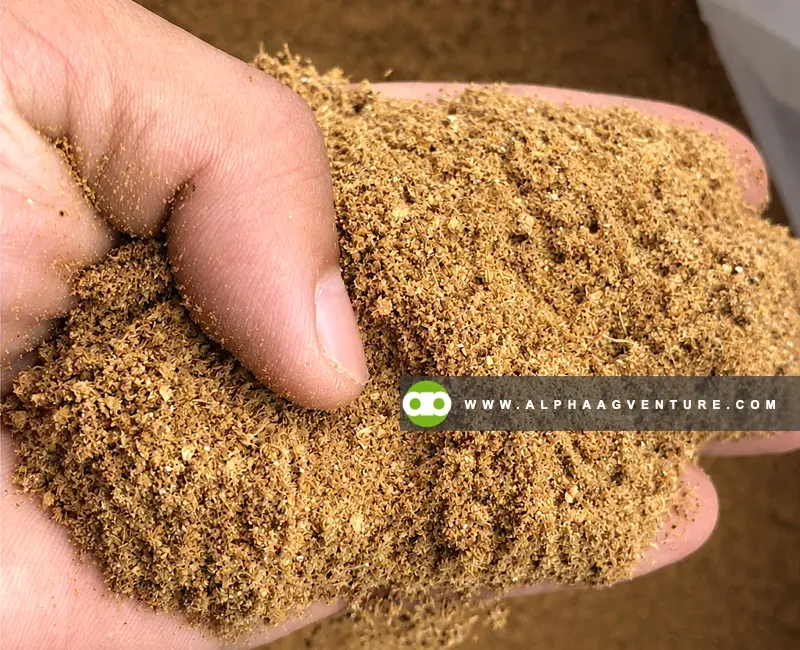
Some raisers assume mash feeds automatically create excessive feed wastage compared with pellets. Actual wastage depends more on feeder design, feeding management, moisture exposure, and animal behavior inside the pen. Properly managed mash feeds can still maintain excellent intake while offering flexibility for ration mixing, forage pairing, and practical feeding adjustments under field conditions today.
Others focus entirely on affordability without evaluating nutritional consistency and laboratory-supported composition. The price of RAM Lactating Mash for ruminants should always be assessed alongside feed quality, ingredient reliability, nutrient profile, and expected animal response. Cheap feeds sometimes create hidden losses through weaker milk production, inconsistent intake, or poor body condition during lactation periods on farms.
RAM Lactating Mash contains a laboratory-tested nutritional composition including 20.31% crude protein, 5.92% crude fat, 0.88% calcium, 0.83% phosphorus, and 9.82% moisture. These figures matter because lactating ruminants continuously drain nutrients through milk production daily. Consistent nutrient delivery helps support body maintenance, milk performance, feeding efficiency, and overall production stability under practical farm environments and management conditions.
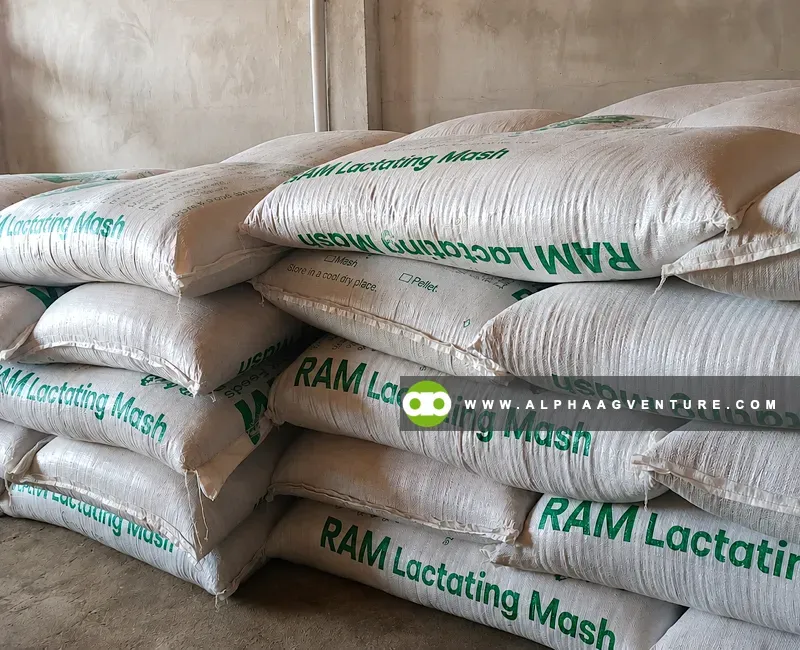
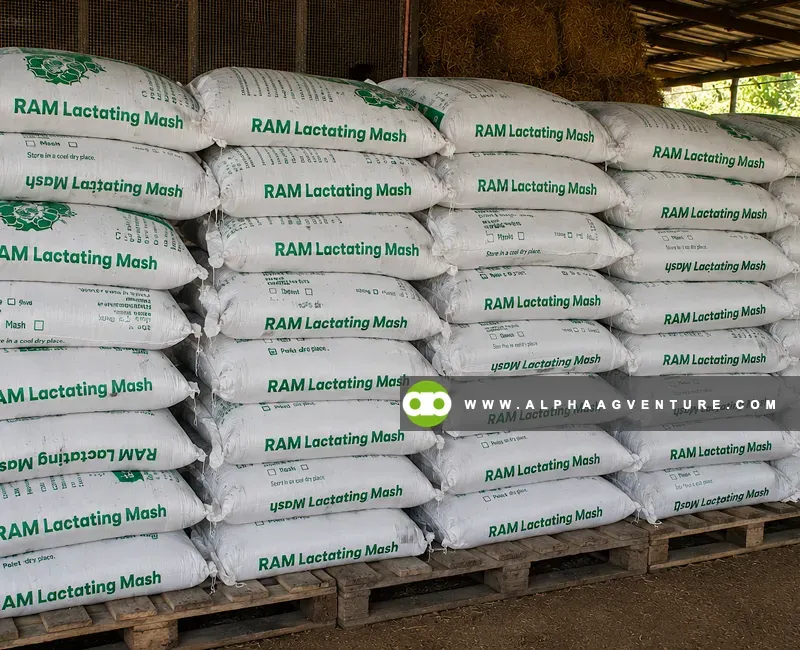
Storage practices also affect feed quality more than many realize. Feeds exposed directly to moisture, poor ventilation, contaminated flooring, or prolonged heat conditions may deteriorate faster and lose freshness over time. Proper storage using pallets, dry facilities, and organized inventory movement helps maintain feed condition while reducing spoilage risks and unnecessary waste inside agricultural operations and storage areas.
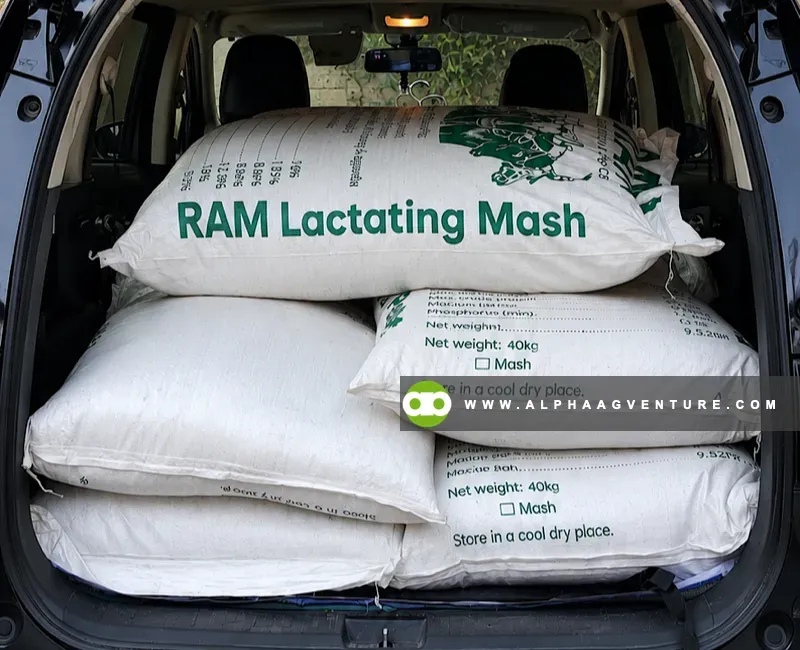
Reliable feeding programs require more than attractive sacks and marketing claims alone. Farmers searching for a dependable supplier of RAM Lactating Mash for ruminants often prioritize consistency, availability, organized logistics, and measurable nutritional standards supporting real farm performance. For raisers seeking RAM Lactating Mash for ruminants for sale, Alpha Agventure Farms provides structured agricultural supply support across various livestock sectors nationwide.
FREQUENTLY ASKED QUESTIONS
Can RAM Lactating Mash be used as the only feed for lactating ruminants?
RAM Lactating Mash should be used as part of a balanced feeding program, not as the only feed source. Lactating ruminants still need good-quality roughage such as forage, hay, silage, or treated rice straw. The mash helps supply concentrated nutrients, while roughage supports rumen function, chewing activity, and overall digestive stability.
Is RAM Lactating Mash suitable for newly kidded, lambed, or calved animals?
Yes, it may be used for newly lactating animals, provided feeding is introduced gradually and matched with the animal’s appetite, body condition, and milk demand. The early lactation period is nutritionally demanding, so sudden overfeeding should be avoided. Start with practical amounts, observe manure consistency and intake, then adjust based on farm conditions.
Will this feed immediately increase milk production?
No feed should be presented as an instant milk booster. Milk production depends on genetics, stage of lactation, water intake, forage quality, health status, body condition, and overall management. RAM Lactating Mash supports nutritional consistency, but results still depend on whether the animal has the biological capacity and proper environment to produce more milk.
Can this be fed to dry animals or non-lactating ruminants?
It is primarily intended for lactating ruminants, so using it for dry or non-lactating animals may not always be economical or necessary. Non-lactating animals usually have lower nutrient demands unless they are recovering, gaining condition, or approaching breeding. Feeding should match the animal’s production stage to avoid waste and unnecessary expense.
Is RAM Lactating Mash only for dairy farms?
No. It can also be useful for small and medium farms with lactating goats, sheep, cattle, or buffaloes, even when milk is mostly used for offspring rather than commercial dairy sales. Good maternal nutrition matters because the dam’s condition, milk availability, and recovery after giving birth can affect offspring growth and survival.
Can I mix RAM Lactating Mash with other feeds?
Yes, it may be mixed with compatible farm feeds or offered alongside forage-based rations, depending on your feeding program. However, avoid random mixing without understanding the total ration. Too many overlapping concentrates may increase cost, disrupt balance, or reduce roughage intake. Practical feeding works best when each ingredient has a clear purpose.
Will animals readily eat RAM Lactating Mash?
Most feeding acceptance depends on previous diet, feed freshness, feeder setup, and how gradually the new feed is introduced. Some animals may eat it immediately, while others need a short adjustment period. Avoid forcing abrupt changes. A gradual transition helps reduce refusal and allows the rumen to adapt more comfortably.
Is mash harder to manage during rainy or humid weather?
Mash feeds require proper storage because moisture exposure can affect freshness and texture. Keep sacks elevated on pallets, away from wet flooring, roof leaks, and direct wall moisture. Open only what can be consumed within a practical period. Good storage discipline is especially important during humid or rainy months.
How do I know if my animals need a lactation feed?
Warning signs include declining body condition, weak appetite after giving birth, lower milk availability for offspring, slow recovery, rough hair coat, or poor response to forage alone. These signs may also involve disease, parasites, or mineral imbalance, so feeding should not be the only thing checked. Nutrition works best with proper health management.
Can RAM Lactating Mash help reduce feeding guesswork?
Yes, because a formulated lactation feed gives farmers a more structured concentrate option instead of relying only on whatever raw materials are available. It does not remove the need for good judgment, but it helps make feeding more organized. Consistency matters when managing animals that produce milk every day.