

Whenever I hear the phrase Sustainable Livelihood Program (SLP), I pause and ask myself what “sustainable” really means in the lives of the people these programs are meant to serve. In the Philippines, Local Government Units (LGUs) often run these programs by distributing goats, pigs, poultry, rabbits, buffaloes, or cattle. The intent is clear: provide food security and open opportunities for additional income. On paper, it looks like a powerful intervention. In reality, it is only as strong as the systems that support it (Scoones, 1998).
The truth is, sustainability does not end with the simple act of handing out animals. A livestock dissemination project becomes a livelihood program only when two essential elements are present. First, there must be regular monitoring and feedback so that mistakes and gaps in implementation are corrected quickly. Second, beneficiaries must be trained not only in cultural management but also in the economics and marketing of livestock farming (Anderson & Feder, 2007; Chambers & Conway, 1992). Without these two elements, what is called a livelihood program often turns into nothing more than a temporary relief effort.
The law itself recognizes this. The Local Government Code of 1991 (Republic Act 7160) makes it clear that LGUs are responsible for delivering agricultural extension and research services, including livestock. The Agriculture and Fisheries Modernization Act of 1997 (Republic Act 8435) adds that agricultural modernization must lead to both profitability and sustainability. Even the Philippine Development Plan 2023–2028 places emphasis on value-chain integration and the development of agripreneurs as a way of achieving inclusive growth. The intention of the law and national plans is not simply to raise animals but to turn them into viable, lasting livelihoods.
The challenge is that, in practice, most training under SLPs tends to emphasize animal science. This is understandable, since LGUs already have veterinarians at the city, municipal, and provincial levels who are highly trained in feeding, housing, and disease management. Their technical expertise is essential to keeping animals healthy and productive. Yet, the hidden gap lies in areas that extend beyond animal health, specifically economics and marketing. These are not traditionally part of veterinary practice, but they are equally critical if livestock projects are to evolve into true livelihoods.
That difference matters. Veterinary support ensures animals survive and thrive; complementary training in agribusiness ensures families do too. Without consistent monitoring and without this additional grounding in marketing and economics, many programs still struggle to produce lasting success stories. Families may benefit in the short term, but the long-term impact often fades. When that happens, we must ask: can we still call them sustainable livelihood programs, or are they simply well-meaning dole-outs?
What Goes Wrong When Livelihood Programs Stop at Animal Distribution
Problem 1. Poor livestock survival rates
Recipients of Sustainable Livelihood Programs are usually trained in cultural management before animals are distributed. So the issue is not that they do not know how to raise goats, rabbits, or chickens.
The real problem is that there is no consistent follow-up. Without monitoring, recipients may ignore or forget what they learned during training. Preventable diseases spread when vaccinations are skipped. Malnutrition develops when feeding protocols are not followed. Even housing mistakes, like failing to provide shade or windbreaks, lead to unnecessary losses.
In fact, I have seen this challenge even in my own work. People who registered for my pre-recorded online chicken and goat farming seminars sometimes still email me months later with questions that were already answered in the video modules. This shows that a few hours or days of training do not guarantee knowledge retention. Farmers, like all learners, need reminders, reinforcement, and encouragement to apply what they were taught.
This is exactly why a follow-through system is necessary. It helps farmers remember and retain the knowledge instead of treating the training as a one-off activity that ends the moment animals are handed over. Programs without this structure almost always face preventable losses.
Ayele et al. (2018) made it clear that follow-up support reduces mortality and improves productivity. Without it, animals die within weeks or months, and programs collapse before success even begins.
Problem 2. Misallocation and misuse of resources
Selling off distributed livestock immediately after receipt is more common than many admit. This does not happen because recipients lack technical know-how. In fact, they usually know how to care for the animals.
The issue lies in accountability. When beneficiaries know that no one will check on them regularly, the temptation to sell animals for instant cash becomes stronger. If, however, they are informed that someone will visit every two weeks or every month, the thought of selling quickly diminishes. The knowledge that monitoring personnel will come creates a sense of responsibility.
Regular visits also encourage recipients to apply the training they received more faithfully. When people know they are being monitored, they become more conscious about doing things right, whether it is feeding, housing, or vaccinating their animals. Moreover, they are more likely to document the problems they encounter, not only to prepare a report during visits but also to seek solutions directly from the monitoring team.
In my observation, the absence of this accountability mechanism is what drives misuse. Recipients may treat livestock as short-term assets to liquidate rather than as long-term capital to nurture. Monitoring, therefore, is not merely a policing activity but a safeguard against waste, a reminder that these animals are entrusted resources meant to build sustainable livelihoods.
Gonsalves et al. (2005) emphasized that farmer participation and accountability reduce this kind of misuse. Monitoring is the missing link that transforms livestock from being treated as disposable assets into genuine long-term capital for sustainable livelihood.
Problem 3. Dependence mindset (“dole-out syndrome”)
Recipients of Sustainable Livelihood Programs usually understand cultural management. That part is not missing because LGU veterinarians already conduct trainings before animals are released. What is missing is the reinforcement of the idea that livestock is not just something to be raised. It is an enterprise to be marketed, expanded, and sustained.
Based on my observation, the best marketing idea many recipients can think of is to rely on their cooperative. And while it is true that one of the fundamental purposes of a cooperative is to assist its members, reliance on this model does not promote independence. It conditions beneficiaries to depend on the marketing strength of an institution rather than their own capacity to sell, negotiate, and build brand recognition. That, in essence, continues the dole-out mentality, only this time disguised in cooperative form.
Contrast this with what is possible today. Social media marketing, website marketing, video marketing, and even online forum marketing are powerful modern tools that can be done by a single farmer without requiring large capital or the infrastructure of a cooperative. I say this not in theory but in practice. Modesty aside, I do all four of these types of marketing single-handedly for Alpha Agventure Farms. They work because I studied them consciously, applied them consistently, and mastered them over time. If I can do it, others can too, provided that they are trained not by mere lecturers but by actual practitioners.
Some critics object to this argument by saying, “Jaycee, if they had your brain, their names would not be listed as program beneficiaries in the first place.” To that I respond firmly: the issue is not the size of the brain of the recipients but the vision and leadership of the project managers. Knowledge of modern marketing is not exclusive to a select few. It is learned through effort, practice, and the willingness to be trained. I myself did not acquire mastery overnight. I earned it through deliberate self-study and persistence.
Therefore, to continue offering livestock without teaching recipients how to market independently is to fuel dependency, not empowerment. Chambers and Conway (1992) long warned that such dependency undermines true transformation in rural programs. Without a clear shift toward independence through modern marketing training, the cycle of reliance will persist and the program will remain, at its core, a dole-out.
Problem 4. Lack of economic literacy in livestock farming
Livestock distribution programs commonly stop at the husbandry stage. Recipients know how to feed, breed, and care for the animals, which is not the problem. The real issue is their lack of economic literacy in livestock farming.
Let me be specific: How many farmers can say, off the top of their head, how much capital is needed to raise 100 Black Australorp or Rhode Island Red heritage chickens up to 1 week, 1 month, 2 months, 3 months, 4 months, or 5 months of age? Very few do, if any. And without a clear record of your cost to raise chickens to these milestones, you’re essentially blind. You don’t know which market your farm can target relative to your expenses and hoped-for profit margin.
Think about it: If your cost of production is higher because you use quality feed and good housing, but you don’t know your target profit margin, you may end up selling to anyone who comes along. On the other hand, someone who understands the numbers would aim for higher-tier markets. Without the term “target profit margin” making sense to you, you lack direction. You simply sell chicken to whoever buys, without strategy.
That’s precisely why my pre-recorded online chicken and goat farming seminars include three focused modules:
- Cultural management (Module 1),
- Marketing (Module 2), and
- Economics (Module 3).
In Module 3 of the chicken seminar, I walk learners through realistic cost breakdowns and profit scenarios if they raise and sell table eggs only, fertilized eggs only, 1-week-old chicks, 1-month-old chicks, up to 5-month-old pullets and cockerels. I even calculate the potential profit margin based on actual cost of production and sale price.
This knowledge shift opens their eyes. It helps them understand that profitability increases with age. But that doesn’t commit you to raising birds to 5 months if your capital doesn’t support it. Instead, you choose a business model that suits your budget, such as selling fertilized eggs until you save enough to move up to higher-margin models. It gives farmers clarity, motivation, and a roadmap to progress.
Research shows that makers of smallholder livestock systems must overcome barriers in accessing production-related information and assets before they can compete effectively (Delgado et al., 2008). Without economic literacy, livestock may be raised, but not turned into sustainable, profitable livelihoods.
Problem 5. Weak community impact
Technical training equips individual recipients with the skills to care for their animals. On paper, this looks sufficient. But in practice, without structured monitoring and community-wide feedback systems, progress is fragmented.
What happens is simple: some households excel while others struggle, and there’s no mechanism to bridge the gap. The beneficiaries who fail often repeat the same mistakes in silence, while those who succeed quietly move ahead. The result is a patchwork of isolated outcomes—good for a few families, but never strong enough to lift the whole barangay.
This highlights the weakness of many Sustainable Livelihood Programs: they measure success by tallying individual achievements, rather than by evaluating collective transformation. The distribution of livestock might uplift one household, but if their neighbors fall behind, the overall poverty level of the community remains unchanged. In fact, uneven results may even create resentment between households, undermining solidarity.
Scoones (1998) emphasized that sustainable livelihoods require strong community-based structures, not just isolated success stories. True progress is only achieved when beneficiaries advance together, with mechanisms in place that allow knowledge-sharing, collective problem-solving, and even pooled resources. Without such systems, the gains of a few remain fragile and easily reversed.
For a livelihood program to have real weight, it must generate what development scholars call “community spillover effects.” This means that when one family thrives, their success becomes a model, a training point, and even a source of opportunity for others. That can only happen if there are deliberate spaces for interaction and accountability across households.
Without this kind of structure, programs will continue producing individual cases of success but fail to transform entire communities into resilient, self-sustaining units.
Practical Solutions to Strengthen Livelihood Programs
Solution 1. Follow-through systems for higher livestock survival
The way to reverse poor survival rates is to embed structured follow-through systems into every Sustainable Livelihood Program. Instead of treating monitoring as an optional activity, it must be designed as a permanent pillar of the program.
A well-planned follow-through system means beneficiaries are not left alone to rely on memory. They are regularly reminded of critical routines such as vaccination intervals, feed adjustments, or housing modifications. This is not about re-teaching cultural management but about ensuring application of what was already taught. Farmers are more likely to retain lessons when someone helps them connect theory to day-to-day practice.
The follow-through does not need to drain the resources of the LGU. While field visits are essential, technology can lighten the workload. Project heads can train recipients to submit updates through digital tools such as Google Documents, existing web-based apps, or even a mobile app designed specifically for this purpose. With this setup, physical visits can be reduced to once a month, while updates continue flowing weekly or biweekly through the digital system.
To encourage compliance, reporting can be incentivized. Those who send timely and accurate updates can be rewarded with small inputs like additional feed supplements, priority access to veterinary services, or recognition during barangay meetings. By linking diligence with positive reinforcement, the LGU inspires a culture where farmers are proud to report progress, not reluctant.
This approach aligns with the FAO’s (2011) guidance on livestock extension, which stresses the importance of ongoing contact rather than one-off training. Programs that provide reinforcement create healthier animals, more consistent productivity, and ultimately a stronger return on investment for both farmers and LGUs.
Instead of collapsing under preventable losses, SLPs that adopt follow-through systems set a foundation where distributed animals actually grow, reproduce, and become the building blocks of long-term livelihood.
Solution 2. Structured accountability and constructive monitoring
Monitoring is more than counting animals or checking pens. When done effectively, it reinforces accountability and fosters a cooperative relationship between recipients and program implementers. Scheduled visits, whether bi-weekly or monthly, should follow a structured framework:
- Acknowledge what the recipient did well
- Identify what could have been done better
- Define joint actions so that improvements move into the “did well” category by the next visit
This approach transforms monitoring from a fault-finding exercise into a partnership. Recipients come to view visits as opportunities for guidance, learning, and problem-solving rather than inspections.
During these visits, the monitoring team can focus on observing patterns in animal care, offering targeted advice, and coaching recipients on consistent application of training. The aim is to reinforce good practices and address gaps early, ensuring that livestock management translates into long-term benefits.
Anderson and Feder (2007) demonstrated that extension programs achieve stronger economic impact when technical training is paired with mechanisms for accountability. By combining structured feedback with practical coaching, LGUs can ensure that recipients manage livestock as productive assets, rather than treating them as temporary relief items.
Solution 3. Training for independent entrepreneurship, not dependency
This directly addresses the dependency trap discussed in Problem 3. One of the greatest shifts needed in Sustainable Livelihood Programs is moving beneficiaries away from dependency models.
Cooperatives, for instance, are often formed to achieve an economy of scale. By pooling resources, farmers can lower costs, access larger markets, and strengthen bargaining power. That is not inherently bad. In fact, it is one of the most practical reasons cooperatives exist in the first place.
The drawback, however, is that over-reliance on cooperatives can erode independence. I have nothing against cooperatives and am not suggesting that recipients should avoid joining them. The key is balance: the benefits of cooperative membership should complement the farmer’s own marketing efforts. If farmers rely solely on the cooperative as their marketing channel, they risk neglecting the development of their own selling skills. In such cases, the program’s goal of empowerment is weakened, as success becomes dependent more on the cooperative’s performance than on the farmer’s initiative and entrepreneurship.
This is where targeted training must come in. Beneficiaries need to be equipped with modern, practical tools that they can apply independently:
- Social media marketing, where a single farmer can promote goats, rabbits, or chickens directly to nearby buyers at no cost.
- Website marketing, which may sound advanced but is increasingly accessible through simple platforms that do not require programming skills.
- Video marketing, using short, authentic clips that showcase your knowledge on livestock farming, livestock quality, farm cleanliness, or even testimonials from satisfied buyers.
- Online forum marketing, where farmers participate in discussions on related Facebook groups to expand their networks and attract serious customers.
For this to work, however, training cannot be delivered by lecturers who only discuss concepts in theory. Beneficiaries need to learn from actual practitioners who have proven their methods in the real world. It is this kind of applied knowledge that turns theory into repeatable practice, and practice into entrepreneurial confidence.
Ellis (2000) emphasized that livelihood diversification and entrepreneurship are essential to resilience. By moving beyond cooperative-dependence and cultivating personal marketing capacity, beneficiaries learn not only to raise animals but also to sell them effectively. That transition from being passive recipients to active entrepreneurs is what makes Sustainable Livelihood Programs truly sustainable.
Solution 4. Embedding Economic Literacy into Livestock Programs
The missing piece in many livestock distribution programs is not technical training, but economic literacy. Farmers are often competent in cultural management, such as feeding, breeding, and housing, but blind when it comes to the economics of their operation. A truly sustainable program must go beyond animal husbandry and integrate economic education as a core module.
The design should be straightforward: every recipient must learn to calculate cost of production per stage, understand how profit margins shift depending on market choice, and keep records that guide strategic decisions. For example, it’s not enough to know how to raise 100 Rhode Island Red or Black Australorp chickens; one must also know the capital required to get them to 1 week, 1 month, or 5 months of age, and what profit can realistically be earned at each stage. Without this literacy, recipients default to selling to whoever comes along, often underpricing themselves.
Take a goat farmer, for instance. If he raises a buckling for three months without calculating the feed and housing costs, he might sell it at a price that barely covers expenses. On the other hand, another farmer who knows his exact cost per head can decide whether to sell at weaning age for quick turnover, or keep the animal longer and command a higher price. The difference is not just in effort, but in knowing the numbers that make each choice viable.
Programs that embed this kind of training create a mindset shift. Farmers stop seeing themselves as mere raisers of animals and start acting as agripreneurs who can choose the right business model for their level of capital, whether it’s selling fertilized eggs now or growing pullets later, selling kids at weaning or raising them for breeding stock. This turns scattered livestock distribution into a ladder for economic progress, one where each farmer knows exactly which rung they are standing on and which rung they can aim for next.
Research underscores this gap: smallholder livestock farmers must overcome barriers to accessing production-related information and assets before they can compete effectively (Delgado et al., 2008). Embedding economic literacy ensures the livestock distributed are not just animals, but vehicles of financial clarity, motivation, and growth.
Solution 5. Building Community-Wide Systems for Collective Progress
One of the biggest shortcomings in many Sustainable Livelihood Programs is that success is measured individually rather than collectively. To turn isolated gains into lasting impact, monitoring must extend beyond the household level and include the entire community.
A practical approach is to create barangay-wide knowledge-sharing and peer accountability systems. During regular monitoring visits, project teams can bring together several beneficiaries to discuss challenges, solutions, and best practices. Households that excel can share their methods, while those struggling can ask questions in a supportive environment. This ensures that successes are not confined to one family but become learning points for the entire barangay.
To facilitate ongoing interaction between visits, a dedicated Facebook or Viber group can be set up exclusively for recipients within a purok or barangay. This allows farmers to post updates, ask questions, share photos or videos of their animals, and receive feedback from peers and project coordinators. It creates a virtual community of practice that strengthens learning, accelerates problem-solving, and keeps everyone accountable.
Deliberate interaction fosters community spillover effects. For example, if one goat raiser develops an efficient feeding routine that reduces mortality, neighbors can adopt the same approach. Over time, good practices multiply, mistakes are corrected faster, and the overall productivity of the community increases. Positive reinforcement, such as recognition during barangay meetings or small incentives, can further motivate households to contribute actively to collective progress.
Pretty (1995) emphasized that participatory learning and systemic engagement create sustainable change. By embedding these structures, programs move from patchwork outcomes to collective transformation, allowing communities to solve problems together, pool resources when necessary, and ensure no family is left behind.
Scoones (1998) similarly highlighted that strong community-based structures are essential for resilience. Without deliberate spaces for interaction, monitoring, and peer support, the achievements of individual households remain fragile. With these systems in place, SLPs can transform from a series of isolated successes into a self-reinforcing cycle of growth, resilience, and empowerment across the entire barangay.
Five Ways Alpha Agventure Farms Can Deliver These Solutions
1. Regular Monitoring and Advisory Program Design
Many Sustainable Livelihood Programs already have access to technical veterinarians through city, municipal, and provincial offices. What I contribute is experiential and technological expertise in designing and executing the processes of monitoring programs. This includes structuring visit schedules, creating reporting templates, and developing systems that ensure each recipient is applying what they learned in training.
What I will implement will not only benefit the recipients but also the program managers. Data analytics derived from the gathered updates will be provided, enabling project managers to make informed, data-driven decisions. I will also teach the skills necessary to interpret these analytics effectively, so that insights from the monitoring program are actively used to improve outcomes.
By building the process thoughtfully, the program gains consistency, reduces preventable losses, and provides actionable intelligence for both beneficiaries and LGU partners. This ensures that the SLP is not just a distribution of livestock but a structured program that fosters measurable progress and accountability.
2. Training Modules on Livestock Economics
Economic literacy is the backbone of sustainable livestock farming. I develop practical, farmer-friendly modules that explain cost structures, budgeting, capital requirements, and expected returns for different livestock types and business models. These modules allow recipients to match their capital levels with viable options, such as selling fertilized eggs versus 1-month-old chicks, without risking overextension. When farmers understand these numbers, they make informed decisions that promote long-term profitability.
3. Hands-On Marketing Coaching
I provide practical, experiential coaching so recipients can attract prospects to their farms. This includes pricing strategies, negotiation techniques, and modern marketing channels such as social media, websites, video platforms, and forums. I bring nearly 25 years of experience in digital marketing, giving recipients guidance from someone who actively practices these strategies, not just theorizes. By mastering these skills, recipients can operate as independent agripreneurs, complementing the cooperative model, which primarily exists to achieve economies of scale.
4. Community-Based Farmer Champions with Incentives
To ensure community-wide adoption, I mentor lead farmers who serve as peer trainers within each barangay. These champions reinforce learning, provide guidance, and help maintain accountability. To encourage participation, diligence in submitting updates or completing forms, which is essential for the integrity of the monitoring system, can be incentivized. Positive reinforcement motivates farmers to report animal health, production, and economic data consistently, ensuring the monitoring system functions effectively.
5. Digital Tools for Feedback and Tracking
Monitoring does not need to rely solely on physical visits. I implement digital tools, including online spreadsheets, web-based systems, or mobile applications, for recipients to submit updates remotely. While IoT-enabled sensors could technically be used to monitor animal health or environmental conditions, this is not cost-effective at this stage. The main priority is to make recipients profitable using simple, reliable digital reporting. High-tech modernization of the monitoring system can be considered later once profitability and consistent monitoring are established.
Making Farmers Entrepreneurs, Not Recipients
Sustainable Livelihood Programs are intended to transform communities, but without consistent monitoring and structured training in economics and marketing, they risk collapsing into mere dole-outs. The technical know-how in cultural management is usually present; LGU veterinarians and extension workers provide it reliably. The missing ingredients are follow-up, accountability, and guidance on turning livestock into profitable enterprises. Without these, even the best-intentioned programs fail to produce lasting impact.
Each problem we discussed has a corresponding solution. Poor livestock survival rates can be mitigated through structured follow-up and reinforcement. Misallocation and premature selling of animals can be addressed by accountability mechanisms and scheduled advisory visits. Dependence on cooperatives diminishes when recipients gain practical marketing skills from experienced practitioners. Lack of economic literacy is corrected through clear modules on cost structures, profit margins, and business models. Weak community impact is reversed when peer champions and digital reporting systems foster collective learning, accountability, and positive spillover effects. Each solution maps directly to a problem, creating a 1-to-1 bridge from challenge to resolution.
This is where Alpha Agventure Farms steps in. By designing and implementing monitoring systems, offering practical economic and marketing guidance, mentoring community champions, and leveraging simple digital tools, we connect the government’s vision with actual farmer success. Our role is not to replace LGU expertise but to complement it with real-world experience, tested systems, and technology-driven processes that make monitoring and training actionable.
True sustainability in livestock programs goes beyond distribution; it lies in creating farmers who are entrepreneurs, not just beneficiaries. Programs that integrate monitoring, economic literacy, marketing skills, and community engagement equip recipients with the tools to thrive independently. When each farmer can plan, execute, and profit from their livestock enterprise, the promise of Sustainable Livelihood Programs is finally realized, transforming isolated gifts into enduring opportunities for growth, resilience, and prosperity.
References
- Anderson, J. R., & Feder, G. (2007). Agricultural extension. In Handbook of Agricultural Economics (Vol. 3, pp. 2343-2378). Elsevier.
- Ayele, S., Duncan, A., Larbi, A., & Khanh, T. T. (2018). Enhancing livestock productivity, improving livelihoods and ecosystem services in crop-livestock systems in developing countries. ILRI Discussion Paper.
- Chambers, R., & Conway, G. (1992). Sustainable rural livelihoods: Practical concepts for the 21st century. IDS Discussion Paper 296.
- Delgado, C., Wada, N., Rosegrant, M., Meijer, S., & Ahmed, M. (2008). Livestock to 2020: The next food revolution. IFPRI/FAO/ILRI.
- Ellis, F. (2000). Rural livelihoods and diversity in developing countries. Oxford University Press.
- FAO. (2011). Guidelines for livestock extension services. Rome: FAO.
- Gonsalves, J., Becker, T., Braun, A., Campilan, D., & de Chavez, H. (2005). Participatory research and development for sustainable agriculture and natural resource management. IDRC.
- Pretty, J. N. (1995). Regenerating agriculture: Policies and practice for sustainability and self-reliance. Earthscan.
- Scoones, I. (1998). Sustainable rural livelihoods: A framework for analysis. IDS Working Paper 72.
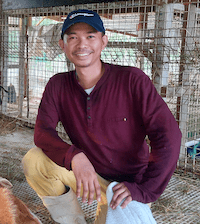
Jaycee de Guzman is the owner of Alpha Agventure Farms, where he develops practical livestock production systems, agricultural marketing strategies, and farm business models. He writes regularly about livestock development, agricultural entrepreneurship, and public policy affecting Philippine agriculture.